Small-batch lunchbox bakers
If you make one batch of cheese crackers at a time, look for stated dough capability without taking up more storage space than you can spare.


For a single lunchbox-sized batch of cheese cracker dough, consider a compact food processor only if the exact model is stated to knead dough and its working capacity suits your recipe. If you regularly make several batches or grate cheese in the same preparation session, a processor with a supplied dough tool may be more useful, provided its size and cleaning requirements work for your kitchen.
If you make one batch of cheese crackers at a time, look for stated dough capability without taking up more storage space than you can spare.
If you make crackers repeatedly or prepare grated cheese and other lunchbox ingredients in the same session, check the dough tool and working capacity before choosing a larger machine.
If someone eating food prepared later must avoid milk, choose food-contact parts you can access and clean according to the manufacturer’s instructions. The Food Standards Agency identifies equipment cleaning as a way to help prevent allergen contamination.
Check dough suitability and the amount you mix in one session before weighing up storage, other preparation tasks and cleaning.
| Concern | What to check | Who this matters to |
|---|---|---|
| Dough capacity | Compare your recipe quantity with the exact model’s stated dough or dry working capacity, not just its total bowl volume. | If I prepare several lunchboxes at once, I want to avoid splitting the dough into repeated batches. Around 33% of consumers put batch capacity first. |
| Storage space | Measure the intended space and check the machine’s dimensions and accessory storage. | When I bake occasionally, I need a machine I can put away without giving up much cupboard space. Around 25% of consumers prioritise storage. |
| Dough and cheese tools | Confirm an explicit kneading function or the included dough tool; check for a grating disc if you need one. | I want to mix cracker dough and grate cheese with the same appliance, rather than choosing one that only chops. Around 25% of consumers make those functions their primary concern. |
| Cleaning and safe use | Check access to food-contact parts and follow the manual for washing them and cleaning the motor base. | If someone in my household avoids milk, I need to remove cheese residue before preparing their food. Around 17% of consumers put cleaning and allergen control first. |
A large bowl does not necessarily permit a dough batch of the same size. Magimix lists a 3 L total bowl capacity but a 1.3 L working capacity for its 4200XL.
Compare the manufacturer’s stated dough or dry working capacity with the quantity in your usual recipe.
A chopping function alone does not establish that a model is intended for dough. Tools and stated functions vary between processors.
Check the exact model’s kneading claim and box contents before relying on it for cheese cracker dough.
Cheese residue on food-contact parts matters when food for someone avoiding milk is prepared later. Food Standards Agency guidance identifies equipment cleaning as part of allergen control.
Choose parts you can access and clean thoroughly, following the instructions for the bowl, lid and blades.
A larger processor may be inconvenient to lift out and put away, even when its batch capacity suits your baking.
Measure your cupboard or worktop space, including height clearance, and check the model’s weight and accessory storage.
Kenwood’s cited MultiPro models illustrate the choice between a compact dough-capable processor and a larger model with a dedicated tool.
The cited 4200XL is relevant if you make larger batches and value the manufacturer’s long motor guarantee.
Bosch’s MultiTalent range offers model-specific dough capacities worth comparing against your usual batch.
Ninja is relevant if you are considering a processor with model-specific interchangeable dough accessories.
These food processors are relevant if you want to prepare cheese cracker dough and handle cheese or other lunchbox ingredients with the same appliance. Check each model’s dough instructions and batch limit against your recipe before choosing.
 No image available
Consider this model if you want to weigh ingredients and prepare dough and grated cheese with one processor.
The product name specifies a 3 L bowl, 1000 W motor, integrated digital scale and eight accessories. Check the dough working limit and dimensions against your recipe and storage space.
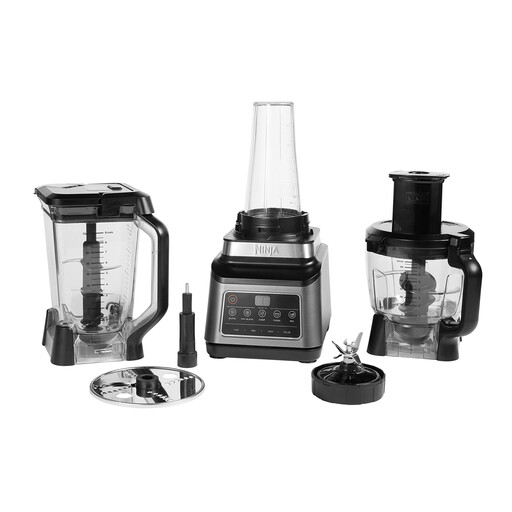 No image available
Consider this model if you want to prepare dough and grate cheese alongside other blending tasks.
The product name specifies a 1200 W motor, 1.8 L processor bowl, 2.1 L jug and 700 ml cup. Check the dough tool instructions and working limit for your cracker mixture; the listing cautions that overly thick mixtures may jam the blades.
 No image available
Consider this model if you want one processor for dough preparation and grating cheese.
The product name specifies a 3 L bowl, 1000 W motor, six accessories and a pulse function. Check the recommended dough batch size and machine dimensions before choosing it.
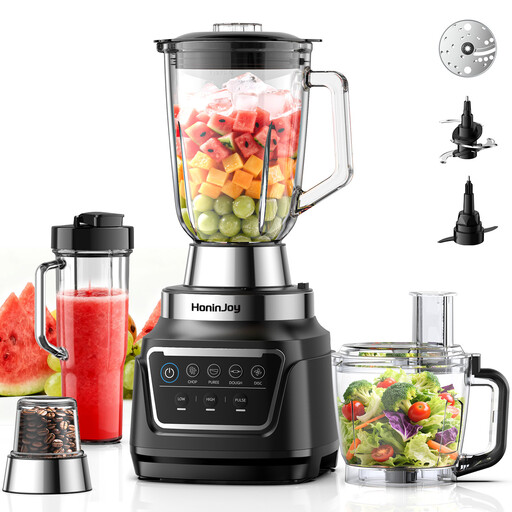 No image available
Consider this model if you want the stated dough-making and shredding functions in a combined blender and food processor.
Check which dough-processing attachment is included and whether the instructions permit your recipe and batch size. Confirm its dimensions if storage space is limited.
Choose one for dough only if the exact model is stated to knead and its working capacity fits your recipe. A chopping function alone is not enough to establish dough suitability; Kenwood explicitly states that its cited MultiPro Go model makes dough.
No: check the dough function or tool and the model’s stated dough capacity before using wattage as a secondary detail. Bosch lists different dough capacities for its cited MultiTalent 3 and MultiTalent 8 models, so the exact model matters.
Follow the model’s instructions and thoroughly clean food-contact parts, including places where dough can remain around blades and lids. Food Standards Agency material identifies equipment cleaning as a way to help prevent allergen contamination, which matters if food for someone avoiding milk will be prepared later.
Keep the processor away from the sink and unplug it when it is not in use, as Electrical Safety First advises. Follow the manufacturer’s instructions when cleaning the motor base and handling sharp blades.