Small-batch beetroot cooks
If you usually chop one or two portions, a compact bowl and a way to stop and inspect the pieces may matter more than maximum capacity. Check that the blade and usable bowl capacity suit your usual portion.


For occasional small portions of cooked beetroot, start with a compact processor or chopper and check for a chopping blade, controllable operation and parts you can clean between users. Choose a larger processor when several people will also use it for regular slicing, grating or batch preparation, accepting the extra storage and washing involved. In a food-business kitchen, how shared equipment is separated, cleaned and disinfected matters alongside the choice of machine.
If you usually chop one or two portions, a compact bowl and a way to stop and inspect the pieces may matter more than maximum capacity. Check that the blade and usable bowl capacity suit your usual portion.
If the processor passes between users, look for food-contact parts that are straightforward to remove and clean. Check the exact model’s dishwasher-safe parts list rather than assuming the whole appliance can go in the dishwasher.
If several people will use the machine for slicing, grating and other preparation as well as beetroot, compare usable capacity, accessory storage and the space needed to put it away.
Choose it when: You usually chop a small portion and need to clear the shared worktop afterwards.
Trade-off: Its usable bowl capacity may limit larger shared batches.
Choose it when: The same machine will regularly handle wider meal preparation for several users.
Trade-off: A larger machine and its accessories need more room for storage and cleaning.
Choose it when: You also need a hand blender and only occasionally chop small portions.
Trade-off: Check the attachment’s usable capacity and which separate parts need washing.
| Concern | What to check | Who this matters to |
|---|---|---|
| Cleaning between users | Check which food-contact parts detach and which the manufacturer approves for dishwasher use. In a food-business kitchen, check the procedure for separating or cleaning and disinfecting equipment used with raw food. | If others may use the processor for raw-food preparation, I need a cleaning routine that works before I prepare ready-to-eat beetroot. Around 42% of consumers put cleanability and safe sharing first. |
| Chopped texture | Look for a chopping blade and pulse or moment control, then match the bowl to your usual portion. | I want distinct pieces of soft beetroot, so I need to stop and inspect them before processing further. For around 33% of consumers, texture control is the primary concern. |
| Storage and usable capacity | Compare stated working capacity with your batch size, then check the appliance’s dimensions and where its accessories will go. | Shared storage is tight, but I still need a bowl that holds the amount we normally prepare. Balancing space and capacity comes first for around 25% of consumers. |
Total volume and stated working capacity are not always the same: Kenwood GB lists a 1.3 L bowl but a 0.75 L working capacity for the MultiPro Go FDP23.140GR.
Compare working capacity with your usual beetroot batch, then check the machine’s dimensions before deciding where it will live.
Dishwasher instructions can differ between a model’s bowl, lid, blade and other components. Sharp blades also need careful handling.
Read the exact model’s parts list and cleaning instructions; do not immerse or machine-wash the motor base unless its manufacturer explicitly permits it.
In a food-business kitchen, shared equipment can transfer contamination. GOV.UK guidance calls for adequate separation of equipment used for raw and ready-to-eat food.
Follow the kitchen’s food-safety procedure: use separate equipment where practical, or clean and effectively disinfect the relevant food-contact parts before ready-to-eat preparation.
The MultiPro Go range is relevant when small portions and restricted storage are the main considerations.
The MultiTalent 3 MCM3501MGB is a conventional processor to consider for wider shared preparation.
The 3160 is relevant when the processor will do more than occasional beetroot chopping.
The MultiQuick 5 Pro MQ55755M offers a mini food-processor attachment as part of a hand-blender system.
These processors and choppers cover smaller beetroot portions as well as wider shared preparation. Compare the capacity and cleaning instructions of each exact model before choosing for your usual batch.
 No image available
Consider this model if the shared kitchen also needs a larger bowl and an integrated scale. Its listed features include a 1000 W motor and eight accessories; Joybuy UK identifies the bowl, lid, blades and discs as dishwasher-safe. Check its working capacity against your usual batch rather than treating 3 L as the amount to process.
 No image available
This is an option when users want chopping alongside other food preparation. The product name specifies a 1000 W motor, six accessories and a pulse function; stop and inspect soft beetroot between bursts. Check the working capacity and the manual’s list of dishwasher-safe attachments for this model.
 No image available
Consider this smaller bowl if you normally chop one modest portion at a time. Its product name specifies a 300 W motor, two speeds and a dishwasher-safe bowl. Confirm the usable capacity and how to control short chopping bursts before buying.
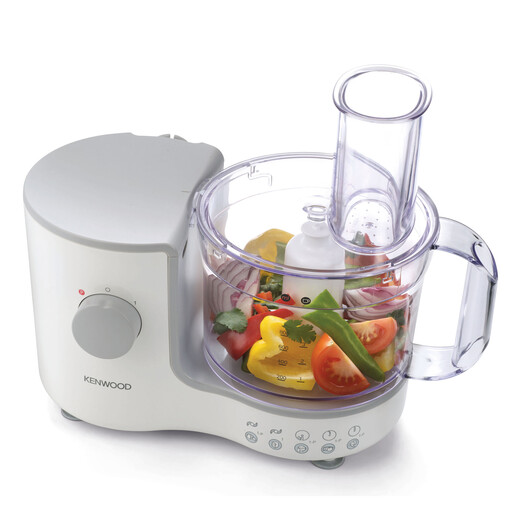 No image available
This compact processor is worth considering if chopping and other occasional preparation must share limited storage space. Its product name specifies a 400 W motor and a shredding disc. Check the bowl’s working capacity, chopping controls and exact cleaning instructions for your routine.
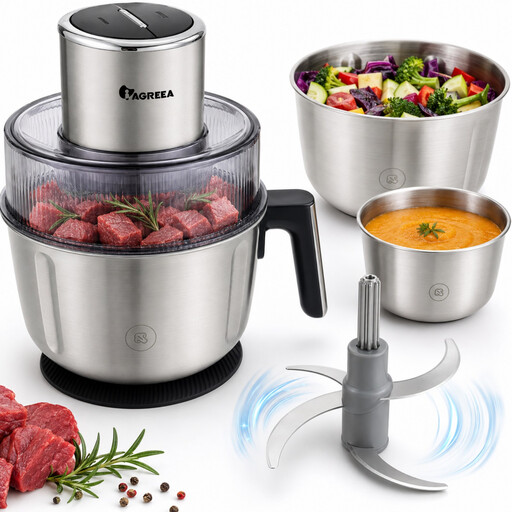 No image available
The three-bowl set may suit a kitchen that prepares different batch sizes. Its product name specifies a 350 W motor, two speeds and 304 stainless-steel bowls of 2.5 L, 2.2 L and 1.8 L. Check each bowl’s working capacity and the cleaning instructions before using it in a shared routine.
A mini chopper or compact processor is a sensible starting point for small portions that must be cleared away after use; choose a larger processor when it will regularly serve broader shared meal preparation. Check stated working capacity, not just total bowl volume.
Use a chopping blade and, where the model has pulse or moment control, process briefly before checking the pieces. The softness and quantity of beetroot affect when to stop, so a control setting alone cannot guarantee the texture.
No: check the instructions for the exact bowl, lid, blade, discs and other food-contact parts on your model. Follow the manufacturer’s directions for the motor base and handle sharp blades carefully even when they are approved for dishwasher use.
Equipment used for raw and ready-to-eat food needs adequate separation under GOV.UK food-business guidance. Where equipment is shared, follow the kitchen’s procedure for effective cleaning and disinfection before using it for ready-to-eat beetroot; the business also needs an effective cleaning schedule.