Start with the amount of oat-bar mixture you normally make, then compare a processor’s working capacity and stored dimensions rather than relying on its headline bowl size or wattage. A compact model can suit occasional small batches; consider a larger bowl if avoiding repeated batches matters more than cupboard space. A stated kneading function is worth checking for cohesive mixtures, but follow the model’s quantity limits and clean food-contact parts carefully when ingredients include allergens.
Who needs which features?
Small-batch makers short on storage
If you make a few portions at a time and put the processor away afterwards, compare working capacity with the space needed for the base, bowl and attachments. Kenwood describes its MultiPro Go as drawer-friendly; check the dimensions of any model against your own storage space.
Regular oat-bar batch makers
If splitting your usual mixture between several runs would be inconvenient, compare usable capacity and the exact model’s quantity limits. A stated kneading or mixing function is relevant, but it does not establish how every oat-bar recipe will process.
Home bakers managing allergens
If your recipes alternate between ingredients such as nuts, milk, sesame or gluten-containing cereals, consider how easily you can reach and clean food-contact parts. The Food Standards Agency’s guidance addresses preventing allergen cross-contamination; dishwasher-safe parts alone are not a substitute for an appropriate cleaning routine.
What to check before buying
For oat-bar mixture in a small kitchen, check your usual batch quantity first, then whether a processor that can handle it will fit where you plan to keep it.
| Concern | What to check | Who this matters to |
|---|
| Storage space |
Measure the storage location against the assembled dimensions, and check where the bowl and attachments will go. |
If I put the processor away after every batch, its parts need to fit the space I have; around 36% of consumers put storage first. |
| Usable batch capacity |
Compare your recipe quantity with dry or working capacity and the model’s stated processing limits, not just nominal bowl size. |
When I make a full tray regularly, dividing the mixture between runs is inconvenient; usable batch capacity comes first for around 29% of consumers. |
| Cohesive mixture handling |
Check for a stated mixing or kneading function and follow the exact model manual’s quantity limits. |
I need to bring oats and binders together without assuming every sticky recipe will process alike; around 21% of consumers prioritise mixture handling. |
| Cleaning and allergens |
Check which parts are dishwasher safe and whether blades, lids and other food-contact surfaces are accessible for cleaning. |
If I alternate recipes with and without nuts or sesame, I need to clean food-contact parts thoroughly; cleaning and allergen control come first for around 14% of consumers. |
Common buying mistakes
-
Equating bowl size with usable capacity
A nominal bowl figure may be larger than its dry or working capacity. Kenwood states a 1.3L bowl but a 0.75L dry working capacity for the MultiPro Go FDP23.140GR.
Compare the amount in your usual recipe with the relevant working capacity and the manual’s limits for that model.
-
Measuring the footprint but not the height
A processor may fit on a shelf yet leave too little room to handle its bowl and lid. Ninja lists the BN650UK as 40.7cm high.
Measure your intended storage position and allow room to lift out and use the removable parts.
-
Assuming a dough function suits every oat-bar recipe
A stated kneading function and limits for bread dough or pastry do not establish a suitable quantity for every mixture containing binders, dried fruit or nut butter.
Follow the named model’s manual and start a new recipe with a conservative batch size.
-
Treating dishwasher-safe parts as complete allergen control
Cleaning convenience does not establish that every food-contact surface has been adequately cleaned. Food Standards Agency guidance addresses preventing allergen cross-contamination.
Check access to the bowl, lid, blades, seals and attachments, and use an appropriate cleaning routine when changing between recipes with different allergens.
Brands to consider
Kenwood
The MultiPro Go line is relevant if a small batch and putting the processor away are priorities.
- Kenwood states that the MultiPro Go FDP23.140GR is 16.8cm wide, has a 1.3L bowl and offers chopping, slicing, grating, puréeing and kneading functions.
- Its stated dry working capacity is 0.75L; compare that figure with your mixture rather than assuming the full bowl volume is usable.
Magimix
The Mini Plus is relevant if you want a compact processor with published limits for specific preparations.
- Magimix states a 600ml working capacity for the Mini Plus and maximum quantities of 400g for bread dough and 500g for short-crust pastry.
- Those preparation-specific limits are not validated quantities for every oat-bar mixture; check your recipe and the model instructions.
Ninja
The BN650UK is worth considering if a larger stated bowl matters more to you than compact cupboard storage.
- Ninja lists a 2.1L capacity and 850W rating for the BN650UK.
- Ninja lists its height as 40.7cm, so check your worktop and cupboard clearance before choosing it for a small kitchen.
Joybuy product choices
These food processors offer dough-related features or descriptions to consider for oat-bar mixture. Compare each model’s batch limits and storage dimensions with your recipe and kitchen before buying.
 Image unavailable
Kenwood MultiPro Express Weighing + FDM71.450SS, 3L bowl
Consider this model if you want to compare a larger nominal bowl with your usual oat-bar batch. Its title specifies a 3L bowl, 1000W rating, integrated digital scale and eight accessories; check the manual for usable quantities and measure your storage space.
View on Joybuy
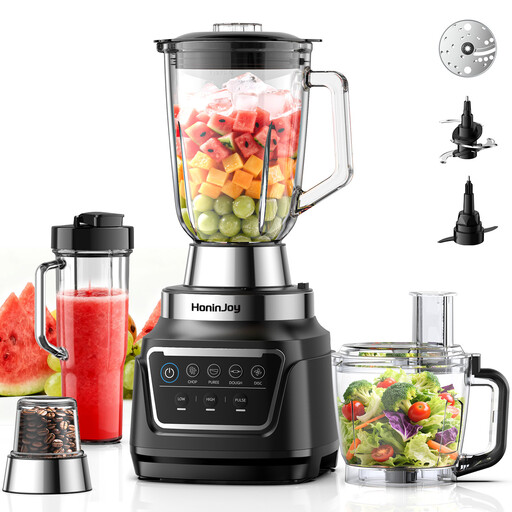 Image unavailable
HoninJoy All-in-One 10-in-1 Blender & Food Processor
Dough making is listed among this model’s functions, making it relevant to consider for a cohesive mixture. Check its instructions for permitted batch quantities and measure the space needed for the appliance and its parts.
View on Joybuy
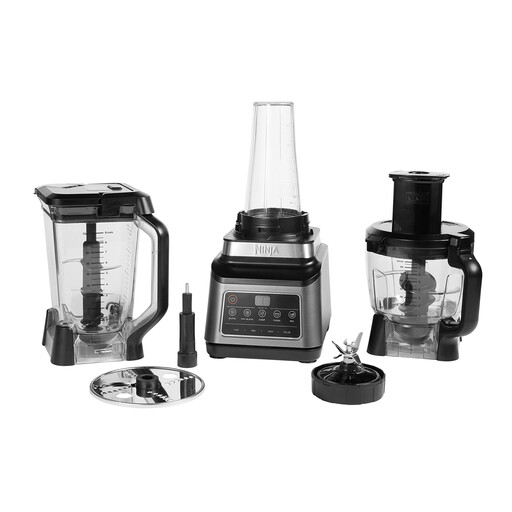 Image unavailable
Ninja 3-in-1 Auto-iQ BN800UK, 1.8L processor bowl
The listed dough tool makes this model relevant if your ingredients need bringing together. Its title specifies a 1.8L processor bowl, a separate 2.1L jug, a 700ml cup and a 1200W rating. Thick mixtures may jam the blades, so check the manual’s batch limits and measure your storage space.
View on Joybuy
Frequently asked questions
Is a larger bowl always better for oat-bar mixture?
No: the useful comparison is your recipe quantity against the processor’s working capacity and model-specific limits. Kenwood states a 1.3L bowl but a 0.75L dry working capacity for the MultiPro Go FDP23.140GR; Magimix publishes different Mini Plus limits for bread dough and short-crust pastry.
Can food-processor parts go in the dishwasher?
Only put a part in the dishwasher when the documentation for your exact model identifies it as dishwasher safe. Kenwood lists specified MultiPro Go parts as dishwasher safe, while Ninja lists dishwasher-safe components for the BN650UK; check which parts those statements cover.
What if my oat-bar recipes contain allergens?
Choose a processor whose food-contact parts you can access and clean thoroughly, especially when switching between recipes with different allergens. Food Standards Agency guidance addresses preventing allergen cross-contamination; a dishwasher-safe label alone does not establish that every surface has been cleaned adequately.
Do I need to register if I make oat bars at home to sell?
If you start a food business, the Food Standards Agency says to register with your local authority at least 28 days before trading or food operations begin. Check the registration route for the place where your home-based business operates.


