Texture-control cooks
If the seeds need to remain as distinct pieces for a topping, salad, bread or dessert, look for an included chopping blade and pulse control. Short bursts let you inspect the texture before processing further.


For distinct pieces of pumpkin seed, choose a processor with a chopping blade and manual pulse control, then stop between short bursts to check the texture. A compact bowl can suit a small topping; if the seeds are one part of a larger dinner-party menu, consider a larger working bowl or separate bowls, while allowing for the extra storage and cleaning.
If the seeds need to remain as distinct pieces for a topping, salad, bread or dessert, look for an included chopping blade and pulse control. Short bursts let you inspect the texture before processing further.
If you are preparing other components alongside the seeds, consider the bowl’s stated working capacity and the attachments needed for the rest of your menu, not just its total size.
If you need only a modest seed batch, a compact processor may be easier to store. Check whether making the other dishes you have planned would mean processing several batches.
Start with the texture you want from the seeds, then size the bowl for everything you plan to prepare and consider where the appliance and its parts will go afterwards.
| Concern | What to check | Who this matters to |
|---|---|---|
| Seed texture | Check for an included chopping blade and manual pulse control. | If I want pieces for a topping rather than a fine mixture, I need to stop and inspect the seeds between bursts. Around 42% of consumers put this texture control first. |
| Usable bowl capacity | Compare stated working capacity with total bowl size; check whether separate bowls suit small and large tasks. | When seeds are only one part of my party menu, I need enough usable capacity for the other preparation without repeated batches. For around 33% of consumers, menu capacity is the primary concern. |
| Storage and cleaning | Check dimensions, accessory storage and which removable parts the manual permits in a dishwasher. | If I host occasionally and have limited cupboard space, I would rather store a smaller machine, even if larger jobs take more batches. Storage and cleaning come first for around 25% of consumers. |
Total capacity is not always the amount you can use for a particular preparation. Magimix, for example, lists the 5200XL at 3.6L total capacity but 1.8L working capacity.
Compare the manufacturer’s working-capacity figure and check whether it refers to dry ingredients, liquids or another use.
Continuous processing gives you fewer opportunities to inspect the seeds and may leave them finer than intended.
Use an included chopping blade and brief pulses, checking the texture between bursts rather than relying on an automatic programme.
A compact bowl may suit one topping but require repeat batches if you also plan to prepare sauces, vegetables or other dishes.
Plan around the whole preparation session. Separate small and large bowls or a larger working bowl may be more useful when you regularly prepare several components.
Cleaning instructions differ between removable bowls, blades, discs and the motor base; sharp attachments also need careful handling.
Follow the exact model’s manual when removing blades and check which parts it permits in a dishwasher. Keep the supplied food pusher in use where the processor has a feed chute.
Its larger food processors are relevant when chopping seeds is part of frequent, broader meal preparation.
Its different bowl configurations are worth comparing if your seed batch is small but other preparation needs more room.
The MultiPro Go is a compact option to examine when storage matters and the seed batch is modest.
A processor-and-blender combination may suit a menu that needs more than seed chopping.
These options include processor-and-blender combinations and a multi-bowl chopper for seed toppings alongside other dinner-party preparation. Compare their controls and usable bowl capacity against the quantity you plan to make.
 No image available
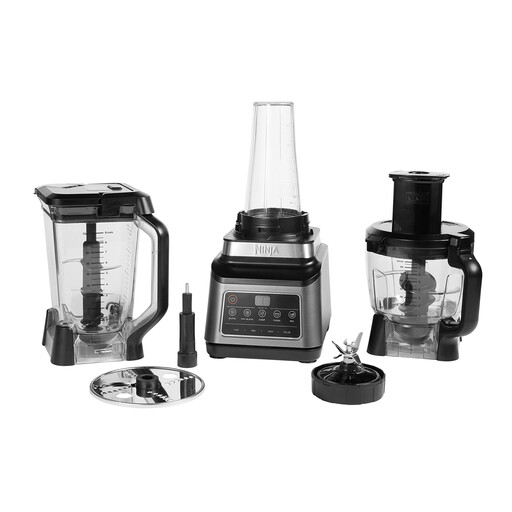
Consider this model if the party menu also calls for blending; use manual control when you want to inspect the seed texture between bursts.
The listed configuration has a 1200W motor, 1.8L processor bowl, 2.1L jug, 700ml cup and five automatic programmes. Check the bowl’s usable capacity for your planned seed batch.
 No image available
This processor-and-blender combination is an option if the seeds are one of several party-prep tasks; check the chopping attachments and controls for the exact version offered.
Its name lists a 750W motor, a 2L bowl and a separate 1.8L capacity. Confirm the processor bowl’s usable capacity if you need to make a particular quantity in one batch.
 No image available
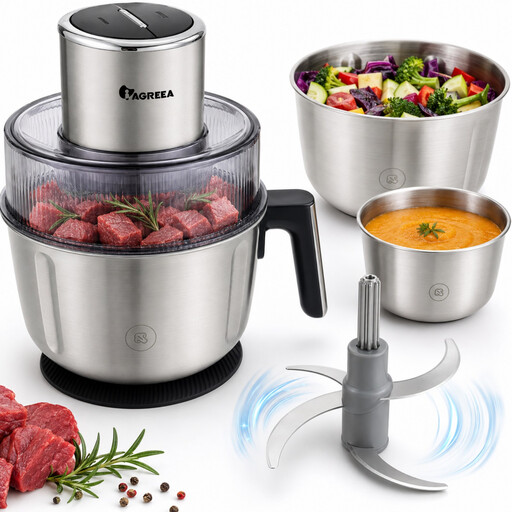
Consider the separate bowls if you want to keep a seed topping apart from other ingredients during preparation; check how the controls let you stop and inspect the texture.
The listed variant has a 350W motor, two speeds, triple-curved blades and three 304 stainless steel bowls of 2.5L, 2.2L and 1.8L. Check usable capacity and the cleaning instructions for each part.
Use a chopping blade and brief manual pulses, stopping to inspect the seeds before processing further. Do not assume an automatic programme will stop at the texture you want for a topping.
A small working bowl can suit a seed topping, but a wider menu may make a larger bowl or separate bowls more useful. Compare working capacity rather than treating total bowl size as the usable amount: Magimix UK lists the 5200XL at 3.6L total and 1.8L working capacity, while Kenwood GB lists 0.75L working dry capacity for the MultiPro Go FDP23.140GR.
Check the cleaning instructions for the exact model and each removable part before putting them in a dishwasher. Handle blades carefully when removing them, and do not put the motor base in the dishwasher.
Check that its lid, supplied pusher and guards are present and follow the model’s operating instructions. Electrical Safety First advises using an implement to guide food towards the blades safely and guarding against contact with them while the processor runs.