Small-batch lunchbox bakers
If you usually make pastry for a few savoury tartlets, hand pies or one pastry case, pulse control, a manageable bowl and cupboard space are likely to shape your choice.


For an occasional small lunchbox bake, start with a processor that has pulse control and a bowl suited to your usual batch, rather than choosing extra capacity by default. If you also make pastry regularly or prepare fillings and vegetables, check which dough and preparation tools the exact model includes. Good Food’s shortcrust method calls for brief pulses until the butter and flour resemble breadcrumbs, followed by gradual liquid addition and a prompt stop.
If you usually make pastry for a few savoury tartlets, hand pies or one pastry case, pulse control, a manageable bowl and cupboard space are likely to shape your choice.
If pastry is a regular task and you also grate vegetables or prepare fillings, compare the supplied dough tool, other attachments and how they are stored.
If you make several pastry cases or prepare multiple components at once, compare usable bowl volume, any stated dough limit and the attachment intended for dough.
Check how the processor handles shortcrust before deciding how much bowl space and how many other preparation tools you need.
| Concern | What to check | Who this matters to |
|---|---|---|
| Pastry control | Confirm pulse control and check the model’s instructions for the appropriate blade or dough tool. | I want to stop as soon as cold butter and flour look like breadcrumbs, rather than keep the mixture running. Around 33% of consumers would put pastry control first. |
| Small-batch practicality | Compare bowl capacity and dimensions; check which parts can be washed in a dishwasher. | For one small lunchbox bake, I need an appliance I can store and clean without making the job cumbersome. Roughly 25% of consumers would prioritise that small-batch practicality. |
| Other preparation jobs | Check the exact supplied discs, bowls and tools for the fillings or vegetables you plan to prepare. | If I also grate vegetables or make fillings, I want those jobs covered by the attachments in the box. Around 25% of consumers would make broader preparation their primary concern. |
| Larger batches | Compare usable bowl volume and any model-specific maximum dough content with your recipe quantity. | When I make several pastry cases, I need a stated capacity that accommodates the larger quantity. Approximately 17% of consumers would put batch capacity first. |
A wattage figure does not tell you when to stop processing shortcrust. Good Food’s method calls for cold butter, short pulses and gradual liquid addition.
Check for pulse control and follow the blade guidance for your model, stopping when the pastry comes together.
Kenwood lists a knife blade for the FP120A, while its FDP31.170GY listing specifies a dough tool. A shared brand name does not mean the bundles are alike.
Check the exact model number, supplied accessories and shortcrust instructions before ordering.
A larger bowl and more attachments may serve repeated meal preparation, but they also mean more equipment to store and clean after an occasional pastry batch.
Compare the amount of pastry you normally make with the model’s capacity guidance and the other tasks you expect to use it for.
The processor helps make the pastry; it does not determine how a cooked filling should be cooled or how the finished lunchbox should be kept.
Plan cooling, refrigeration and time out of the fridge around the particular filling you use.
Kenwood lists both basic compact processors and compact models with more preparation tools.
Magimix offers food processors in different bowl sizes, with tool choice varying by model.
The FP1300SU is a multi-bowl option for pastry alongside other food-preparation tasks.
Bosch provides model-specific bowl and dough-capacity figures that can help with larger-batch planning.
Braun offers compact food-preparation products and attachments for compatible systems.
These food processors cover a compact pulse-controlled option and larger models for pastry alongside other lunchbox preparation. Compare each model’s tools and bowl with your usual batch; a larger bowl alone does not establish how well it handles a small quantity.
 No image available
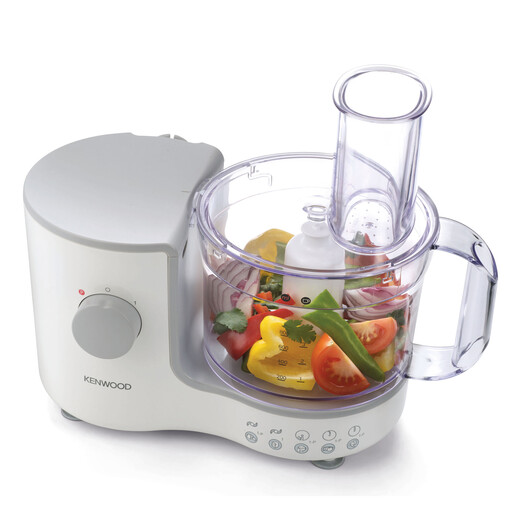
Consider this compact model for an occasional small pastry batch if its blade instructions suit your recipe.
The listed configuration has a 1.4L bowl, 400W motor and pulse control. Check the FP120A manual for shortcrust blade guidance and whether your usual quantity is suitable.
The product information mentions a European-standard outlet; confirm the supplied plug and rated supply suit your UK home before use.
 No image available
Consider this model if you regularly make pastry and also use slicing or grating tools for lunchbox preparation.
Its product name specifies a 3L bowl, 1000W motor, pulse function and six accessories; the listed tools include a 2-in-1 dough and emulsifying tool. Check the model’s pastry instructions and whether the bowl suits your smaller batches.
Confirm the supplied plug and rated supply suit your UK home.
 No image available
This model is relevant if pastry is one of several preparation jobs and you also want integrated weighing.
Its product name specifies a 3L processor bowl, 1000W motor, 13 accessories, variable speed and pulse control. Check the exact supplied tool and FDM73.850SS instructions before using it for shortcrust.
Confirm the supplied plug and rated supply suit your UK home.
 No image available
Consider this processor if you expect to use integrated weighing and other preparation functions alongside pastry.
Its product name specifies a 3L bowl, 1000W motor, eight accessories and an integrated digital scale; the product information also states pulse control. Check which supplied tool the FDM71.450SS instructions specify for shortcrust.
Confirm the supplied plug and rated supply suit your UK home.
Not for every processor: the appropriate tool depends on the model’s instructions. Magimix’s shortcrust recipe specifies a dough blade for its listed processors but a metal blade for the Mini Plus, so check your exact model before treating the blades as interchangeable.
Use brief pulses and stop processing promptly. Good Food advises starting with cold butter, pulsing until the mixture resembles fine breadcrumbs and adding liquid gradually; too much water or extra handling can make the pastry hard.
Match the bowl and any stated dough limit to the quantity you normally make, rather than treating total bowl volume as a minimum-batch guarantee. Kenwood lists a 1.4L bowl for the compact FP120A, while larger models offer more room for repeated batches or other preparation jobs.
Plan its cooling and refrigerated storage separately from making the pastry. GOV.UK advises keeping a fridge between 0°C and 5°C; whether a filled lunchbox can spend time out of refrigeration depends on the filling and how it will be stored.
Confirm that the supplied plug and rated electrical supply suit your UK home, particularly if a listing mentions a different outlet standard. Check the appliance and cable condition before use; the Health and Safety Executive also identifies suitability for the electrical supply as an important equipment check.