
24/7 Customer Support

Free returns

Same-day & Next-day Delivery

Quality Guaranteed

Unlock Your Welcome Offers: FREE Delivery | Up to 80% OFF | Free 30-day JoyPlus trial
Download the APP
By Joybuy Product Recommendation Officer
Food processors can simplify chopping, slicing, grating, blending and meal preparation, but the wrong model may quickly become an expensive cupboard item. A compact food chopper may struggle with family-sized batches, while a multifunction food processor can take up more room than expected.
Before choosing from the many food processors available, look beyond motor wattage and long feature lists. The most useful appliance is the one that matches your cooking habits, available storage and cleaning routine.
A higher wattage figure does not automatically mean better results for every task. Blade design, bowl shape, control settings and the recommended operating time also affect performance. A 300W food chopper may be suitable for onions, herbs and small batches, while larger quantities or dough preparation may call for a more capable electric food processor.
Check the manufacturer’s permitted continuous operating time. For example, some compact choppers specify short cycles followed by cooling periods. Ignoring these instructions can cause overheating and interrupt meal preparation.
A stated capacity is not always the same as the amount you can safely process. Ingredients need room to move, and liquid mixtures should remain below the indicated maximum line to reduce splashing or leakage.
For a household preparing several portions, a 1.8L or 3L bowl may be more practical than a mini food processor. For garlic, herbs, dips or a small amount of baby food, a 350ml to 600ml bowl can reduce washing-up and storage requirements.
Product images can show several attachments, but the listed configuration may include fewer items. Check whether the box contains slicing and grating discs, a dough tool, blending jug, travel cup or an additional bowl. This is particularly important when comparing a food processor with blender functions against a dedicated food chopper.
Also check cleaning instructions. “Easy to clean” may mean detachable parts rather than dishwasher compatibility. Look for a clear statement about which components are dishwasher-safe and remember that the motor base should only be wiped with a damp cloth.
Match bowl size to your usual batch size rather than choosing the largest model available. A 3L bowl is helpful for family meals and food preparation, but it needs suitable cupboard or worktop space. A 1.4L bowl can offer a useful compromise for everyday chopping, blending and shredding in a smaller kitchen.
Measure the appliance and consider the height needed to remove the lid or add ingredients. Accessories also require storage, so a compact footprint may be more valuable than a long list of attachments.
Power ratings in the products below range from 300W to 1,200W. Use wattage as one comparison point, then review the intended tasks and controls. Two speeds can give more control over soft and firm ingredients, while a pulse function helps create a coarser texture without over-processing.
For frequent baking, dough making or larger batches, look for a model with a larger bowl and dedicated dough accessory. For short chopping jobs, a food chopper with a glass bowl may be more convenient.
Stainless steel blades are common for chopping and slicing, but their design varies. Double-stacked or multi-layer blade systems can offer several cutting levels within a bowl, while discs are used for slicing, shredding or grating.
Glass bowls can resist odour and flavour transfer, although they may be heavier than plastic. If you prepare raw meat, vegetables and baby food, separate bowls can help reduce flavour transfer when each component is cleaned properly. Always follow the supplied instructions for food hygiene, blade handling and dishwasher use.
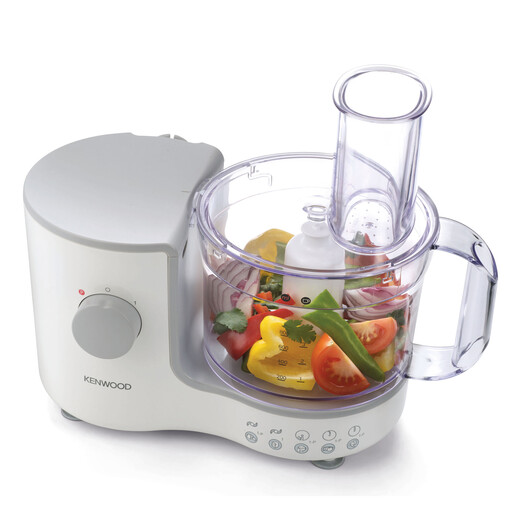
Why This Fits Their Persona: Its 1.4L bowl and compact dimensions suit first-time buyers, smaller households and UK kitchens with limited worktop or cupboard space.
The 1.4L capacity is clearly stated, and the supplied functions include chopping, blending, emulsifying and shredding rather than relying on an unclear accessory list.
400W motor, one speed plus pulse, stainless steel blade, shredder disc and dishwasher-safe parts.

Why This Fits Their Persona: A suitable choice for households wanting one appliance for family cooking, baking, batch preparation and drinks.
The 3L bowl, listed accessories and Blend-Xtract 2GO bottle make its intended batch and blending uses clear.
1000W motor, 3L capacity, metal slicing and grating disc, baking tool and dishwasher-safe attachments.
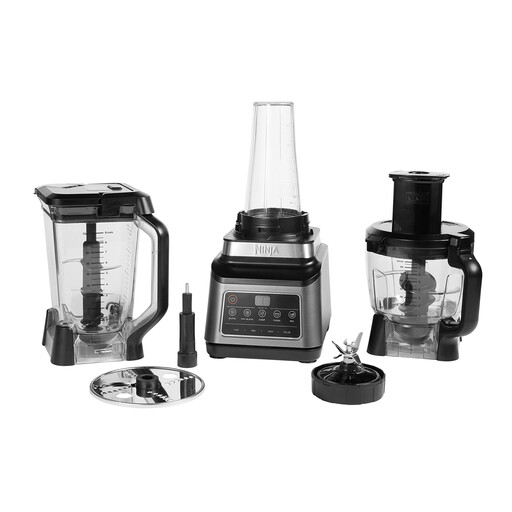
Why This Fits Their Persona: Designed for cooks who regularly switch between food processing, multi-serve blending and personal drinks.
The bowl, jug and cup capacities are separately stated, so shoppers can assess whether the three-container system suits their recipes.
1200W motor, five automatic programmes, 1.8L processor bowl, 2.1L jug and dishwasher-safe parts.
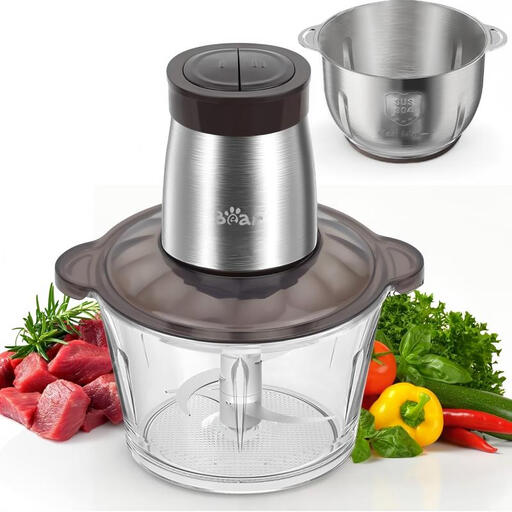
Why This Fits Their Persona: Two bowls support separate preparation of ingredients and offer flexibility for vegetables, meat and smaller household tasks.
The listing specifies both bowl capacities and blade sets, helping avoid confusion about what is included.
2L glass bowl, 1.8L stainless steel bowl, two speed settings and dishwasher-safe bowls and blades.
A mini food processor such as a 350ml model is convenient for herbs, garlic, nuts, breadcrumbs and dips, particularly when storage space is limited. A manual vegetable chopper may suit occasional slicing and dicing without plugging in, but it generally offers fewer functions than an electric model.
For parents, a dedicated baby food processor can be convenient for small purée batches. Check capacity, material information, cleaning guidance and the manufacturer’s age-use instructions. Do not assume that a general blender or chopper is automatically designed for every baby-food preparation task.
A dishwasher-safe food processor can reduce cleaning time, but blades remain sharp and should be handled carefully. Always remove the motor unit before washing and dry detachable parts thoroughly before storage.
We have compiled a complete, real-time list of products that fully satisfy these strict selection criteria and UK safety regulations.
Running cost depends on the appliance’s power rating and operating time. A 300W chopper used for short bursts may use less electricity per task than a 1,200W multifunction model, although the larger appliance may complete certain jobs more quickly. Compare the wattage with your actual cooking routine rather than selecting on power alone.
Lifespan depends on frequency of use, ingredient choice, cleaning and adherence to operating limits. Avoid overfilling the bowl, processing unsuitable hard foods and running a compact appliance beyond its stated cycle. Store blades safely, inspect components for damage and follow the supplied maintenance guidance.
Some models combine both functions, but the results and container designs differ. A food processor is generally useful for chopping, slicing, grating and dough preparation, while a blender is designed around liquid-based mixtures and smooth textures. A food processor with blender attachments can save space if you regularly need both functions, provided its capacities and accessories match your recipes.