
24/7 Customer Support

Free returns

Same-day & Next-day Delivery

Quality Guaranteed

Unlock Your Welcome Offers: FREE Delivery | Up to 80% OFF | Free 30-day JoyPlus trial
Download the APP
Food storage containers can simplify packed lunches, batch cooking and leftover storage, but choosing the wrong set can lead to leaks, wasted cupboard space or containers that are unsuitable for reheating. UK households, commuters, students and small food businesses all have different requirements, so the most attractive-looking option is not always the practical one.
As the Joybuy Product Recommendation Officer, I focus on separating useful specifications from vague marketing language. Here are the key pitfalls and checks to consider before buying food storage containers.
A lid that clips into place may help protect food, but that does not automatically mean the container is leak-proof. Soups, sauces and dressings need particular care. Check whether the product description specifically refers to a sealed or leak-resistant design, and avoid overfilling containers before placing them in a work bag or school bag.
For hot food, allow steam to escape when reheating. A sealed lid can allow pressure to build in a microwave, even when the container itself is microwave-safe.
Nominal capacity does not always reflect how much food you can comfortably pack. A 4oz pot is suitable for dips or condiments, while a 650ml container may suit an individual meal. Larger 1-litre food storage containers are more practical for pasta, salads, soups or family-sized portions.
Also check the external dimensions. A container may hold the right amount but fail to fit a lunch bag, fridge shelf or office microwave.
“Food-safe” describes suitability for contact with food; it does not automatically confirm microwave, freezer or oven compatibility. Plastic food tubs with lids may be microwave-safe, but the lid usually needs loosening or removing. Glass food storage containers can be convenient for reheating, but lids may have different care instructions.
Stainless steel food containers are useful for transporting meals, but metal should not be placed in a microwave. Always check the individual product instructions rather than relying only on the material name.
Match capacity to the food you usually carry or store:
For portion control containers, consistent sizes can make weekly meal preparation easier. Divided lunch containers and bento boxes are useful when you want fruit, vegetables, grains and proteins kept apart.
Compartments can help prevent wet and dry foods mixing, but they reduce flexibility compared with a single open container. A divided design is suitable for packed lunches and prepared meals, while a plain tub may be better for soups or larger leftovers.
Look at whether dividers are fixed, removable or supplied as separate trays. The Sistema Nest It containers, for example, are described as having a multi-compartment layout and a nesting format for cupboard storage.
Common options include:
For any reusable food containers, check whether the base and lid are dishwasher-safe, whether the lid needs hand washing, and whether the product is freezer-safe. A freezer-safe container should still have enough space left for food expansion.

Why This Fits Their Persona: A pack of 25 gives households, batch cooks and small catering operations a practical supply for repeated portioning, lunches and leftovers.
The stated 650ml capacity is clearer than relying on vague “lunch size” wording. Matching lids are included, and the product information lists microwave and freezer suitability.
Clear rectangular tubs support quick identification and stacking; the large pack suits high-volume meal prep.
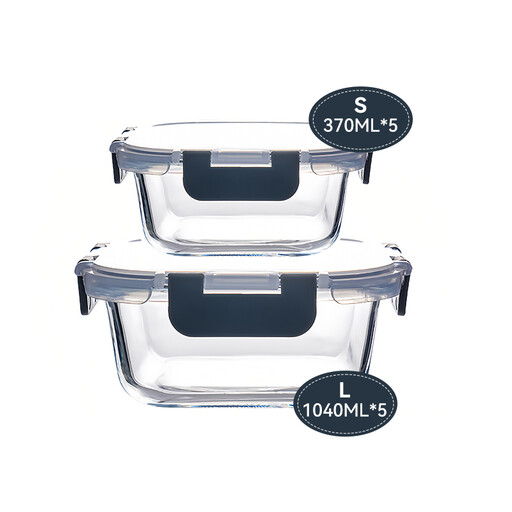
Why This Fits Their Persona: The combination of five 1,040ml and five 370ml glass containers suits shoppers who want different sizes for lunches, leftovers and smaller ingredients.
The capacities and materials are specified, while the product information separates glass-body suitability from lid care. This helps avoid assuming that every component has identical appliance instructions.
High-borosilicate glass bodies; snap-lock PP lids; five large and five small containers in one set.

Why This Fits Their Persona: Weekly meal-prep users can prepare several similar-sized lunches, then stack full containers in the fridge or freezer and nest them when empty.
The listed freezer, microwave and top-rack dishwasher suitability addresses common appliance-compatibility concerns. Follow the supplied microwave guidance and check the lid position before reheating.
Five 870ml containers; stackable when full and nestable when empty; multi-compartment format for separating meal components.
We have compiled a complete, real-time list of products that fully satisfy these strict selection criteria and UK safety regulations.
Only use a container when its product information confirms microwave suitability. Vent or remove the lid as instructed, and do not microwave stainless steel. Glass bodies may be microwave-safe while their lids are not, so check each component separately.
Lifespan depends on material, cleaning, heat exposure and handling. Replace any container with cracks, deep scratches, warped plastic or a lid that no longer closes securely. Glass can remain usable for a long time if it is not chipped or subjected to sudden temperature changes.
Medium containers between approximately 650ml and 900ml are suitable for many individual meals. Divided meal prep containers help separate ingredients, while a selection of small pots is useful for sauces and toppings. Choose stackable or nestable designs if fridge and cupboard space is limited.