
24/7 Customer Support

Free returns

Same-day & Next-day Delivery

Quality Guaranteed

Unlock Your Welcome Offers: FREE Delivery | Up to 80% OFF | Free 30-day JoyPlus trial
Download the APP
Choosing food storage containers can look straightforward until lids stop sealing, boxes occupy too much fridge space or materials prove unsuitable for reheating. UK households also need to consider packed lunches, freezer storage, meal preparation and everyday cleaning before buying.
A low price does not always mean good value, while a premium-looking set may still lack the features you actually need. The following guide explains the key specifications to check and matches several options to different shopping needs.
A lid that simply rests on a container may help cover food, but it may not prevent leaks or reduce exposure to air. For leftovers, sauces and packed lunches, look for wording such as sealed, airtight or leak-proof, and check whether the lid uses clasps, a silicone ring or another defined sealing system.
Also consider how the seal will be used. A container may be suitable for fridge storage but less practical for carrying soup in a work bag if the lid is difficult to secure correctly.
Material suitability varies. Glass food storage containers are often selected for visibility and reheating convenience, but the lid may still need to be removed before heating. Stainless steel food containers should not be placed in a microwave, and some are unsuitable for ovens or direct heat.
Always check the product instructions rather than relying on appearance. The Maxcook set, for example, is stated to be not microwave or oven safe, while the PURECOOK deep set is described as suitable for indirect water heating, fridge and freezer use. Avoid sudden temperature changes with glass components, as this can increase the risk of breakage.
Large food storage containers can be useful for batch cooking, but they may waste room in a small fridge. Conversely, a collection of small boxes may not accommodate a family-sized portion or bulky produce.
Before purchasing, measure the available shelf depth and height. Stackable storage containers are particularly useful where shelves are limited, but check whether the lids stack securely and whether different sizes nest or stack efficiently.
The main choices are plastic, glass and stainless steel:
A material description such as 304 stainless steel identifies the steel grade used in several products below. It does not automatically mean that every lid, seal or accessory has the same material properties, so assess the whole container.
For airtight food storage containers, inspect how the lid closes. Clasps can provide visible closure points, while silicone seals may improve the fit around the rim. For liquids, do not overfill the container and confirm that the lid is fully secured before placing it in a bag.
Airtight storage can help limit exposure to air and reduce spills, but it does not replace sensible refrigeration, correct food handling or checking use-by dates.
A useful set should match the food you usually store. Deep containers suit larger portions, salads and batch-cooked meals, while shallow boxes can be easier to portion and stack.
Smooth interiors are generally easier to clean, particularly after oily food. Lids can require more attention because seals and clasps may trap residue. Wash containers before first use and dry them thoroughly before storage. If dishwasher use matters, check whether the manufacturer recommends it for both the container and lid; stainless steel finishes may change appearance over time when repeatedly washed in a dishwasher.
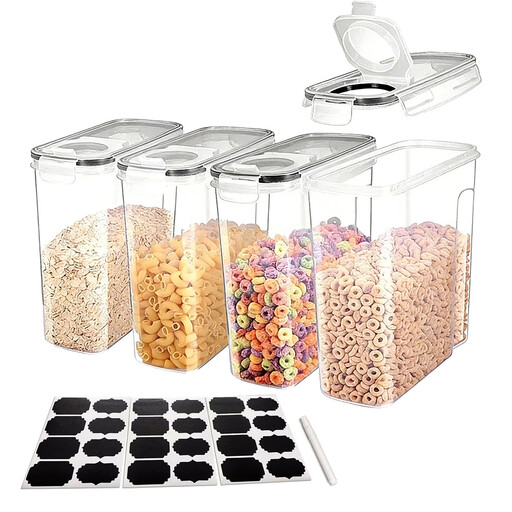
Why This Fits Their Persona: A transparent four-piece set can suit households building a basic collection for leftovers, dry ingredients and everyday fridge storage.
The transparent design makes contents easier to identify, helping avoid buying boxes that require opening each lid to check what is inside.
Four-piece quantity; transparent construction; described as sealed and moisture-proof.
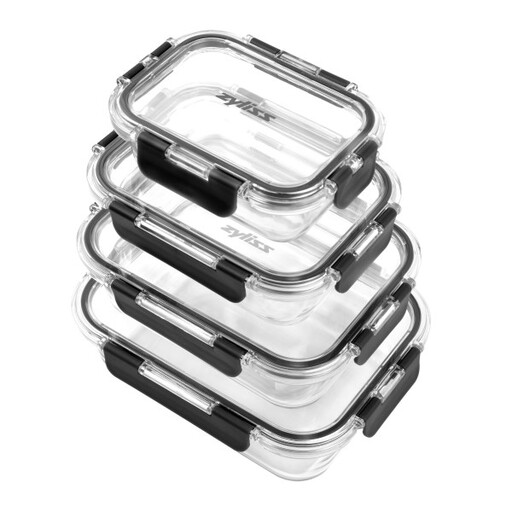
Why This Fits Their Persona: This option suits shoppers who want one set for storing, preparing and reheating food, with clear containers for quick identification in a busy kitchen.
Its stated fridge and freezer suitability helps address the common mistake of choosing containers without checking cold-storage use.
Glass construction; airtight lids; stated fridge and freezer suitability; easy-clean design.
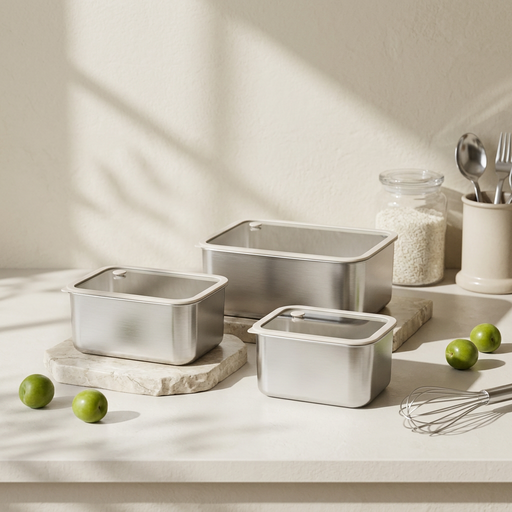
Why This Fits Their Persona: The 1000 ml, 1800 ml and 3000 ml capacities suit batch cooking, large leftovers, camping, picnics and households that regularly store substantial portions.
The stated capacities and deep, stackable format reduce the risk of buying a set that cannot handle larger meals or wastes vertical fridge space.
304 stainless steel bodies; high-borosilicate glass lids; silicone sealing rings; three listed capacities.

Why This Fits Their Persona: The three-piece format is suited to packed lunches, fridge organisation, meal prep and travel, including camping where a reusable metal container is practical.
The product information clearly states that it is not microwave or oven safe, helping prevent misuse caused by assuming stainless steel containers can be heated.
304 stainless steel; sealed lids; stackable construction; three-piece set for lunches and fridge storage.
We have compiled a complete, real-time list of products that fully satisfy these strict selection criteria and UK safety regulations.
Some are, including the Zyliss set described above, but suitability depends on the specific product. Leave room for expansion and avoid moving cold glass directly into high heat. Follow the manufacturer’s instructions for temperature changes and lid use.
There is no single lifespan. Durability depends on material, frequency of use, washing method and whether the container is exposed to heat or impact. Stainless steel bodies can be suitable for repeated use, while glass containers should be checked regularly for chips or cracks. Seals and lids may need replacing before the container body.
Choose compact, stackable storage containers with clearly defined capacities. A mixture of shallow boxes for individual portions and one or two deeper containers for larger leftovers can make better use of shelf height. Transparent designs can also support quicker fridge organisation by making contents visible.