
24/7 Customer Support

Free returns

Same-day & Next-day Delivery

Quality Guaranteed

Unlock Your Welcome Offers: FREE Delivery | Up to 80% OFF | Free 30-day JoyPlus trial
Download the APP
A well-organised kitchen can make daily life smoother, from streamlining your weekly meal prep to reducing food waste. The right food storage containers are central to this, yet the market is filled with options that promise much but deliver little. Many of us have bought containers that warped, stained or leaked, ending up as clutter rather than a solution.
As a Joybuy Product Recommendation Officer, my role is to help you navigate these choices. This guide cuts through the marketing clutter to focus on what truly matters, helping you avoid common purchasing mistakes and find containers that genuinely work for your lifestyle.
Before you buy, be aware of these frequent issues that lead to disappointment and wasted money:
To ensure your new containers are a long-term asset, focus on these three core parameters.
The material of your container dictates its use, durability and maintenance.
A truly airtight food storage system relies on more than just a simple press-on lid. For a genuinely leak-proof and freshness-preserving seal, look for two key features: a silicone gasket fitted inside the lid and four-sided locking clips. This combination creates firm, even pressure that locks out air and prevents liquids from escaping, making it essential for transporting soups or sauces.
For efficient storage, consider how containers behave both in and out of use. Good design includes:
Based on these practical criteria, here are some recommendations matched to different needs and lifestyles.

Why This Fits Their Persona: This set is designed for those who plan their week's meals in advance. The multi-compartment layout helps with portion control and keeps different food elements separate, which is ideal for a balanced lunch at the office.
It directly solves the "stackable myth" by being designed to stack securely when full and nest compactly when empty, optimising both fridge and cupboard space.
Multi-compartment design keeps food separate. Microwave, dishwasher and freezer-safe for ultimate convenience.
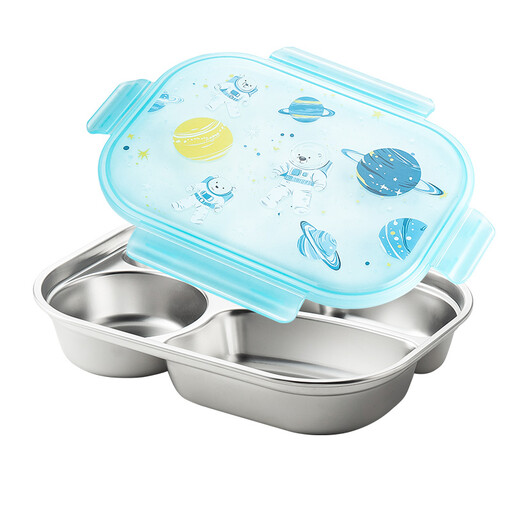
Why This Fits Their Persona: For those seeking a durable, plastic-free alternative for daily lunches, this stainless steel bento box is an excellent choice. It's built to last, reducing the need for disposable packaging or less durable plastic options.
As it's made from 316L stainless steel, it is completely immune to the staining and odour trap. The robust four-buckle lid also provides a secure closure, addressing the "leak-proof lie".
Highly durable, rust-resistant and easy to clean. The compartment design is perfect for keeping different parts of a meal separate without using extra containers.
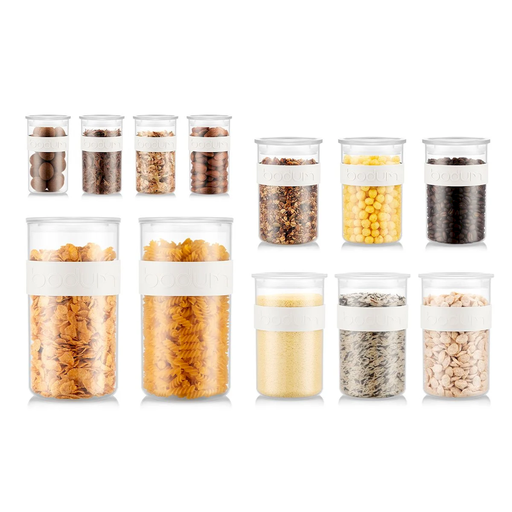
Why This Fits Their Persona: This comprehensive set is for someone who values a tidy, uniform look in their kitchen. The crystal-clear design makes it easy to see contents at a glance, perfect for organising dry goods like pasta, flour and cereals in a pantry or on open shelving.
Crafted from high-quality, shatterproof BPA-free plastic, these kitchen storage jars are designed not to discolour or impair flavour, neatly avoiding the staining and odour trap of cheaper plastics.
A complete 12-piece set with multiple sizes for instant pantry organisation. The lightweight, clear material offers the look of glass without the weight or risk of shattering.
We have compiled a complete, real-time list of products that fully satisfy these strict selection criteria and UK safety regulations.
It depends entirely on your primary use. Glass food containers are excellent for home use as they are non-porous (no stains or smells) and can often be used in the oven. However, they are heavier and can break. High-quality, BPA-free plastic is lightweight, durable and often more affordable, making it a superior choice for on-the-go meals, picnics and for households with children.
To minimise staining from foods like tomato sauces or curries, rinse the container with cold water immediately after use before washing with hot, soapy water. For existing stains, creating a paste from bicarbonate of soda and water and leaving it in the container overnight can help lift the discolouration. Investing in higher-grade plastic containers will also significantly reduce the likelihood of staining.
BPA (Bisphenol A) is an industrial chemical that has been used in the production of certain plastics. Concerns have been raised about its potential to leach from containers into food. A 'BPA-free' label indicates that the product is made without this specific chemical, which is now a common safety standard for food-contact items in the UK and provides peace of mind for health-conscious consumers.