
24/7 Customer Support

Free returns

Same-day & Next-day Delivery

Quality Guaranteed

Unlock Your Welcome Offers: FREE Delivery | Up to 80% OFF | Free 30-day JoyPlus trial
Download the APP
Finding reliable food storage containers can feel like a thankless task. You invest in a new set, hoping for organised meal preps and fresh leftovers, only to be let down. A supposedly leak-proof pot spills soup all over your bag, a once-clear box is now permanently stained orange from last week's bolognese and another has warped into an unusable shape after a single trip to the microwave.
As a Joybuy Product Recommendation Officer, my role is to help you navigate these common issues. Before you spend another pound on containers destined for the bin, let's look at the frequent pitfalls and what to look for instead.
To avoid these problems, it pays to look past the marketing slogans and focus on a few core parameters. Understanding these will help you select durable, functional and safe food storage containers for your household.
The material is the single most important factor determining a container's performance, lifespan and suitability for your needs.
glass food storage with lids at home.reusable lunch box or a stainless steel bento box that gets carried around daily. Look for food-grade stainless steel, such as 304 or the even more corrosion-resistant 316L grade. The key limitation is that you cannot use it in the microwave.A container is only as good as its lid. For truly airtight food containers that are also leak proof food pots, two features are non-negotiable:
Good design makes storage a pleasure, not a puzzle. Consider stackable kitchen storage features, where containers of the same range securely stack on top of each other to maximise fridge or cupboard space. For those who do weekly meal prep, meal prep containers with built-in dividers are invaluable for keeping ingredients separate and controlling portions. Finally, always check if the containers are certified as freezer safe containers if you plan to store meals long-term.
Based on these practical criteria, here are a few options from our catalogue matched to different user needs.

Why This Fits Their Persona: This set is purpose-built for preparing a week's worth of lunches. The multi-compartment design is perfect for keeping chicken, rice and vegetables separate, maintaining texture and flavour until you're ready to eat.
The durable, BPA-free plastic is designed for repeated microwave use without warping. The compartments prevent the "soggy lunch" issue where flavours bleed together.
The clever Nest It system allows the containers to nest compactly when empty, saving valuable cupboard space. They also stack securely when full.
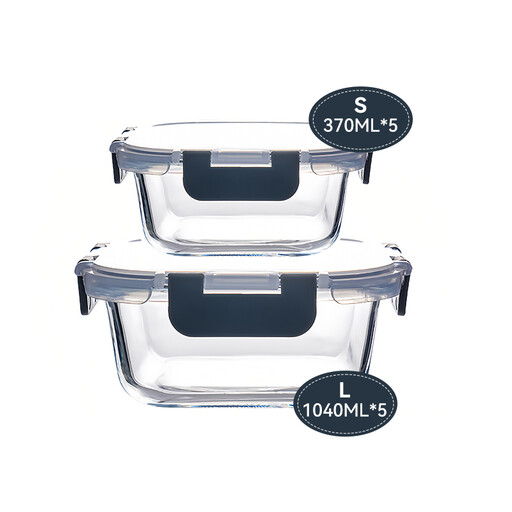
Why This Fits Their Persona: For those prioritising hygiene and avoiding plastic, this high borosilicate glass set is ideal. It's perfect for storing family-sized leftovers, reheating meals without chemical concerns and keeping food fresh and pure-tasting.
Glass is completely non-porous, making it impervious to the staining and odour retention that plagues plastic containers. The secure snap-lock lids provide a reliable, leak-proof seal.
The high borosilicate material is thermal shock-resistant, allowing it to go from fridge to microwave safely. The 10-piece set offers great versatility with two different sizes.

Why This Fits Their Persona: For anyone carrying their lunch in a rucksack or tote bag, durability is key. These stainless steel containers are lightweight yet robust, eliminating any worry about cracks or breaks during a busy commute.
Unlike plastic that can warp or glass that can shatter, stainless steel offers long-term structural integrity. It also won't stain or hold onto the smell of yesterday's lunch.
This set uses premium 316L stainless steel, which offers superior resistance to corrosion from salts and acids compared to the more common 304 grade, ensuring maximum hygiene and longevity.
We have compiled a complete, real-time list of products that fully satisfy these strict selection criteria and UK safety regulations.
It depends on your priorities. For hygiene, reheating and avoiding stains or odours, glass is superior. It's non-porous and doesn't leach chemicals. However, for portability, durability against drops and lightweight convenience, high-quality BPA-free plastic or stainless steel are often more practical choices, especially for lunch on the go.
For plastic containers, the best prevention is to wash them immediately after use. For stubborn smells, try soaking the container overnight in a solution of water and white vinegar or bicarbonate of soda. Storing them without the lids on also allows them to air out. With glass or stainless steel, a simple wash with soap and water is usually sufficient as these materials are non-porous.
Not all of them. Always check the manufacturer's instructions. Most glass, stainless steel and quality plastic containers are designed to be freezer safe containers. However, when freezing liquids in any container, remember to leave some space at the top (about an inch) to allow for expansion as the liquid freezes. This prevents the container from cracking or the lid from popping off.