
24/7 Customer Support

Free returns

Same-day & Next-day Delivery

Quality Guaranteed

Unlock Your Welcome Offers: FREE Delivery | Up to 80% OFF | Free 30-day JoyPlus trial
Download the APP
Navigating the world of food storage containers can feel surprisingly complex. You buy a set that promises to simplify your life, only to find your bag soaked in soup or your fridge filled with containers that have absorbed the colour and scent of last week's curry. It’s a common frustration for anyone trying to organise their kitchen, plan meals or pack a reliable lunch.
As a Joybuy Product Recommendation Officer, my role is to help you see past the marketing jargon. Many shoppers fall into a few common traps that lead to wasted money and cluttered cupboards. Before you buy your next set, let's look at the pitfalls to avoid.
To make a smart purchase, focus on a few core features that determine a container's true value and longevity. Understanding these parameters will help you find a solution that fits your lifestyle, whether for weekly meal prep or simply storing leftovers.
The material of your container is the most significant factor influencing its performance, durability and use cases.
A container is only as good as its lid. For true effectiveness, you need a design that provides both an airtight and leak-proof seal.
Practicality is paramount. Ensure the containers you choose are suited for your daily routine. Being freezer safe containers is essential for anyone who batch cooks or wants to preserve leftovers for longer. If you plan on reheating meals, check that the container base is microwave-safe (most lids should be removed before heating). Finally, consider how they will be stored. Sets designed to nest when empty and stack securely when full will bring order to your fridge and cupboards.
Instead of a one-size-fits-all approach, the right container depends on your specific needs. Here are a few options matched to different UK lifestyles.
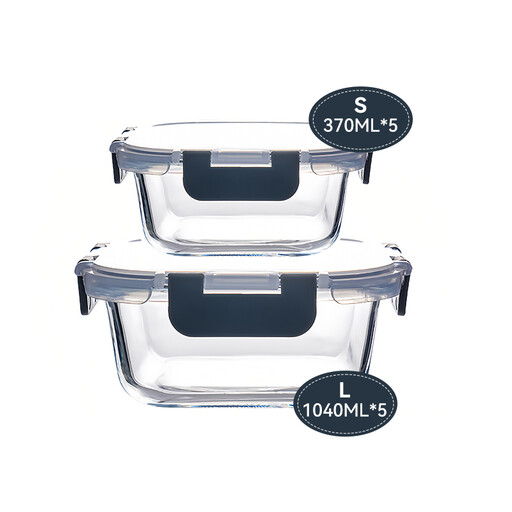
Why This Fits Their Persona: This set is ideal for those who prioritise quality and versatility. The glass construction is perfect for storing a wide variety of foods, from leftovers to pantry staples, without worrying about discolouration or lingering smells.
The high borosilicate glass body completely avoids the staining and odour trap, ensuring every meal tastes fresh. The snap-lock lids provide a secure, airtight seal for reliable storage.
Thermal shock-resistant glass is safe for moving between temperatures (e.g., freezer to microwave). The 10-piece set offers two practical sizes for different needs.

Why This Fits Their Persona: This set is purpose-built for meal prepping. The multi-compartment design helps with portion control and keeps different food elements separate, so your chicken doesn't make your salad soggy by lunchtime.
It directly solves the cupboard chaos problem. The 'Nest It' system allows the containers to nest compactly when empty and stack securely when full, saving valuable kitchen space.
The multi-compartment layout is ideal for balanced meals. The set is freezer, microwave and dishwasher safe, covering the entire meal prep cycle from storage to reheating and cleaning.
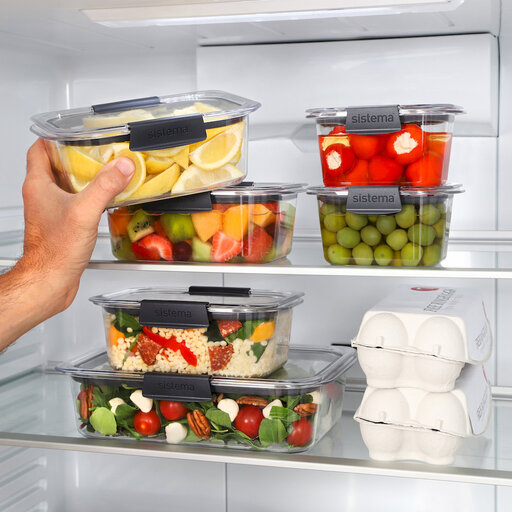
Why This Fits Their Persona: For anyone who regularly transports their lunch, especially soups or stews, a reliable seal is everything. This container is specifically designed for secure, spill-free transport.
It tackles the 'leak-proof illusion' head-on. The product description specifies a 100% leak-proof guarantee, providing confidence for carrying liquids. The high-quality Tritan plastic also resists stains and odours.
Features integrated microwave vents under the clips, allowing for splatter-free reheating with the lid on. The crystal-clear, durable Tritan plastic offers glass-like clarity without the weight or risk of breakage.
We have compiled a complete, real-time list of products that fully satisfy these strict selection criteria and UK safety regulations.
Are glass food storage containers safe to move from the freezer to the microwave? This depends entirely on the type of glass. Containers made from borosilicate glass are specifically engineered to handle sudden, significant temperature changes (thermal shock) without cracking. Standard soda-lime glass, which is less common for this type of product, can shatter. Always check the manufacturer's specifications. As a general precaution, allowing the container to sit at room temperature for a few minutes before microwaving is a good practice.
How can I prevent my plastic containers from staining? Staining is most common with oil-based sauces, particularly those containing tomatoes or turmeric. The quickest way to minimise this is to rinse the container with cold water immediately after use, before washing with hot, soapy water. For existing stains, creating a paste from bicarbonate of soda and water, leaving it in the container for a few hours and then washing as normal can help lift the colour. Alternatively, choosing containers made from higher-grade, stain-resistant plastic like Tritan or switching to glass, will prevent the problem.
What is the real difference between 'airtight' and 'leak-proof'? While often used interchangeably, these terms describe two different functions. Airtight refers to the seal's ability to block air transfer, which is key for keeping dry goods like crackers crisp and preventing fresh food from spoiling quickly. Leak-proof refers to the seal's ability to contain liquids without any spillage. A truly leak-proof container requires a very secure seal, typically involving a flexible silicone gasket and strong locking clips on all sides. For carrying soup in your bag, you need a container that is explicitly described as leak-proof, not just airtight.