
24/7 Customer Support

Free returns

Same-day & Next-day Delivery

Quality Guaranteed

Unlock Your Welcome Offers: FREE Delivery | Up to 80% OFF | Free 30-day JoyPlus trial
Download the APP
Choosing food storage containers should be simple, but product listings often make similar-looking options seem interchangeable. A container that works for dry pasta may be unsuitable for soup, while a lid that feels secure in the cupboard may leak inside a packed lunch bag.
For UK households, the right choice depends on where the container will be used: the fridge, freezer, dishwasher, kitchen cupboard or worktop. It also depends on the material, capacity and closure design.
An airtight seal helps limit air and moisture exchange, which is useful for dry ingredients such as tea, coffee, sugar and rice. However, it does not automatically mean a container is suitable for transporting liquids.
For soups, sauces and marinades, look for a lid with a clearly described leak-resistant or leak-proof closure, such as clasps, locking tabs or a fitted silicone gasket. Before carrying any container in a bag, check that the lid is fully engaged and keep it upright where possible.
Glass food storage containers may be suitable for oven use, but the lid usually is not. A container that is safe in the oven may still require the lid to be removed before reheating.
Plastic food storage containers also need careful checking. Unless the product information specifically confirms microwave or oven compatibility, use them for storage only. Bamboo and wooden lids should be kept away from direct heat and should generally be cleaned according to the manufacturer’s instructions rather than soaked.
Food storage container sets can offer useful variety, but a set made up of several very small containers may not suit batch cooking or family leftovers. Conversely, large pantry storage containers can waste cupboard space if they do not fit your shelves.
Measure the height, width and depth of your fridge shelves, freezer drawers and cupboards before choosing. Consider the meals and ingredients you store most often rather than selecting a set based only on the number of pieces.
Glass food storage containers are useful when you want to see the contents clearly and avoid odours or staining concerns. Borosilicate glass is specifically described as oven-safe in some product listings, but check whether this applies to the container only and remove the lid before heating. Glass is also heavier and can break if dropped or exposed to sudden temperature changes.
Stainless steel food containers are lightweight compared with many glass alternatives and are suitable for users who want a robust option for packed meals, fridge storage or general household organisation. They are not transparent, so labels are helpful. Check the lid material and closure system if you need reliable transport for liquids.
Plastic food storage containers are generally lightweight and shatterproof. A BPA-free, recyclable plastic option may suit pantry staples, leftovers and everyday fridge use. Confirm dishwasher, microwave and freezer suitability separately, as these features are not automatically included with every plastic container.
For airtight food storage containers, inspect how the seal is formed. A silicone ring or gasket can help create a close fit, while latching lids or clasps can provide additional security. Removable seals should be easy to clean and should be checked regularly for food residue, distortion or damage.
For leak-proof food containers, prioritise a lid designed for liquid storage rather than relying on a push-fit cover intended for dry goods. No closure should be treated as permanently leak-proof if it is damaged, incorrectly fitted or overfilled.
A practical kitchen collection usually includes more than one capacity:
Round containers can be convenient for scooping and cleaning, while rectangular designs often make better use of fridge shelves. Transparent sides are useful for quickly identifying food and monitoring quantities.
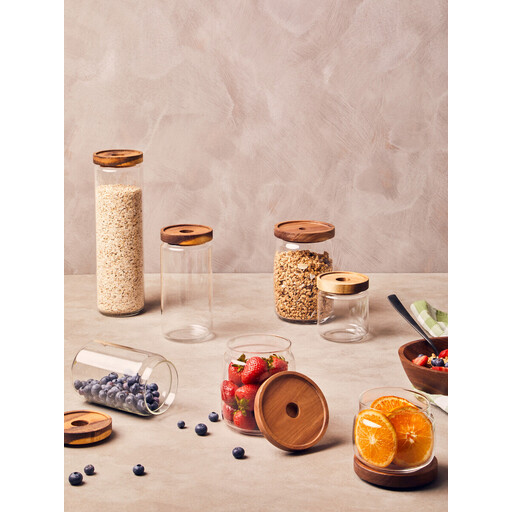
Why This Fits Their Persona: Its 500ml capacity is a manageable starting point for dry staples, tea, coffee, sugar or rice in a smaller UK kitchen.
It is intended for dry goods, making its use clearer than choosing a small container for soups or sauces. The silicone seal should be secured correctly to protect contents from moisture.
Clear glass, round 500ml format, removable wooden lid and airtight silicone seal.
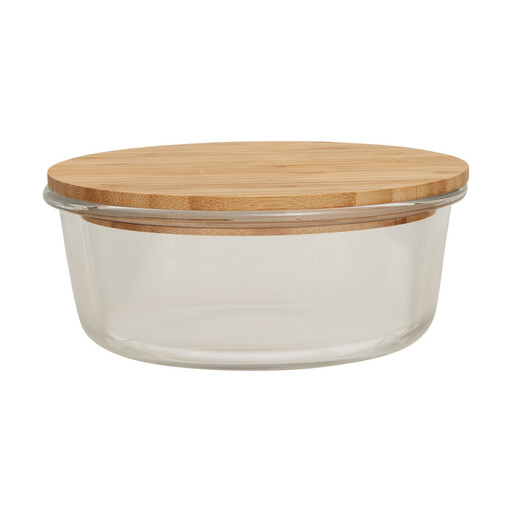
Why This Fits Their Persona: The 950ml format suits leftovers and meal preparation, while the clear borosilicate glass allows contents to be identified without opening the lid.
The listing distinguishes oven use from lid use: the glass container can go in the oven without the bamboo lid. This helps avoid treating the complete product as heat-safe.
950ml capacity, borosilicate glass, airtight silicone seal and dishwasher-compatible glass cleaning.
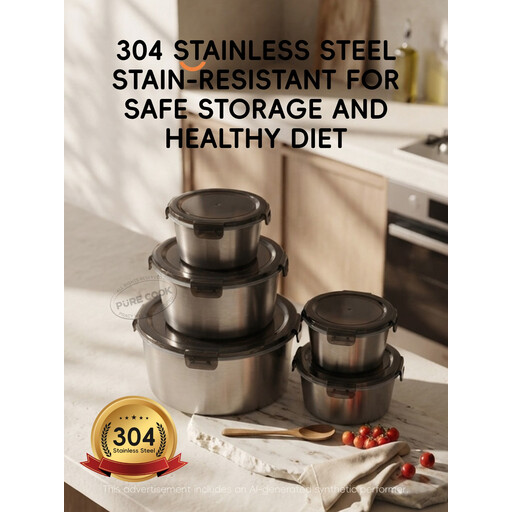
Why This Fits Their Persona: The five-piece range covers capacities from 350ml to 3500ml, making it suitable for households storing individual portions as well as larger batches.
A range of sizes reduces the need to force every meal into one oversized container. The product title also specifies latching lids and fridge, freezer and dishwasher use; check the full listing before heating.
304 stainless steel construction, five capacities and black transparent polypropylene latching lids.
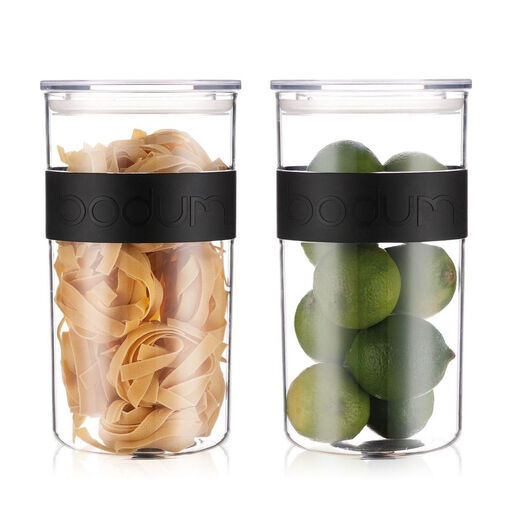
Why This Fits Their Persona: Two matching 2-litre containers suit organised cupboards, batch-cooked meals and households that prefer a consistent storage format.
The clear body makes it easier to monitor contents, while the listed dishwasher-safe design reduces cleaning friction. It is specified for storage rather than oven or microwave heating.
Two 2L containers, BPA-free recyclable plastic, silicone components and dishwasher-safe parts.
Wash new containers before first use. Allow food to cool appropriately before sealing and avoid placing hot food into a container unless the product instructions permit it. For fridge and freezer storage containers, leave some space for expansion, particularly with liquid-based foods.
Dishwasher-safe food containers should still be loaded according to the manufacturer’s guidance. Wooden and bamboo lids may need hand cleaning, while silicone seals should be removed where possible so trapped food does not build up. Replace any container or lid that shows cracks, warping, a persistent odour or a seal that no longer fits securely.
We have compiled a complete, real-time list of products that fully satisfy these strict selection criteria and UK safety regulations.
Some are, but freezer suitability must be confirmed in the product instructions. Avoid sudden temperature changes, leave room for expansion and inspect glass for chips or cracks before use.
Lifespan depends on material, frequency of use and care. Glass and stainless steel bodies can remain usable for a long time if undamaged, while plastic lids and silicone seals may wear sooner. Check for warping, splits, staining and loss of seal rather than relying on a fixed replacement date.
Stainless steel should not be placed in a microwave unless the manufacturer explicitly provides instructions allowing it. Transfer food to a microwave-compatible dish and check the container’s guidance before using an oven, microwave or dishwasher.