
24/7 Customer Support

Free returns

Same-day & Next-day Delivery

Quality Guaranteed

Unlock Your Welcome Offers: FREE Delivery | Up to 80% OFF | Free 30-day JoyPlus trial
Download the APP
Finding the right food storage containers can feel like a never-ending quest. You invest in a set that promises to be the solution to your kitchen chaos, only to find yourself a few months later with warped lids, stained boxes and a cupboard full of mismatched pieces. As the Joybuy Product Recommendation Officer, my role is to help you navigate past the marketing clutter and focus on what truly matters for keeping your food fresh and your kitchen organised.
Before you make another purchase, let's look at the common pitfalls that lead to buyer's remorse.
To avoid these traps, focus on a few core parameters. Understanding these will help you select durable and practical reusable food containers that fit your lifestyle, whether you need them for weekly meal prep or for a tidy pantry.
The material of your container is the single most important factor. Each has distinct advantages.
A container is only as good as its lid. For a truly leakproof bento box or airtight kitchen storage, look for lids with a four-sided locking system and a silicone gasket. This design creates a secure, compressive seal that is far more reliable than a simple press-on lid, preventing both spills and air from getting in, which keeps food fresher for longer.
Consider how the containers will fit into your space. A well-designed pantry organisation set should feature containers that nest inside one another when empty to save cupboard space and stack securely when full to maximise fridge real estate. Modular, straight-sided designs are generally more space-efficient than round or irregularly shaped ones.
Based on these practical criteria, here are a few recommendations matched to different needs and lifestyles.
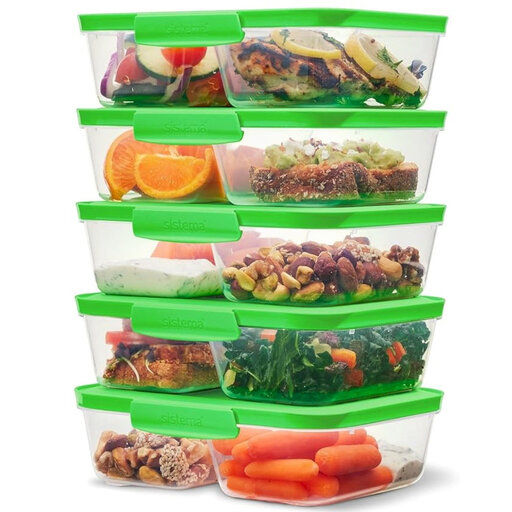
Why This Fits Their Persona: Ideal for busy professionals who prepare their week's lunches in advance. The multi-compartment design helps with portion control and keeps different food elements separate until it's time to eat.
This set directly counters the "wasted space" trap. The containers are designed to nest compactly when empty, saving valuable cupboard space and stack securely when full.
Made from BPA-free plastic, these are microwave, dishwasher and freezer safe for maximum convenience. The multi-compartment layout is a key feature for balanced meal prep.
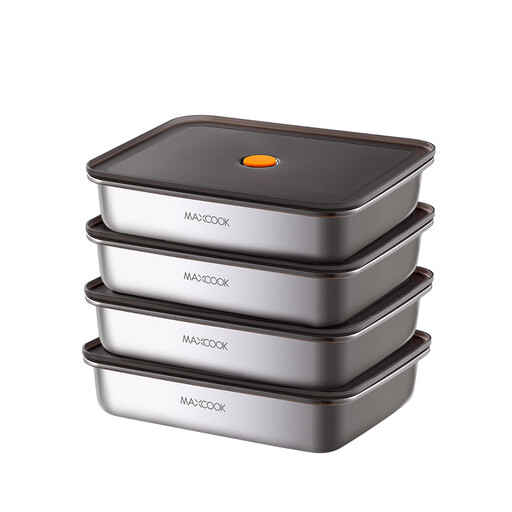
Why This Fits Their Persona: For those who prioritise material safety and long-term durability. This set is a solid investment for storing leftovers, packing lunches or general kitchen use, without concerns about staining or chemical leaching.
The non-porous stainless steel construction completely eliminates the "stain and odour magnet" problem. Its robust build is resistant to warping, ensuring the lids maintain their fit over time.
Crafted from premium 316L stainless steel, a grade known for superior corrosion resistance and hygiene. The set is durable, dishwasher-safe and freezer-safe.
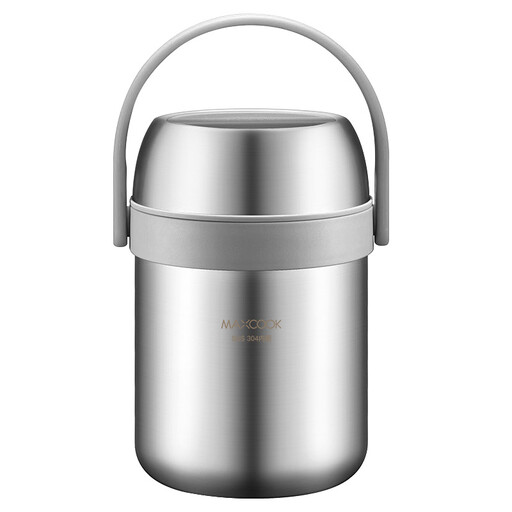
Why This Fits Their Persona: Perfect for anyone who wants to enjoy a hot soup, stew or pasta for lunch without access to a microwave. This is a specialised tool for taking home-cooked hot meals on the go.
This insulated food flask solves a problem standard containers can't. Its vacuum insulation and leakproof lid are specifically designed for transporting hot liquids safely, avoiding messy and lukewarm lunches.
The vacuum insulation technology helps maintain temperature for 4-6 hours. Its wide mouth design makes it easy to fill, eat from directly and clean thoroughly.
We have compiled a complete, real-time list of products that fully satisfy these strict selection criteria and UK safety regulations.
It depends on your primary use. Glass is great for home storage and reheating in the microwave, but it's heavy and can break. Stainless steel is much more durable and lighter, making it ideal for travel, packed lunches and a stainless steel lunch box, but it cannot be used in a microwave. Many households find a combination of both to be the most practical solution.
The best way is to choose high-quality, non-porous materials like glass or stainless steel from the start. If you use plastic containers, wash them as soon as possible after use. For stubborn smells, try soaking the container overnight in a solution of water and bicarbonate of soda or white vinegar.
No, not all containers are dishwasher-safe. Always check the manufacturer's instructions. While many containers are, high heat cycles can cause some plastics to warp and some stainless steel to discolour. Lids with silicone seals often last longer when hand-washed, as the high heat and harsh detergents can degrade the seal over time.