
24/7 Customer Support

Free returns

Same-day & Next-day Delivery

Quality Guaranteed

Unlock Your Welcome Offers: FREE Delivery | Up to 80% OFF | Free 30-day JoyPlus trial
Download the APP
Finding the right food storage containers can feel like a never-ending quest. You buy a set that promises to keep food fresh and your kitchen organised, only to find yourself with warped lids, stained plastic and a cupboard in chaos a few months later. An organised kitchen and less food waste shouldn't be complicated, but common design flaws and marketing hype often lead to disappointing purchases.
As the Joybuy Product Recommendation Officer, my role is to help you see past the clutter. Before you spend another pound on containers that don't deliver, let's look at the frequent pitfalls and what truly matters when making your selection.
Many of us have been caught out by containers that fail to live up to their promises. Here are a few issues that frequently lead to buyer's remorse:
stackable kitchen storage should be stable and secure.To avoid these issues, focus on a few core parameters that define a container's quality and suitability for your needs.
This is non-negotiable for freshness and preventing spills. Look beyond a simple press-on lid. A superior system typically involves two components:
airtight food containers. It is more durable and effective than a simple plastic-on-plastic closure.The material dictates a container's use, durability and safety. The two main choices are plastic and stainless steel.
meal prep containers and packing lunches for children, plastic is lightweight and convenient. The most important factor here is ensuring they are certified BPA-free containers. This means they are made without Bisphenol A, a chemical that has raised health concerns. Also, check if they are marked as safe for the microwave (usually without the lid), freezer and dishwasher (often top rack only).insulated food jar or thermos for hot food uses vacuum insulation—a gap between two walls of steel from which the air has been removed. This dramatically slows down heat transfer, keeping hot food hot and cold items chilled for hours. It's an ideal choice for packed lunches, soups and stews. Steel is also highly durable and resistant to stains and odours.To help you find a solution that fits your lifestyle, here are a few recommendations matched to common UK household needs.

Why This Fits Their Persona: This set is ideal for anyone who batch cooks or portions out meals for the week. The 1L size is practical for lunches and their uniform shape makes them perfect for organising a fridge or freezer.
It directly counters the "Airtight Illusion" with its distinctive Klip It easy-locking clips and a built-in flexible seal, ensuring a secure closure that keeps food fresh.
Versatility is key: these BPA-free containers are safe for the fridge, freezer, microwave (without lid) and top-rack dishwasher use. They are also designed to stack securely.
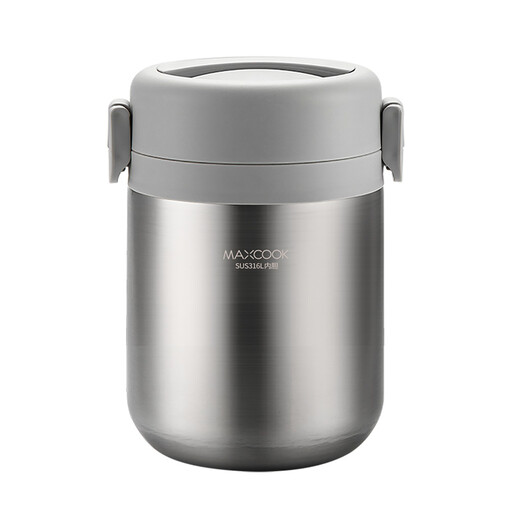
Why This Fits Their Persona: For those who value a hot, home-cooked meal at their desk without relying on a communal microwave. This is a durable, long-term investment for better work lunches.
It solves the "Material Mismatch" pitfall by using 316 stainless steel and vacuum insulation, a design specifically for maintaining temperature. The leak-proof lid ensures safe transport.
Its effective temperature retention keeps food hot for 4-6 hours. The wide mouth makes it easy to fill, eat from and clean, while the premium steel resists odours and stains.
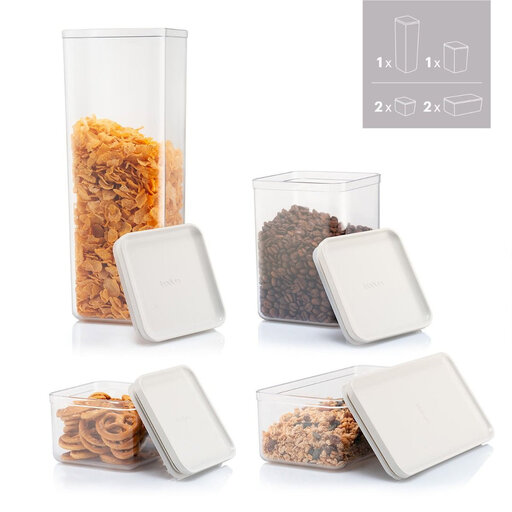
Why This Fits Their Persona: This set is for anyone aiming to create a tidy, uniform look in their kitchen cupboards. It's perfect for decanting dry goods like pasta, rice, flour and cereals, keeping them fresh and easy to find.
These stylish pantry storage jars are designed as a cohesive system, avoiding the "Unstable Stack" problem. The airtight lids also ensure dry goods don't go stale, beating the "Airtight Illusion".
The set includes six jars in various practical sizes, offering a complete solution for pantry organisation. They are made from BPA-free plastic and are dishwasher safe for easy cleaning.
We have compiled a complete, real-time list of products that fully satisfy these strict selection criteria and UK safety regulations.
Many are, but you must check for two things. First, ensure the container is explicitly labelled as BPA-free and "microwave safe". Second, always remove the lid or at least open any vents before heating. This allows steam to escape, preventing a dangerous build-up of pressure and stopping the lid from warping.
For plastic containers, the best method is to wash them as soon as possible after use, especially if they held oily or strongly coloured foods like curry or tomato-based sauces. For stubborn stains, a paste of bicarbonate of soda and water can help. Alternatively, choosing a stainless steel container, such as an insulated food jar, is a great way to avoid this issue altogether, as the material is naturally non-porous and highly resistant to stains and odours.
Both are high-quality, food-grade steels. However, 316 stainless steel includes molybdenum as an alloying element. This gives it superior resistance to corrosion from salts and acids, which are common in many foods like soups and sauces. For a thermos for hot food that will be used frequently with a variety of meals, 316 steel offers enhanced durability and longevity.