
24/7 Customer Support

Free returns

Same-day & Next-day Delivery

Quality Guaranteed

Unlock Your Welcome Offers: FREE Delivery | Up to 80% OFF | Free 30-day JoyPlus trial
Download the APP
As a Joybuy Product Recommendation Officer, my role is to help you navigate the crowded market of household goods. When it comes to food storage containers, the promises on the packaging can often lead to disappointment in the kitchen. A well-chosen set can streamline your meal prep and reduce food waste, but the wrong one can be a source of constant frustration.
Before you add another set of containers to your basket, let's look at the common pitfalls that lead to buyer's remorse. Understanding these can save you money and ensure you get a product that truly works for your lifestyle.
To make a smart purchase, it's crucial to look beyond the marketing and focus on the core specifications. These three factors will determine the performance, safety and longevity of your containers.
The material is the most significant factor, influencing everything from durability to how you can use the container.
lunch box set or for those who need many containers without a large investment.freezer safe containers. The key limitation is that they cannot be used in the microwave. Look for food-grade steel like 304 or 316 stainless steel for assured quality.A container that isn't properly sealed is failing at its main job. The most reliable airtight food containers feature two key components: a silicone gasket fitted inside the lid and a robust locking mechanism. The gasket creates a barrier against air and moisture, while four-sided locking clips apply even pressure to keep the lid securely in place, preventing leaks and preserving freshness.
Consider how the containers will fit into your daily routine. For tidy cupboards and fridges, stackable storage containers are essential for effective pantry organisation. Also, check the product's specifications for use in the freezer, dishwasher and microwave. A "microwave-safe" label should always be followed by the instruction to remove the lid, allowing steam to vent safely.
Based on these practical criteria, we've matched some standout options to different user needs.
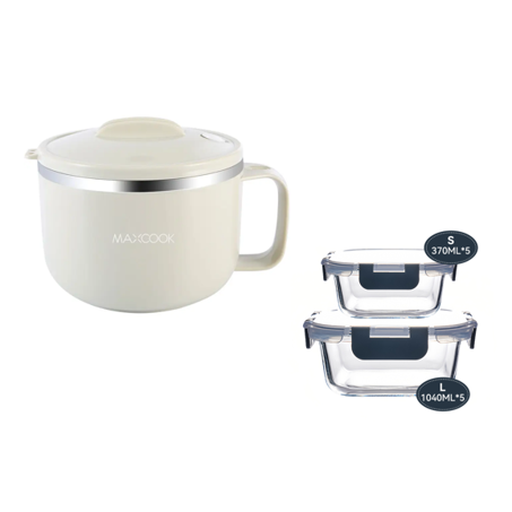
Why This Fits Their Persona: This set is ideal for those who prepare a week's worth of lunches and dinners. The borosilicate glass allows for safe reheating directly from the fridge, and the two different sizes are perfect for mains and sides. The included ramen bowl is a practical bonus for office lunches.
The glass material is non-porous, so it will not stain or retain odours from foods. The robust snap-lock lids are designed for a secure, airtight seal that resists warping.
Made from thermal shock-resistant borosilicate glass. The 10-piece set offers great versatility for comprehensive meal prep containers.
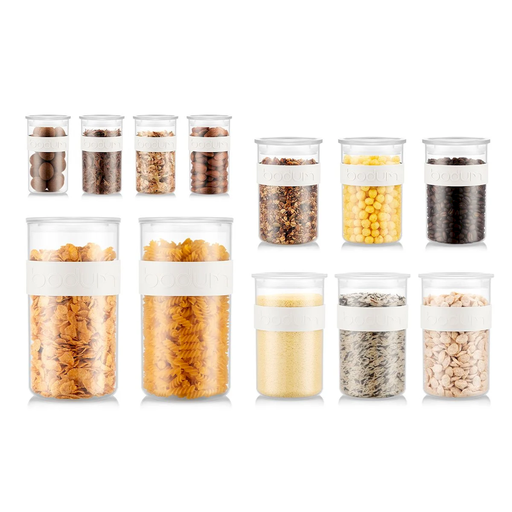
Why This Fits Their Persona: This large, uniform set is designed specifically for pantry organisation. With four different sizes, it's perfect for decanting everything from pasta and flour to nuts and coffee beans, creating a tidy, cohesive look while keeping dry goods fresh.
These are designed for dry storage, avoiding the issues of staining and odour from wet foods. The shatterproof plastic construction is durable for long-term pantry use.
Large 12-piece set with multiple sizes for comprehensive organisation. The clear, BPA-free plastic allows for easy identification of contents.
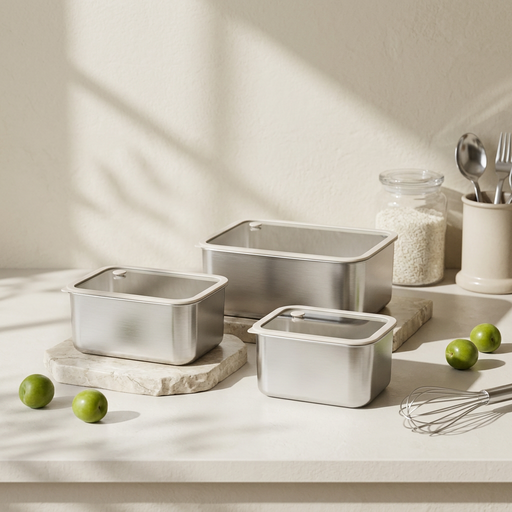
Why This Fits Their Persona: For those who prioritise longevity and material safety, this stainless steel set is an excellent investment. It's ideal for storing leftovers, marinating food, or taking on picnics, offering a lightweight yet indestructible alternative to glass and plastic.
The 304 stainless steel body is completely non-porous and resistant to corrosion, stains and odours. The material will not warp or become brittle, ensuring a long lifespan.
Extremely durable and hygienic material. The glass lids allow you to see the contents, a feature not common with other stainless steel food containers.
We have compiled a complete, real-time list of products that fully satisfy these strict selection criteria and UK safety regulations.
The lifespan of a food storage container depends heavily on its material and how it's used. High-quality borosilicate glass and stainless steel containers can last for many years with proper care. Plastic containers may need to be replaced every couple of years, or sooner if they show signs of heavy staining, warping or if the locking clips break.
You should only microwave a plastic container if it is explicitly marked as "microwave-safe". Even then, it is advisable to remove the lid to allow steam to escape and prevent pressure build-up. If a container is not marked or if you have any doubts, it is always safer to transfer the food to a ceramic or glass dish before heating.
Neither is definitively "better"; they simply serve different purposes. Glass is excellent for its transparency and ability to be used for reheating in a microwave or oven. However, it is heavier and can break. Stainless steel is incredibly durable, lightweight and ideal for transport, but it cannot be used in a microwave. The right choice depends on whether your priority is reheating convenience or portability and durability.