
24/7 Customer Support

Free returns

Same-day & Next-day Delivery

Quality Guaranteed

Unlock Your Welcome Offers: FREE Delivery | Up to 80% OFF | Free 30-day JoyPlus trial
Download the APP
Choosing food storage containers with lids seems straightforward until a lid leaks in a packed lunch, a jar is too narrow for a measuring spoon or a plastic tub becomes unusable after repeated heating. The right choice depends on what you store, where it will be kept and how often it will be cleaned.
This guide focuses on practical details rather than marketing language, helping UK households compare glass storage jars, glass storage bottles and plastic food storage tubs for everyday kitchen use.
A lid that feels secure is not automatically airtight. Dry ingredients such as coffee, rice and sugar benefit from a properly fitted seal that helps limit exposure to moisture. For leftovers, the priority may instead be leak resistance during transport.
Check the construction carefully:
A container can look ideal online but prove awkward in a cupboard, fridge or lunch bag. Check capacity as well as external measurements. A tall bottle may work well for dressings but waste shelf space, while a wide tub may be easier to fill and clean.
For kitchen storage containers, consider:
Microwave-safe food containers still require correct use. Steam can build up inside a sealed container, creating pressure. When reheating, follow the product instructions and allow ventilation where required. The Caroline plastic tubs are described as microwave-safe, but their lids should not be sealed fully during heating.
Glass, plastic and wood components may also have different care requirements. Never assume that every part of a container is suitable for a dishwasher, oven or microwave unless the product information confirms it.
Glass is useful for visible, attractive storage and does not retain food odours as readily as some plastics. Glass storage jars are particularly suited to tea, coffee, sugar, rice and other dry goods. However, glass is breakable and heavier to carry.
Food-grade plastic is practical for meal preparation, packed lunches and freezer storage. It is generally lighter and more convenient for transporting food, but buyers should check whether it is microwave-safe, freezer-safe and suitable for repeated use.
For oils, dressings and beverages, a purpose-designed glass storage bottle may be more practical than a wide jar. A narrower neck can support controlled pouring, although it may require more care when cleaning.
Capacity should reflect how the container will be used:
Round containers can be easy to access but may leave unused space when stacked. Rectangular meal prep containers often make better use of fridge shelves, while bottles and jars can add convenient vertical storage.
For dry goods, look for a clearly described airtight seal, such as the silicone-sealed lid on the Maison by Premier jar. For leftovers and transported meals, a matching lid and secure closure are important for reducing spills.
Also check:
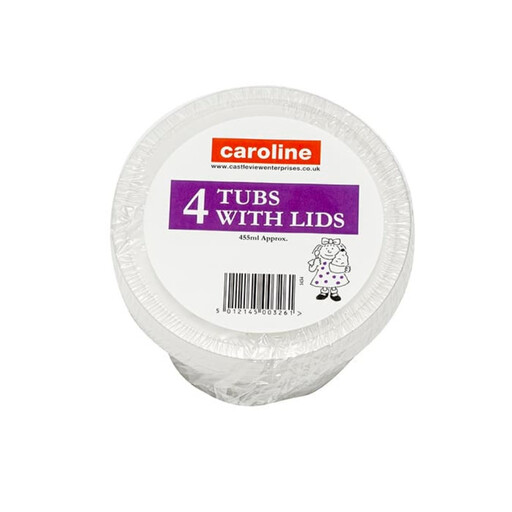
Why This Fits Their Persona: A four-piece set gives new households a flexible starting point for packed lunches, leftovers and weekly meal preparation without buying several container styles separately.
The clear sides make contents visible, while the stated microwave-safe and freezer-safe design avoids relying on containers with unclear temperature guidance.
Four 16oz tubs; 120mm diameter and 70mm depth; suitable for meal prep, leftovers, microwave use and freezer storage.
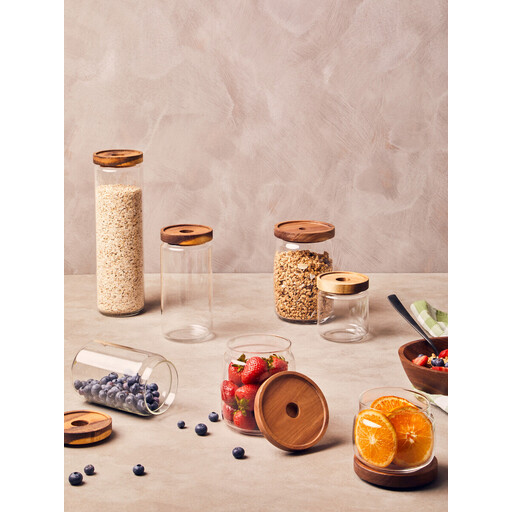
Why This Fits Their Persona: Its clear glass body and wooden lid suit kitchens where dry ingredients are kept on open shelving or a worktop and need to look organised.
The product information specifies an airtight silicone seal, while the care guidance makes clear that the wooden lid should not be soaked.
500ml capacity; round 10cm by 12cm format; clear glass with a removable wooden lid and silicone seal.
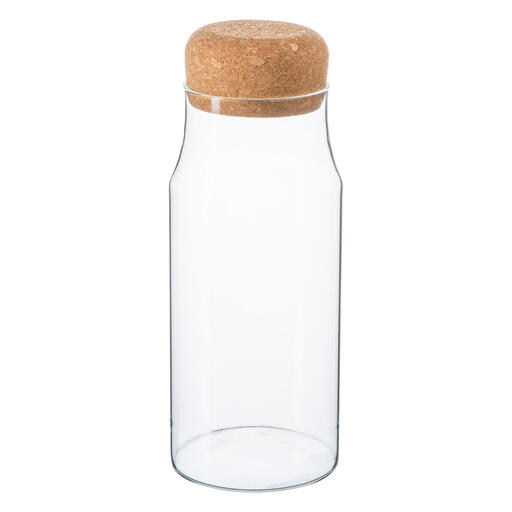
Why This Fits Their Persona: The larger bottle is suited to households that regularly prepare dressings, oils or beverages for kitchen and tabletop use.
The 720ml capacity is stated clearly, helping buyers avoid choosing a smaller bottle for regular batch preparation. The cork lid is described as providing a secure seal, not as a guarantee of leak-proof transport.
720ml capacity; 8.5cm diameter and 21cm height; suitable for oils, dressings or beverages; includes a 2-year warranty.
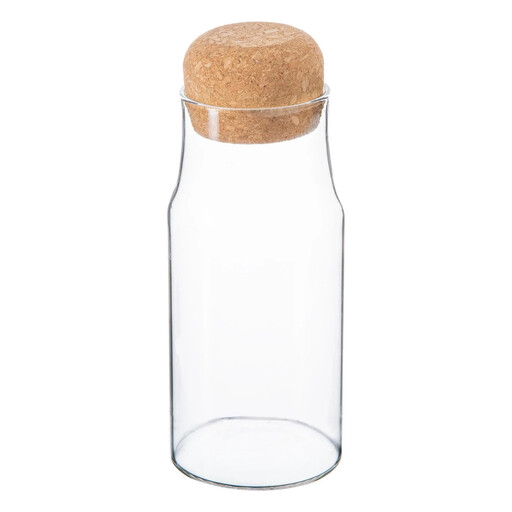
Why This Fits Their Persona: The smaller footprint works for compact UK kitchens, breakfast tables or occasional servings of oil, dressing and beverages.
The listed 375ml capacity and 7cm diameter make its intended compact use clearer than choosing a large bottle that occupies unnecessary shelf space.
375ml capacity; 7cm diameter and 17cm height; natural cork lid; includes a 2-year warranty.
We have compiled a complete, real-time list of products that fully satisfy these strict selection criteria and UK safety regulations.
Use larger dry food storage jars for frequently used staples and label them with the ingredient name and opening date. Keep glass bottles upright in a tray to contain accidental drips, particularly when storing oils or dressings.
For meal prep, portion food only after it has cooled appropriately, then follow the container’s freezer and microwave guidance. Transparent plastic tubs make it easier to identify food before it is forgotten at the back of the fridge. Rotate older meals forward to help reduce waste.
Yes, glass storage jars can work well for dry goods such as rice, tea, coffee and sugar. They are heavier and breakable, so they may be less suitable for packed lunches or transport. Check the lid material and care instructions, especially where wood is included.
For leftovers, choose containers with a secure matching lid and a capacity suited to individual portions. Freezer-safe food containers are useful for batch cooking, while microwave-safe food containers can simplify reheating. Always vent the lid as instructed during microwave use.
Lifespan depends on material, cleaning method and frequency of use. Replace plastic tubs if they become cracked, warped or difficult to clean. Glass should be discarded if chipped or broken, and seals or lids should be replaced when they no longer fit securely.