
24/7 Customer Support

Free returns

Same-day & Next-day Delivery

Quality Guaranteed

Unlock Your Welcome Offers: FREE Delivery | Up to 80% OFF | Free 30-day JoyPlus trial
Download the APP
Preparing onions, herbs, vegetables, nuts or meat can be one of the most time-consuming parts of cooking. A suitable food chopper can reduce preparation time and help create more consistent pieces, but not every model suits every kitchen. The right choice depends on batch size, ingredient types, storage space, cleaning preferences and how much manual effort you want to use.
A higher wattage figure can indicate greater motor input, but it does not automatically guarantee better results. Blade arrangement, bowl capacity and operating limits also affect performance. A compact 300W electric food chopper may be practical for garlic and herbs, while a larger 750W multifunctional food processor may be more suitable for slicing, shredding and larger batches.
Also check whether the appliance is designed for short pulses rather than continuous operation. Some models require cooling intervals, which matters when preparing several batches for a family meal.
A bowl advertised as 2 litres may have a lower maximum fill line. For example, the Tefal Choppeo has a 2-litre borosilicate glass bowl with a stated 1-litre useful capacity. Exceeding the working limit can lead to uneven chopping, spillage and extra strain on the motor.
A 350ml mini food chopper is convenient for small quantities but will not replace a full-size food processor chopper when preparing vegetables for several people. Match the useful capacity to your normal portions rather than choosing based only on the largest number in the product title.
Food residue can collect around blade hubs, lids and seals. Detachable, dishwasher-safe food chopper parts can simplify cleaning, but the motor base should never be immersed in water. Sharp blades also require careful handling, whether they are removed for washing or rinsed by hand.
Before buying, check which parts are dishwasher-safe and whether the bowl material is suitable for your routine. Glass can resist odours and scratches, while plastic is generally lighter and easier to handle.
A glass bowl chopper can be useful for ingredients with strong aromas because glass does not retain flavours in the same way some plastics can. Borosilicate glass is designed to handle temperature changes, but hot ingredients should still be allowed to cool before processing unless the instructions specifically permit otherwise.
For a single person or couple, 350ml may be sufficient for sauces, dips, garlic and herbs. Families and meal-prep users may prefer around 1 to 2 litres of usable capacity. A food chopper with bowl also keeps ingredients contained, reducing preparation mess compared with using a loose handheld tool.
Look for stainless steel blades and consider how they are positioned. Double-stacked or multi-level blades can reach more of the bowl contents, while a simple rotating blade may work well for smaller batches.
A vegetable chopper should state which vegetables it can process and whether food needs to be cut into smaller pieces first. If you need a meat chopper, confirm that the instructions permit boneless meat and check the recommended operating cycle. Do not assume a model suitable for vegetables can process bones, ice or frozen food.
Two speed settings can provide more control: a lower speed for soft ingredients and a higher speed for firmer foods. A pulse-style top press also makes it easier to stop before ingredients become purée.
A non-slip base and a secure lid are valuable practical features. For UK kitchens, check the supplied plug, voltage information and user instructions before use. Follow the manufacturer’s limits, keep hands and utensils away from blades, and unplug the appliance before assembly, disassembly or cleaning.
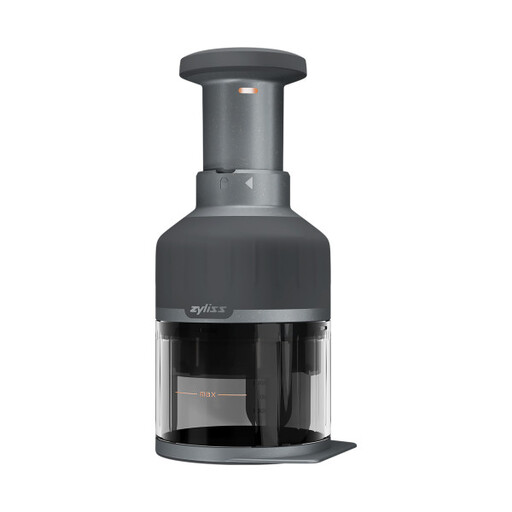
Why This Fits Their Persona: Its manual push-down mechanism suits occasional cooks, renters and anyone who wants a compact kitchen chopper without using a power socket.
There is no motor wattage to overvalue, and the clear container lets you monitor the chopping process and stop at the desired texture.
Manual operation; rotating stainless steel blades; suitable for vegetables, herbs and nuts.
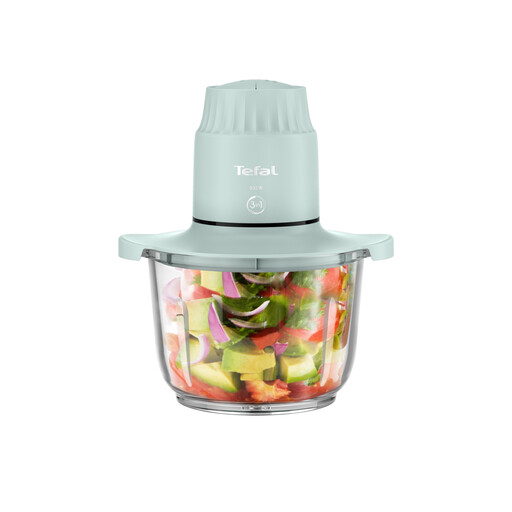
Why This Fits Their Persona: This option suits households wanting a durable glass bowl, two speeds and storage capability for prepared ingredients.
The stated 1-litre useful capacity clarifies the difference between bowl size and working capacity. Removable parts are listed as dishwasher-safe.
500W motor; four stainless steel blades; two speed settings; borosilicate glass bowl and conservation lid.
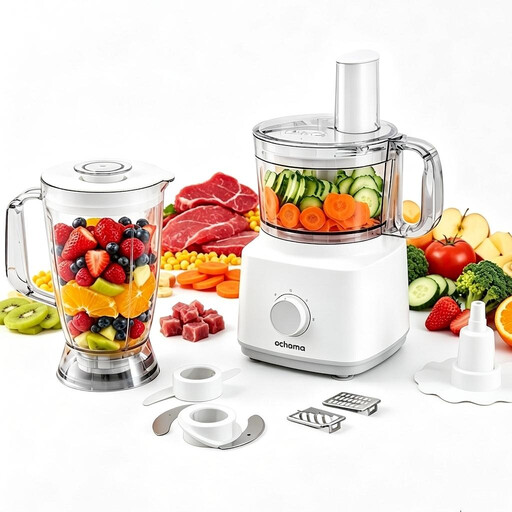
Why This Fits Their Persona: Meal-prep households and family cooks may value its larger bowl and several processing functions in one appliance.
Its 1.8-litre capacity is stated separately from the 750W motor, while the listed functions make the purchase easier to assess than wattage alone.
Chopping, slicing, grating and puréeing; detachable parts; 1.8-litre bowl; 750W motor.

Why This Fits Their Persona: Its small footprint works for flats, compact worktops and cooks who prepare sauces, herbs, garlic or breadcrumbs in modest quantities.
The 350ml bowl sets realistic expectations for small batches, and the stated 30-second continuous-use limit helps prevent overworking the motor.
Two speeds plus pulse; dishwasher-safe bowl and blade; non-slip feet; compact dimensions.
We have compiled a complete, real-time list of products that fully satisfy these strict selection criteria and UK safety regulations.
Usually, a compact appliance uses less time and may draw less power per short cycle than a larger food processor, but running cost depends on the motor rating, usage time and electricity tariff. The difference for occasional chopping is likely to be modest. Convenience, cleaning time and storage may matter more than electricity consumption.
Some models are described as suitable for meat, but always follow the individual instructions. Cut boneless meat into smaller pieces, avoid overfilling and use short pulses. A model specifically listed as a meat chopper may include a bowl or blade arrangement intended for this task. Never process bones unless the manufacturer explicitly permits it.
Lifespan depends on frequency of use, ingredient hardness, cleaning and whether operating limits are followed. Avoid continuous running beyond the stated cycle, allow cooling intervals and store blades safely. Check the warranty period, spare-part availability and whether replacement bowls or blades can be sourced before purchase.