Birthday-party pastry bakers
If you are making tart, pie or quiche cases for guests, the decision is how to prepare enough dough while retaining control over its texture. Good Food’s shortcrust method calls for pulsing to a fine-breadcrumb texture.


Choose a food processor that lets you control short bursts of mixing, with a suitable blade or supplied dough tool, and size it against the pastry quantity you plan to make rather than motor wattage alone. A compact model may suit a modest party bake if the recipe fits its stated capacity; several pastry cases may call for separate batches or a model with a higher stated limit. Keep the butter cold, add liquid gradually and stop when the dough comes together.
If you are making tart, pie or quiche cases for guests, the decision is how to prepare enough dough while retaining control over its texture. Good Food’s shortcrust method calls for pulsing to a fine-breadcrumb texture.
If cupboard space is limited, consider whether the processor’s attachments and other preparation functions will be useful after the party, as well as whether your pastry recipe fits its capacity.
If you expect to make larger quantities regularly, a model-specific processing limit is more useful for planning than bowl volume alone. Magimix publishes shortcrust limits for its 3200XL, 4200XL and 5200XL main bowls.
Work out your recipe’s total pastry weight, then check the exact model’s controls, tools and processing limit before deciding how much space to give the appliance.
| Concern | What to check | Who this matters to |
|---|---|---|
| Pastry texture | Look for pulse or momentary control and check which supplied blade or dough tool the model instructs you to use. | If I am making shortcrust, I want to stop at fine breadcrumbs and again as the dough binds, rather than let it run continuously. Around 36% of consumers would put that control first. |
| Batch capacity | Compare your total ingredient weight with a model-specific shortcrust limit where available; do not treat a general dough limit as the same measure. | With several pastry cases to prepare, I would rather know whether the planned quantity fits than discover midway that I need another batch. For around 29% of consumers, capacity would be the primary concern. |
| Space and other uses | Check the bowl size, storage arrangement and which attachments you would use after the party. | If cupboard space is tight, I need the processor to earn its place through preparation jobs beyond pastry. That would be the leading need for around 21% of consumers. |
| Cleaning and handling | Check the washing instructions for each part and how to remove and handle the blade safely. | When preparing food for guests, I need to clean shared equipment carefully and manage ingredients around any known allergies. Around 14% of consumers would make clean-up and guest-food handling their first priority. |
Wattage does not tell you whether you can stop mixing at the texture stages shortcrust requires. Good Food’s method calls for pulsing the mixture until it resembles fine breadcrumbs.
Check for suitable short-burst control, the correct supplied tool and a capacity that fits your recipe before considering wattage.
Magimix publishes shortcrust-pastry maximums for named models, while Bosch lists maximum dough content for its cited processors. A dry working-bowl capacity is another distinct measure.
Read what each figure measures and which model it applies to. If there is no shortcrust limit, check the model instructions and be prepared to divide the recipe into batches.
The Ninja BN800UK offers automatic programmes, but a shortcrust recipe calls for stopping when the mixture reaches particular textures; a programme name alone cannot tell you when that happens.
Check the model’s manual controls and follow the recipe’s visual stages, stopping once the dough binds.
Food-processor blades need careful handling during assembly and cleaning. If a guest has a known food allergy, shared bowls, blades and worktops also need attention to avoid cross-contact.
Ask about dietary requirements before preparing food, follow the model’s blade and lid instructions, and clean equipment carefully between ingredients where needed.
Worth examining if a published shortcrust-pastry limit would help you plan several batches or pastry cases.
Its cited MultiTalent models give you different bowl sizes and stated dough limits to assess against your recipe.
The MultiPro Compact FDP31.170GY is a reference point if you want pastry preparation alongside other kitchen tasks in a compact format.
A processor-and-blender configuration may appeal if drinks and other party preparation matter alongside pastry.
These choices cover a processor-and-blender model for other party preparation and a compact processor for kitchens where storage matters. For either one, check how your planned pastry quantity fits the exact model’s instructions.
 No image available
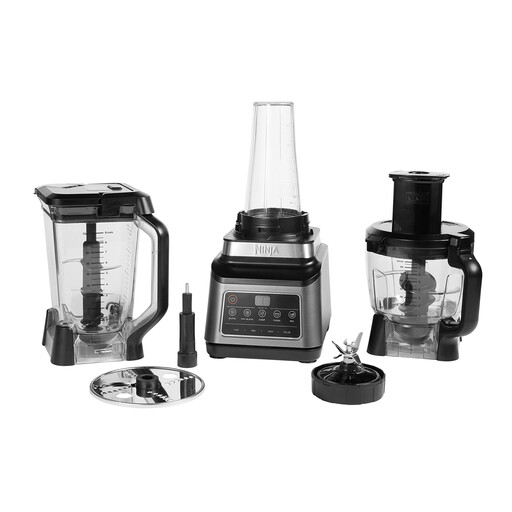
Consider this model if you also want to prepare drinks or other food for the party, while using manual control to judge shortcrust by its texture. The stated configuration includes a 1.8L processor bowl, 2.1L jug and 700ml cup; the product title also lists five automatic programmes. Check the model instructions for a suitable pastry quantity rather than relying on bowl volume or an automatic programme.
 No image available
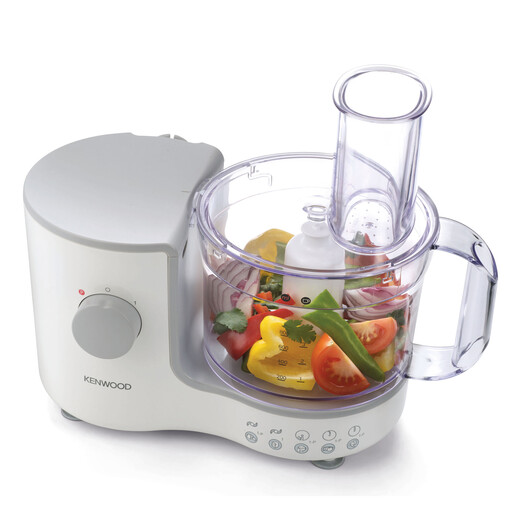
Consider this compact model if storage space and preparation tasks beyond pastry are important. Its product title specifies a 1.4L bowl, blender and shredder disc. Check the FP120A instructions for the appropriate blade, short-burst control and pastry batch size; do not apply capacity figures published for Kenwood’s separate FDP31.170GY model to this one.
A control that allows brief pulses helps you stop at the recipe’s texture stages. Good Food instructs cooks to pulse until the mixture resembles fine breadcrumbs; add liquid gradually and stop once the dough comes together.
Use bowl size to assess the appliance’s fit, but use the exact model’s stated processing limit to plan a batch. Magimix publishes shortcrust-specific maximums for named models, whereas Bosch’s cited figures describe dough generally; compare your recipe’s total ingredient weight with a limit that actually applies to it.
Yes, if your recipe quantity fits the model’s instructions or you are prepared to make separate batches. For example, Kenwood’s FDP31.170GY has a dough tool and pulse setting, but its 1.2kg dry working-bowl capacity should not be read as a shortcrust maximum.
Confirm their requirements before preparing food and take care to avoid cross-contact from shared blades, bowls and worktops. Wash equipment thoroughly as appropriate; a dishwasher-safe description alone does not settle whether preparation is suitable for that guest.