Small-batch biscuit bakers
If you usually make one batch at a time, look for controllable mixing, a dough limit that covers your recipe and a machine you can store comfortably. A compact bowl is not, by itself, proof of biscuit-dough suitability.


Choose a food processor that lets you control short bursts of mixing and has a stated dough or pastry limit that fits your usual biscuit batch. A larger model may save you splitting frequent big batches, but check its storage space and cleaning demands; bowl volume alone does not tell you how much dough it can process.
If you usually make one batch at a time, look for controllable mixing, a dough limit that covers your recipe and a machine you can store comfortably. A compact bowl is not, by itself, proof of biscuit-dough suitability.
If you also make pastry and other baking recipes, model-specific blade instructions and a published processing limit can help you decide whether routine batches need splitting.
If you make several trays at once or also want slicing, grating and chopping, compare the stated dough limit with your largest recipe. Allow for the space needed to store the machine and its accessories.
Start with the mixing method your recipe calls for, then compare the processor’s stated dough limit with your batch and decide whether its size and other uses justify the space it takes.
| Concern | What to check | Who this matters to |
|---|---|---|
| Controlled mixing | Look for pulse or moment control and follow the exact model’s blade instructions. Good Food’s digestive-biscuit recipe processes ingredients to a breadcrumb texture; Magimix advises stopping its shortcrust pastry once the dough forms a ball. | When I make butter-and-flour dough, I want to inspect its texture between bursts instead of processing past the point my recipe calls for; around 44% of consumers put mixing control first. |
| Dough capacity | Compare your largest recipe with the exact model’s stated dough or pastry maximum, not just its bowl volume. | If I bake several trays, I want the batch to fit without dividing it between runs; for around 33% of consumers, batch capacity is the primary concern. |
| Storage and cleaning | Check dimensions, accessory storage and which parts the model’s instructions permit you to put in a dishwasher. | A processor has to fit my cupboard and be manageable to clean if I also use it for everyday prep; around 23% of consumers place that practicality first. |
A power rating does not give you the model’s permitted dough quantity. Bosch and Magimix publish separate dough or pastry limits for named models.
Check the exact processor’s processing limit, pulse control and recommended tool before deciding whether it fits your biscuit recipe.
That may take a breadcrumb-stage biscuit recipe beyond the texture it calls for. Magimix’s shortcrust guidance also says to stop when the dough forms a ball.
Follow your recipe and the processor’s instructions, checking the mixture between short bursts rather than leaving it running.
A bowl’s volume and the maximum dough quantity are different specifications, so a large bowl does not establish that your whole recipe can be processed at once.
Compare your ingredient quantity with the stated dough or pastry limit for the exact model.
A title alone may not settle which attachments come with a particular variant or how its dough function should be used.
Check the complete model number, included tools and manufacturer instructions on the product-detail page before ordering.
Magimix publishes model-specific shortcrust-pastry limits, making it possible to compare batch allowances across its processor range.
Bosch’s cited MultiTalent models offer different stated dough limits for buyers weighing batch size against space.
Selected Ninja processors have a dedicated dough-tool option, but the tool’s stated uses need to be checked against a biscuit recipe.
These processors offer different combinations of bowl size, stated functions and form factor. Match each one to your recipe and check its model-specific dough instructions before choosing it for biscuits.
 No image available
Consider this model if you want a stated pulse function for checking biscuit-dough texture between bursts. Its product name lists a 3 L bowl, 1000 W rating, six accessories and dishwasher-safe attachments.
Check the manual for the appropriate dough tool and method, and compare its permitted dough amount with your recipe; the 3 L bowl figure is not a dough limit.
 No image available
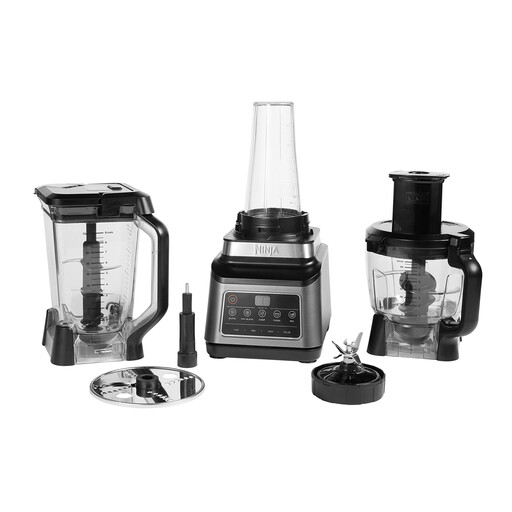
If you want one appliance for processing and blending, assess this model’s biscuit-dough instructions alongside those other uses. Its product name lists a 1.8 L processor bowl, 2.1 L jug, 700 ml cup and five automatic programmes.
Check the recommended tool, mixing method and permitted dough quantity for the BN800UK rather than treating the bowl volume as its dough capacity.
 No image available
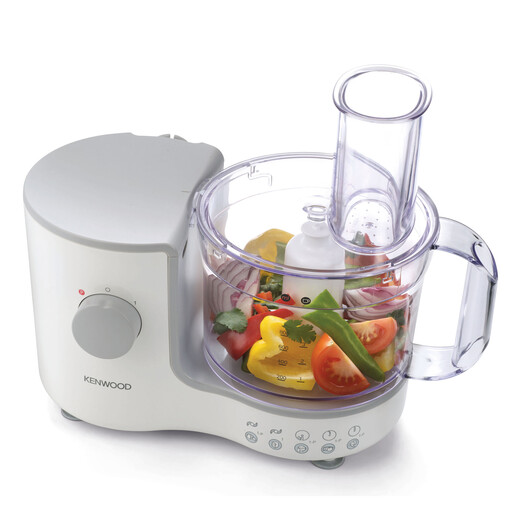
For a kitchen where storage space matters, consider this compact model only after checking that its instructions permit your intended biscuit dough. Its product name specifies a 1.4 L bowl, 400 W rating and shredder disc.
Confirm the suitable tool and permitted dough quantity for the FP120A; neither the bowl volume nor its compact design establishes those details.
 No image available
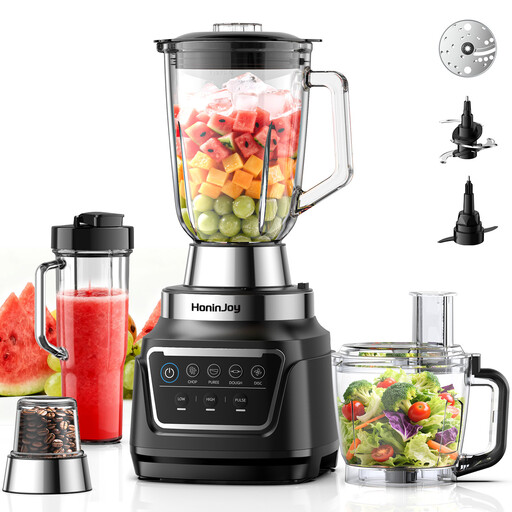
If you also want blending, chopping, slicing and shredding, this model’s product name lists those functions alongside dough making. Check whether its dough instructions suit the short, closely watched processing your biscuit recipe requires.
Confirm whether pulse control is available and what dough quantity the instructions permit before using the dough-making claim to judge batch fit.
Not for every processor: use the tool specified for your exact model and recipe. Magimix’s shortcrust recipe calls for a dough blade, but specifies the metal blade for its Mini Plus; it advises stopping once the dough forms a ball.
Choose a stated dough or pastry limit that covers the quantity in your usual recipe, rather than choosing by bowl litres. For a point of comparison, Magimix Support lists shortcrust-pastry limits of 1 kg for the 3200XL, 1.2 kg for the 4200XL and 1.5 kg for the 5200XL; Bosch Home UK lists maximum dough quantities of 0.8 kg for the MCM3501MGB and 1.5 kg for the MC812S734G.
Only put in the parts that the exact model’s care instructions identify as dishwasher-safe. Bosch Home UK lists dishwasher-safe accessories for the cited MCM3501MGB and MC812S734G models, while Magimix describes dishwasher-safe accessories for its food-processor range; check the instructions for your bowl, lid, blade and other attachments individually.
Check your local authority’s electrical recycling options or a retailer’s take-back arrangements before disposing of it. GOV.UK explains that UK waste electrical and electronic equipment rules aim to encourage recovery, reuse and recycling; its cited guidance is directed principally at producers and distributors.