Weekly vegetable-batch cooks
If you prepare ingredients for several meals or freezer portions at once, concentrate on usable bowl capacity, the feed tube and the slicing and grating discs supplied with the exact model.


Choose a food processor by the largest batch you regularly prepare, then check that its supplied tools cover your recurring jobs. A smaller bowl may suit shorter sessions and tighter storage, while a larger one can accommodate bigger ingredient loads; neither its headline capacity nor its list of functions tells you the working limit for liquids or dough.
If you prepare ingredients for several meals or freezer portions at once, concentrate on usable bowl capacity, the feed tube and the slicing and grating discs supplied with the exact model.
If your sessions move between vegetables, dough, sauces and purées, check the tools and working limits for each task. Bowl capacity alone cannot establish how much dough or liquid you can process.
If worktop and cupboard space are tight, a compact processor with in-bowl accessory storage may fit your routine, provided you are comfortable processing larger quantities in separate runs.
Start with your usual batch size, then check the tools you would use most weekends and the space needed to keep them.
| Concern | What to check | Who this matters to |
|---|---|---|
| Batch capacity | Compare your largest regular batch with the exact model's usable volume and task-specific liquid or dough limit, not just its total bowl size. | If I slice and grate vegetables for several meals at once, I want a bowl that avoids repeated runs. Around 33% of consumers put batch capacity first. |
| Range of prep jobs | Check the in-box blades, discs and blending components against the jobs you actually do. | When my weekend prep includes chopped ingredients and blended sauces, I would rather choose tools for both than assume one attachment does everything; around 27% of consumers prioritise this range of jobs. |
| Dough and purées | Check the stated dough quantity, relevant working capacity and supplied tools for the exact model. | If dough or purées are a regular part of my cooking, I need to know the limits for those recipes before choosing a machine. This is the primary concern for around 20% of consumers. |
| Cleaning and storage | Check which parts are dishwasher-safe, how accessories are stored and whether food-contact parts can be cleaned thoroughly between tasks. | With little cupboard space or a session that moves between raw and ready-to-eat ingredients, I care about storing the parts and cleaning them properly; around 20% of consumers make this their main priority. |
Kenwood lists a 3L bowl but a 1.5L liquid working capacity for the MultiPro Express FDP65.180SI. Bosch lists a 3.9L bowl and 2.4L usable volume for the MultiTalent 8 MC812S734G. Neither headline bowl figure replaces the relevant task limit.
Compare your largest usual recipe with the liquid or dough specification for the exact model.
Models within a range can have different tool sets. A processor bowl, blender jug and personal cup are also separate components, not interchangeable descriptions of one container.
Check the package contents against your recurring slicing, grating, dough and blending tasks.
If a needed tool is not included, you may need an additional compatible attachment or a separate appliance.
When equipment is used for raw meat, fish or poultry and then for ready-to-eat food, cleaning between tasks matters. GOV.UK food-hygiene guidance for businesses calls for separate equipment or thorough disinfection between uses.
Keep raw and ready-to-eat preparation separate where practical, and thoroughly clean and disinfect food-contact parts before switching tasks.
A larger bowl may suit bigger loads, but the machine and its accessories still need worktop and storage space. Bosch lists in-bowl accessory storage for the compact MCM3201BGB.
Measure the space you can use, then weigh it against the size of your largest regular batch.
Its MultiPro Express and MultiPro OneTouch models offer different tool sets for varied weekend prep.
The cited models span a compact processor and a larger-capacity MultiTalent 8.
The 4200XL is a route to consider for regular vegetable and dough preparation.
The BN800UK combines processor and blending formats for prep that also includes sauces or drinks.
These processors cover vegetable prep and combinations of processing and blending. Choose between them by your recurring tasks, the stated bowl size and the tools in the exact package; check task-specific working limits before planning large liquid or dough batches.
 No image available
Consider this model if chopping, slicing and grating are regular parts of your weekend prep. Its listed features include a 3L bowl, dough tool and dishwasher-safe attachments; Kenwood states a 1.5L liquid working capacity. Check the maximum dough quantity against your recipes.
 No image available
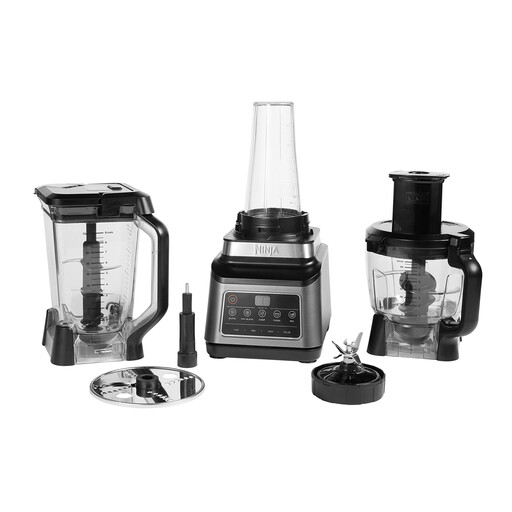
Consider this processor-blender combination if prep includes chopped ingredients as well as sauces or drinks. It lists a 1.8L processor bowl, 2.1L jug and 700ml cup. Compare your vegetable batch with the processor bowl, not the jug, and check the working limit for dough if you plan to make it.
 No image available
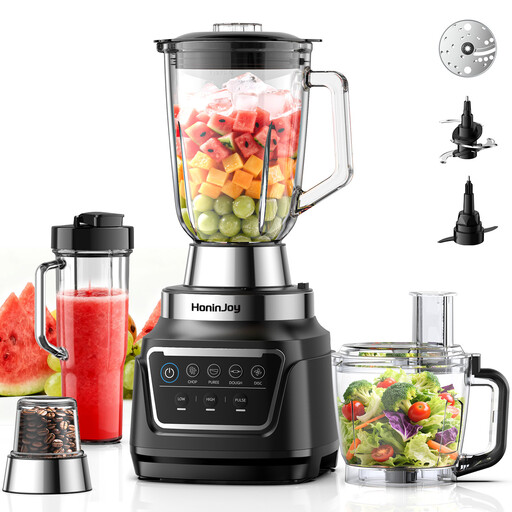
Consider this combination if your meal prep calls for both processor and blender functions. The product name lists chopping, slicing and shredding among its uses; confirm the included attachments and the working limits for your usual recipes before choosing it.
 No image available
Consider this model if your routine combines ingredient prep with blending. Its product name specifies a 750W rating and 2L bowl; check the supplied prep tools and working limits for the tasks you repeat most.
 No image available
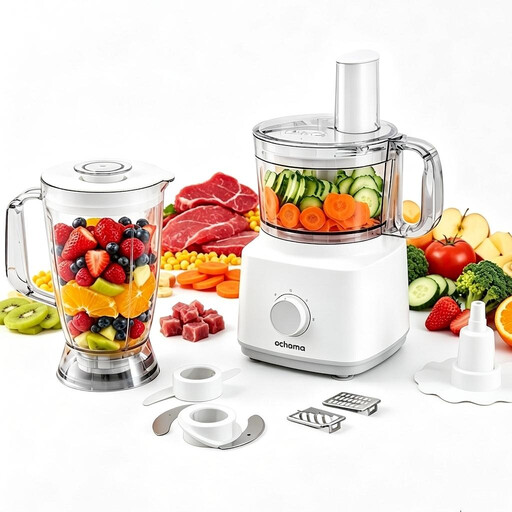
Consider this model for prep that includes chopping, slicing or grating. Its product name states a 1.8L bowl and 750W rating; wattage alone does not establish how it will handle your batches. Check the included discs and task-specific working limits.
Choose a size that suits the amount and type of food you process in one run. Bosch lists a 2.3L bowl for the MCM3201BGB and a 3.9L bowl with 2.4L usable volume for the MC812S734G; Kenwood lists a 3L bowl but 1.5L liquid working capacity for the FDP65.180SI. Check the exact model's limit for your usual task.
It can cover those jobs if the exact package includes a suitable blender jug or attachment. The Ninja BN800UK listing includes a 2.1L jug and 700ml cup, while Kenwood lists blender components for the FDM73.850SS. Do not assume a processor bowl alone provides the same setup.
Use separate equipment or thoroughly disinfect food-contact equipment between those tasks. GOV.UK food-hygiene guidance for businesses gives this precaution for raw meat, fish and poultry; clean the bowl, blade, lid and other contacted parts before preparing ready-to-eat food.