
24/7 Customer Support

Free returns

Same-day & Next-day Delivery

Quality Guaranteed

Unlock Your Welcome Offers: FREE Delivery | Up to 80% OFF | Free 30-day JoyPlus trial
Download the APP
Buying football equipment for a child, team or casual kickabout can look straightforward until you compare ball sizes, goal dimensions, materials and safety details. Marketing descriptions often focus on bright graphics or phrases such as “professional feel”, while leaving out information that affects everyday use.
The right choice depends on who will use it, where it will be used and how often. A garden goal for a five-year-old has different requirements from football training equipment for a club or school.
A larger ball is not automatically more suitable. A size 5 football is commonly used by older youth players and adults, while younger children may find a size 4 or size 3 easier to control. The Kickmaster training set, for example, includes a size 4 ball, making it more appropriate for many younger players than a standard size 5 option.
Check the product specification rather than relying on the player’s height alone:
A portable football goal may look compact in product photography, but its assembled dimensions can be considerably larger. Measure the garden, park area or indoor space before ordering. Also check whether anchor pegs are supplied, particularly if the goal will be used outdoors.
The Kickmaster Large Quick Up Goal measures 213 x 152 x 152cm when assembled. Its target sheet, side storage pockets, carry bag and anchor pegs make it more suitable for structured shooting practice than a basic open goal. The smaller yellow version measures 120 x 80 x 80cm, which may suit tighter spaces and younger players.
Club colours, glow effects and bright graphics can make football gifts appealing, but they do not replace useful construction features. For training, look for:
Official football club merchandise can work well as a present when the recipient supports a particular team, but confirm whether the ball is intended for regular play, display or both.
PVC footballs are often suitable for leisure use, gardens, parks and casual training. They can be practical for families because they are easy to wipe clean. A textured outer surface may help with grip and ball control, although surface texture does not guarantee match-level performance.
For wet British conditions, check whether the product description specifically identifies waterproof construction. The Longsail Size 4 ball uses a seamless foam rubber shell and is described for use on grass, turf and beaches. It also includes an inflation pin, pump and storage bag. Avoid assuming that every ball is suitable for heavy rain simply because it is labelled for outdoor use.
Football goals should be assembled fully and secured according to the instructions. Anchor pegs are particularly important on grass or other suitable outdoor surfaces. A carry bag is useful for families who take equipment to a park, while a quick-up frame can reduce set-up time.
For drills, portable football cones should be visible, stackable and sufficiently flexible for repeated use. The Hy-Pro six-pack cones are made from PE plastic, measure 9 inches and are described as suitable for indoor and outdoor training. Adjustable training hurdles can add progression to agility work, but they require a clear, level surface and adequate space around each hurdle.
Look for stated age suitability, warnings and available compliance information. The Kickmaster children’s goals are listed as suitable from age five and described as CE and UKCA compliant. This should be read alongside the manufacturer’s instructions, including secure assembly and adult supervision.
Small parts and accessories can create risks for younger children. Inspect balls, netting, pegs and plastic training aids regularly, and remove damaged items from use. Do not overinflate footballs: follow the pressure guidance supplied with the product.
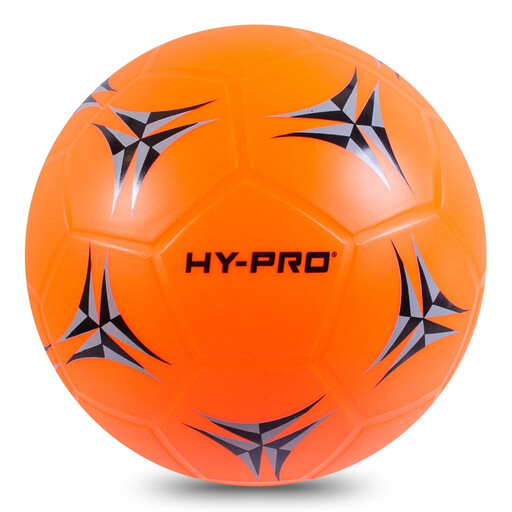
Why This Fits Their Persona: A lightweight 280g ball is a practical starting point for garden play, playground activities and early football practice.
Its stated weight and PVC construction provide clearer information than choosing a ball based only on appearance.
Lightweight design; suitable for gardens, playgrounds and casual practice.
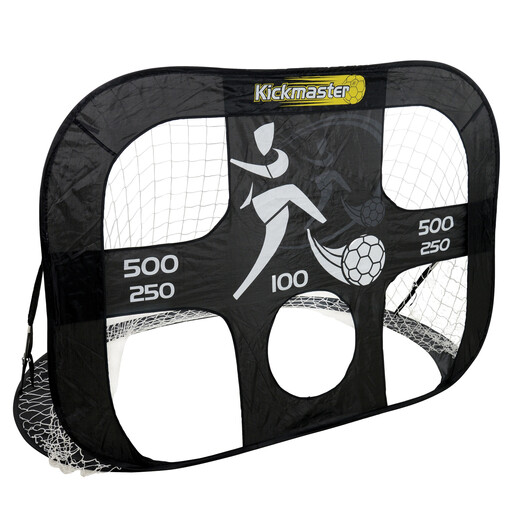
Why This Fits Their Persona: Families wanting a more structured garden set-up can use the large frame and target sheet for shooting practice.
The listed assembled dimensions, anchor pegs and carry bag make space and stability easier to assess before purchase.
213 x 152 x 152cm assembled size; target sheet, storage pockets and carry bag included.
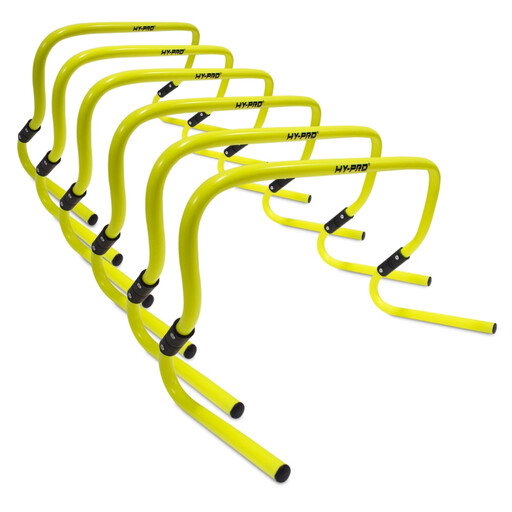
Why This Fits Their Persona: Coaches, schools, clubs and fitness trainers can use six hurdles for repeatable agility, speed and coordination drills.
Adjustable height supports different training levels, rather than locking every user into one drill format.
Six-piece set; carry handle for transport and storage; suitable for multiple sports.
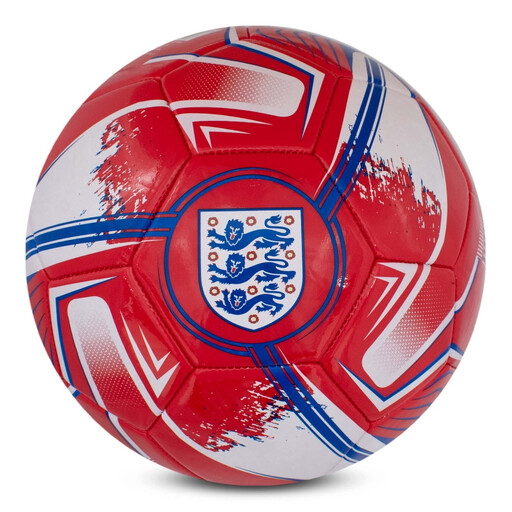
Why This Fits Their Persona: An officially licensed England FA design suits supporters who want a usable football gift with recognisable national-team branding.
The product listing identifies its size, textured exterior and official licensing, so buyers can distinguish function from decoration.
Size 5 format; textured outer surface; official England FA merchandise.
We have compiled a complete, real-time list of products that fully satisfy these strict selection criteria and UK safety regulations.
Start with a suitable lightweight or size 3/4 football, depending on the child’s ability and the product guidance. A small portable goal, cones and shin guards can support varied practice. Adult supervision is recommended, especially when using goals, anchor pegs or sets containing small parts.
Lifespan depends on frequency of use, surface, weather and storage. Wipe footballs and cones clean, dry equipment before storing it, keep balls away from sharp objects and inspect goals for loose fittings. Store portable equipment in its carry bag or another dry location when not in use.
Most football training equipment, including goals, cones, hurdles and footballs, needs no electricity. The main ongoing costs are occasional replacement of worn balls, damaged accessories or inflation equipment. Check air pressure regularly and avoid overinflation to reduce unnecessary wear.