Keep a familiar UK keyboard if you mainly switch between English and other languages using your device’s input settings. If you practise one different layout or script regularly, visible target-language legends or a dedicated layout may be more useful. In either case, check that the physical keys and the selected software input layout match; for longer sessions, consider key feel and desk setup as well.
Who each setup suits
Dedicated target-layout learners
If you practise one language frequently and need to see unfamiliar characters or key positions, look for the exact national layout or bilingual legends. Check the physical keyboard and your device’s input setting separately.
Flexible multilingual learners
If you alternate between UK English and several languages, or mainly type occasional accents, a familiar UK keyboard with additional input sources may suit you. Microsoft Support and Apple Support explain how to add and switch input layouts on their respective systems.
Long-session or multi-device practisers
If you study for extended periods or move between devices, consider key feel and your typing setup alongside device compatibility. Check language settings on every device you plan to use.
What to check before buying
Decide whether you need characters printed on the keys or simply a way to type them, then check the exact keyboard variant and the input settings on your devices.
| Concern |
What to check |
Who this matters to |
| Visible characters and physical layout |
Check product photos and the named national layout, including whether the keyboard or any replacement keycaps are ISO or ANSI. Confirm that the printed legends match the layout you intend to practise. |
If I repeatedly practise unfamiliar key positions or a different script, I want the target characters visible while I learn. Around 36% of consumers would put matching legends or a physical layout first. |
| Language and device switching |
Test the target input layout, punctuation and language-switch controls on each device. For a wireless keyboard, check compatibility with the devices you use. |
When I move between UK English and other languages, I need to know which input layout is active without replacing my familiar keyboard. Roughly 29% of consumers would make flexible language switching their primary concern. |
| Repeated-session comfort |
Consider key spacing and feel, and whether the keyboard fits your desk setup. Chelsea and Westminster Hospital NHS Foundation Trust advises straight wrists, a light touch and frequent breaks. |
For longer practice sessions, I want a setup I can use without reaching awkwardly or pressing harder than necessary. About 21% of consumers would prioritise comfort during repeated typing. |
| Practice away from a desk |
Check the selected regional-layout variant, supported devices and whether a smaller keyboard still has the keys you need. |
If I practise on a phone or tablet as well as a computer, I need a keyboard that works with those devices without losing the layout I am learning. Around 14% of consumers would put portable, multi-device use first. |
Layout mistakes to avoid
-
Assuming printed letters set the typing language
Physical key labels and software input layouts are separate. A key may produce a different character from the one printed on it when another input layout is active.
Before buying, add and test the target input source on the device you will use. Try letters, punctuation, accents and the language-switch controls.
-
Choosing ANSI when you expect UK ISO
Logitech UK describes differences in Enter and left Shift shapes and the extra key on ISO keyboards. Those differences also matter if you plan to change keycaps.
Compare the product photos and stated physical standard with your current keyboard, then match any replacement keycap set to that standard.
-
Relying on a product-family name for the language variant
A keyboard family may offer several regional layouts. Multi-device support does not tell you which characters are printed on the unit you select.
Check the actual layout option and photos for the chosen variant before ordering.
-
Expecting a keyboard alone to resolve typing discomfort
Desk position and typing technique matter alongside hardware. Chelsea and Westminster Hospital NHS Foundation Trust advises keeping wrists straight, using a light touch and taking regular breaks.
Arrange the keyboard so you can type without reaching, and seek appropriate professional advice if symptoms persist.
Relevant brands for reference
Keychron
Worth considering when a particular European physical layout matters more than retaining UK legends.
- Keychron UK lists K10 Pro ISO variants for UK, German, Swiss, Nordic, French and Spanish layouts.
- Choose the exact variant: those layout options describe the cited K10 Pro line, not every Keychron keyboard.
Logitech
Relevant when device switching or a keyboard for tablet practice is part of the decision.
- Logitech UK specifies switching across up to three devices for MX Keys S and lists several regional layouts for Keys-To-Go 2.
- Select the regional variant you need; device switching does not set the input language or establish the printed legends on every variant.
Apple
Relevant to Mac users who want a British-English keyboard and plan to type other languages through macOS input sources.
- Apple sells a British-English Magic Keyboard, while Apple Support explains how to add and switch macOS input sources.
- British-English keys are not dedicated target-language legends; decide whether the characters need to be visible while you practise.
Keyboards for language practice on Joybuy
These choices include UK-labelled wireless keyboards for practising with device input layouts and a German QWERTZ keyboard for practising that specific arrangement. Check the selected physical layout and your device’s input settings before deciding.
 No image available
Targus EcoSmart full-size wireless keyboard (UK)
Consider this UK-labelled keyboard if you want to keep familiar keys while adding foreign-language input layouts on your device. Confirm the exact physical layout and printed legends if those details matter to your practice.
View on Joybuy
 No image available
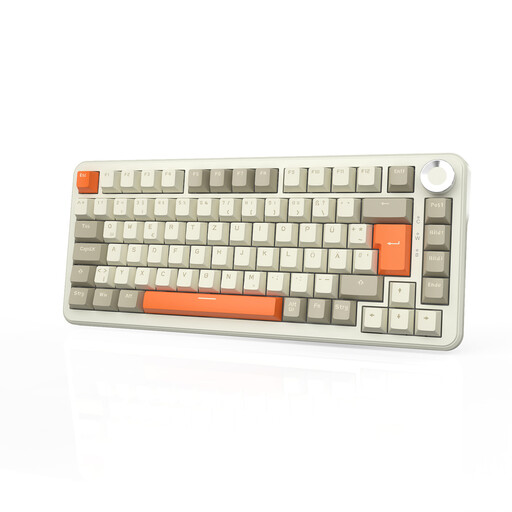
AJAZZ AK820 MAX German QWERTZ mechanical keyboard, 75%
Consider this model if German QWERTZ is the layout you intend to practise. The product name identifies German keycaps and a 75% layout; check the key photos, the ISO or ANSI physical standard and the matching software input layout before buying.
View on Joybuy
 No image available
Hyper HyperSpace Next Bluetooth keyboard (UK), white
Consider this UK-labelled Bluetooth keyboard if you plan to practise using input layouts configured on your devices. Check the physical layout and printed characters, and test the target input source on each device you use.
View on Joybuy
Frequently asked questions
Can I practise another language on a normal UK keyboard?
Yes, if your device offers the input layout you need. Microsoft Support explains how to manage Windows keyboard layouts, and Apple Support explains how to add macOS input sources; the printed UK legends will not change when you switch software layouts.
Does UK ISO mean the same thing as a French or German layout?
No. ISO describes a physical keyboard arrangement, while the national variant determines the printed characters and their positions. Check both before ordering a keyboard or replacement keycaps.
Can labels help me try a different typing layout?
Labels can make target characters visible on an existing keyboard, but they do not change what its keys type. Check their fit and placement, then select and test the corresponding software input layout.
What matters during longer typing-practice sessions?
Choose a key feel and keyboard position you can use comfortably, rather than relying on a feature name alone. Chelsea and Westminster Hospital NHS Foundation Trust advises straight wrists, a light touch and frequent breaks while typing.


