
24/7 Customer Support

Free returns

Same-day & Next-day Delivery

Quality Guaranteed

Unlock Your Welcome Offers: FREE Delivery | Up to 80% OFF | Free 30-day JoyPlus trial
Download the APP
A forged stainless steel kitchen cleaver can become the main preparation knife in a busy household or professional kitchen. It may handle chopping, slicing, dicing and mincing, but not every wide-bladed knife is suited to the same jobs. The wrong design can feel unbalanced, lose its edge quickly or become difficult to maintain.
Before choosing a stainless steel cleaver knife, look beyond phrases such as “razor sharp”, “professional grade” or “heavy duty”. These descriptions can be vague unless supported by practical specifications.
A broad Chinese kitchen cleaver may look suitable for breaking down meat, but many models are intended for vegetables, boneless meat and general preparation. Repeatedly striking through large bones can damage a thinner slicing edge, even when the blade is forged.
Check the product description for its intended use. If you mainly prepare vegetables, herbs and boneless meat, a lighter meat and vegetable chopping knife is generally more suitable than a thick breaking cleaver.
Stainless steel offers useful resistance to staining and corrosion, but it does not mean the knife is maintenance-free. Steel type, heat treatment, blade thickness, edge geometry and storage all affect day-to-day performance.
A product that only states “high-quality stainless steel” gives less useful information than one that identifies a steel grade or clearly explains its construction. Where a hardness figure is provided, remember that hardness is only one factor: a very hard edge can still chip if used incorrectly.
A sharp kitchen knife is helpful only when it remains controllable and safe to use. A handle that becomes slippery when wet, a blade that flexes unexpectedly or a poorly balanced design can make food preparation tiring.
Look for practical details such as full-tang construction, handle shape, blade length and whether the knife is recommended for hand washing. Marketing language about edge retention should not replace clear care instructions.
Forging involves shaping heated steel rather than simply stamping a flat sheet. It can contribute to a substantial feel, but forging alone does not guarantee a particular cutting performance. The blade should still have a clearly described edge, suitable thickness and secure handle construction.
For everyday cooking, stainless steel is convenient because it generally needs less corrosion care than untreated carbon steel. It should still be washed by hand, dried promptly and stored so the edge does not contact other utensils.
A full-tang kitchen knife extends the blade material through the handle. This can provide a stable feel, although the quality of the handle attachment and overall balance also matter.
A 190 mm kitchen cleaver offers a useful compromise for many UK home kitchens: it provides a broad cutting surface without requiring the workspace of a much larger chef’s cleaver. Shorter blades can feel nimble for herbs and vegetables, while heavier blades may suit larger quantities or tougher ingredients.
Consider your chopping board, cupboard storage and hand size. A wide, heavy blade requires a stable board and a controlled chopping technique. Weight should assist the cut rather than force you to use excessive pressure.
A double-bevel edge is familiar to many Western cooks and can be easier to use ambidextrously. Some Japanese cleaver knife designs may have a more specific edge profile or balance, so check the product information rather than assuming that “Japanese” describes the blade geometry.
Do not use a slicing and dicing knife to pry, twist, cut frozen food or strike through hard bones unless the manufacturer specifically permits it. For vegetables, boneless meat, fruit and herbs, a multi-purpose cooking knife with a controlled, well-maintained edge is usually more practical.
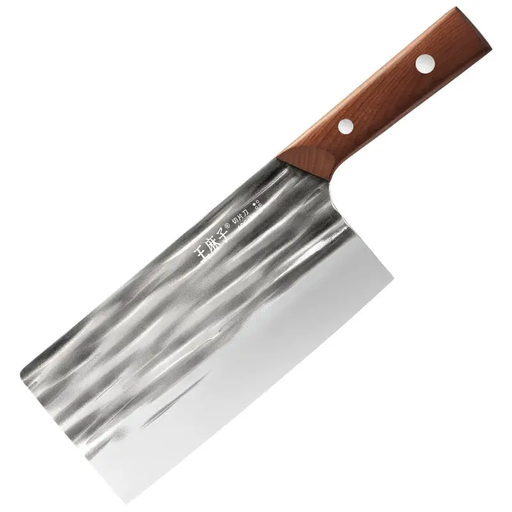
Why This Fits Their Persona: A straightforward household option for cooks who want one stainless steel cleaver knife for everyday meat, vegetable and fruit preparation.
Its description identifies stainless steel construction and general slicing, dicing and mincing uses rather than relying only on a “heavy-duty” label.
Versatile household format; stainless steel is practical for routine kitchen maintenance.
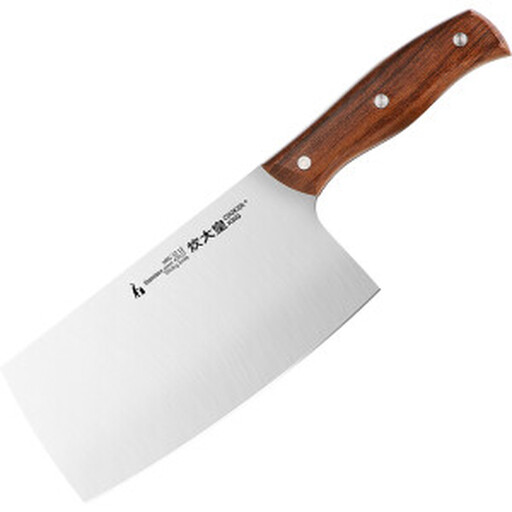
Why This Fits Their Persona: Suits serious cooks seeking stated blade specifications and a full-tang, weight-forward design for controlled preparation.
The listing specifies 7Cr17MoV stainless steel, a stated 58±2 HRC hardness and a 15° double-bevel edge, giving buyers more to assess than promotional wording.
Full-tang construction; waterproof pakkawood handle; wide blade described for chopping, dicing and scooping.
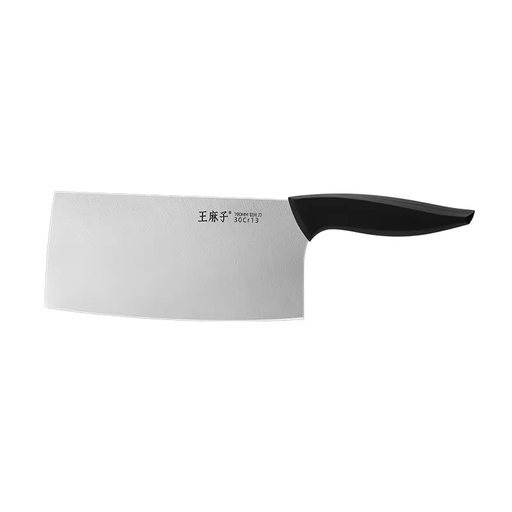
Why This Fits Their Persona: The 190 mm format is aimed at cooks who prepare larger quantities and want a substantial all-purpose chopping blade.
The listing states a forged stainless steel blade and identifies meat, vegetables, slicing, dicing and mincing as intended tasks.
190 mm blade; forged stainless steel construction; broad task coverage for busy preparation sessions.
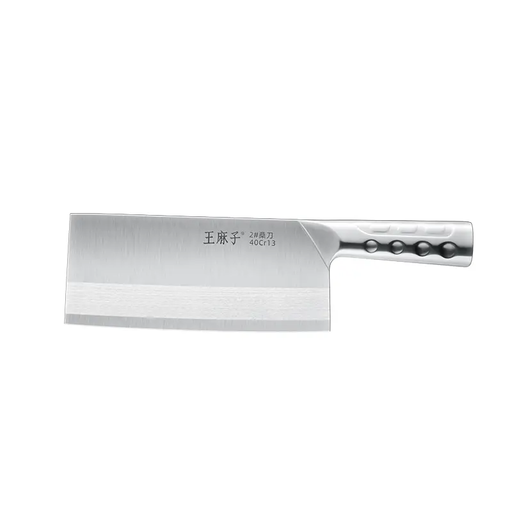
Why This Fits Their Persona: A practical choice for households wanting a traditional-style vegetable cleaver for regular meal preparation.
Its stated full-tang construction and ergonomic handle address common concerns about stability and grip comfort.
Forged stainless steel; designed for slicing, dicing and chopping meat and vegetables.
We have compiled a complete, real-time list of products that fully satisfy these strict selection criteria and UK safety regulations.
Yes, provided its size and edge are suited to your tasks. A medium cleaver can manage vegetables, herbs, boneless meat, fruit and many slicing jobs. It should not automatically be used for large bones or frozen food.
There is no fixed lifespan. Frequency of use, ingredients, cutting-board material, technique and sharpening all affect edge performance. Avoid glass boards and hard impacts, wash by hand and hone the edge regularly.
Not necessarily. A 190 mm blade gives useful coverage for larger vegetables and batch preparation, but it needs adequate board space and safe storage. If your kitchen is compact or you prefer light, precise work, a shorter or lighter model may feel easier to control.