What matters when choosing?
The three camera-and-lens routes address different priorities: tiny details, depth of field in a still arrangement, or flexible framing for complete pens.
Nikon Z50II with NIKKOR Z MC 50mm f/2.8
Choose when: Nib engravings and similarly small details are the main subject; Nikon UK specifies 1:1 magnification for this lens.
Allow for: Very close lens-to-pen positioning, which can restrict where you place a light.
OM SYSTEM OM-5 Mark II with a compatible close-focus lens
Choose when: You regularly need more of a stationary, angled pen in focus and want the camera’s Focus Stacking function.
Allow for: A stable camera and motionless subject while the camera captures images at different focus distances.
Canon EOS R50 with RF 35mm F1.8 Macro
Choose when: Complete pens, arranged groups and moderately close details matter more than life-size macro capture.
Allow for: Canon UK specifies up to 1:2 magnification for this lens, not 1:1; check whether that fills enough of the frame for your smallest details.
| Concern | What to check | Who this matters to |
|---|
| Small details and working room |
Check the exact lens’s magnification, minimum focus distance and space left for lighting. Nikon UK specifies 1:1 and 0.16 m for the Z MC 50mm f/2.8; Canon UK specifies up to 1:2 for the RF 35mm F1.8 Macro. |
If I need a nib imprint or fine engraving to fill the image, magnification comes before general camera features. Around 40% of consumers would put that detail-first need ahead of the other tabletop priorities here. |
| Depth of field |
Check for an in-camera stacking function and plan a stable setup. OM SYSTEM lists Focus Stacking for the OM-5 Mark II; the sequence requires multiple focus-distance images. |
With a pen angled across the table, I want both its nib and barrel to appear sharp without shifting the arrangement between frames. That would be the primary need for around 40% of consumers. |
| Flexible framing |
Check the lens mount, included lens, screen movement and bundle contents against your shooting position. |
For complete pens and other everyday subjects, I want to compose easily from above or beside the table without making tiny details my main aim. Around 20% of consumers would prioritise that flexibility. |
Joybuy choices for general tabletop use
These Sony camera-and-zoom listings are choices to assess for whole-pen framing and general photography. If tiny nib details or focus stacking are central to your purchase, check the exact lens and camera functions before choosing one of these kits.
 Image unavailable
Sony A6400 APS-C with 16–50 mm Power Zoom Lens
For whole-pen photographs, check whether the supplied zoom frames your arrangement at the distance available on your table.
The listed kit pairs the A6400 with a 16–50 mm power-zoom lens. If close nib crops matter, confirm that lens’s magnification and minimum focus distance; check the camera’s stacking functions separately if you need them.
View on Joybuy
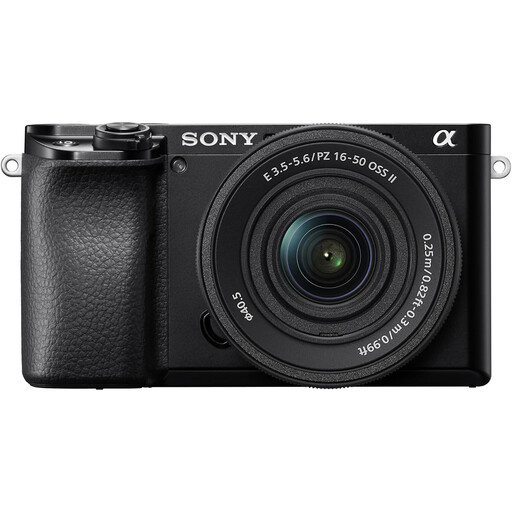 Image unavailable
Sony A6100 APS-C with Zoom Lens
For complete-pen compositions, confirm that the included lens gives you the framing you want on a small table.
The product title identifies a 16–55 mm zoom, while the accompanying lens description identifies a 16–50 mm zoom. Confirm the exact lens in the bundle, and check its close-focus capability if small details matter.
View on Joybuy
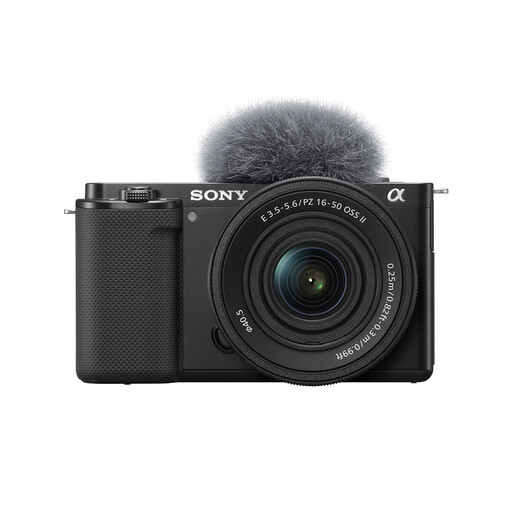 Image unavailable
Sony ZV-E10K with 16–50 mm Power Zoom Lens
If you photograph complete pens and also make video, assess whether this camera-and-zoom kit fits both uses.
The listed kit includes a 16–50 mm power-zoom lens. Check its magnification and minimum focus distance before relying on it for nib-scale images, and check stacking functions if greater depth of field is a priority.
View on Joybuy
Frequently asked questions
Do I need a macro lens to photograph a whole fountain pen?
No: a lens that frames the complete pen at your available shooting distance can serve that purpose. If engravings or feed details must fill much of the image, check magnification instead; Nikon UK specifies 1:1 for the Z MC 50mm f/2.8, while Canon UK specifies up to 1:2 for the RF 35mm F1.8 Macro.
When is in-camera focus stacking worth choosing?
It is worth considering when a close, angled pen needs greater apparent depth of field and you can keep the setup still during capture. OM SYSTEM lists Focus Stacking for the OM-5 Mark II; the function works with images taken at different focus distances.
Will a vari-angle screen help on a small table?
It can make framing easier when the camera is above the table or low beside it. Canon UK lists a vari-angle touchscreen for the EOS R50, and Nikon UK lists one for the Z50II; the screen does not determine how closely the lens can focus.
Does USB charging mean a charger is included?
No. Canon UK Store states that its EOS R50 body supports USB charging but does not include a USB-C charger in the box. Check the contents of the particular body or kit before ordering.
What should I do if a camera bought in the UK is faulty?
Contact the seller and keep your proof of purchase. GOV.UK states that consumer law protects buyers when goods are faulty; a fault is a different issue from simply changing your mind about a working camera.


