What should you check before choosing a bar?
Decide whether a bar is appropriate for the child’s stage before comparing flavours or free-from claims. A soft homemade or adapted family-food option lets you control the ingredients and texture; a packaged product still needs individual checks.
Soft family food or homemade finger food
Consider when: A baby is newly weaning or needs a texture and ingredients adapted to their stage.
Trade-off: Preparation takes time, and a homemade recipe still needs the same food-safety and allergen checks.
Packaged baby or toddler snack
Consider when: The child is established on solids and the product’s age guidance, texture and ingredients fit their needs.
Trade-off: Convenience and a baby-focused label do not replace checking sugars, allergens and the current pack.
Standard cereal or protein bar
Consider when: Choosing a snack for an older child or adult, rather than a first finger food for a baby.
Trade-off: Ingredients vary by product: Nature Valley UK lists honey in its Crunchy Oats & Honey bar and peanut, soya and milk ingredients in its Chocolate & Coffee Protein bar.
| Priority | What to check | Your needs |
|---|
| Readiness and texture |
Check that the child is ready for solids and can manage the food’s size, shape and texture. Offer it seated upright and supervise eating, following NHS guidance. |
I’m looking for a finger food my baby can hold and manage at their current stage, not simply something sold in a bar shape. |
| Honey and sugars |
For a child under 12 months, check the ingredients for honey. Compare sugars per 100g and per serving when assessing packaged snacks; read the ingredients as well as front-of-pack claims. |
I want to avoid honey before my baby turns one and understand how sweet a packaged snack is before offering it. |
| Exact allergens |
Match the specific free-from claim, full ingredient list and any precautionary allergen wording to the child’s needs. Check the current pack each time. |
A gluten-free claim alone will not answer my question if milk, peanut, soya or another allergen is the concern. |
| New ingredients |
Identify ingredients the child has not yet tried. The NHS advises introducing foods that can trigger allergic reactions one at a time from around 6 months. |
If several potential allergens would be new to my baby, I would rather not introduce them together in one bar. |
What do familiar cereal-bar brands illustrate?
These product examples show why the exact variant matters; a brand name does not establish suitability for baby-led weaning or a particular allergy.
Nature Valley
Its UK cereal and protein bars provide examples of ingredients to check rather than baby-led-weaning options to assume are suitable.
- Nature Valley UK lists wholegrain rolled oats in Crunchy Oats & Honey.
- That bar also lists honey. Its Chocolate & Coffee Protein bar lists peanut, soya, milk ingredients and coffee; check the exact variant and current pack.
Kellogg's
A familiar cereal name is not a substitute for assessing an individual snack bar’s ingredients and nutrition information.
- Kellogg’s UK provides per-bar nutrition information for its Rice Krispies Snack Bar.
- Kellogg’s UK lists 5.8g sugars per 20g bar for that product. Check the current pack before choosing it for a child.
Alpen
Alpen’s cereal range is relevant to checking grain ingredients, not to assuming its products are made for infants.
- Alpen’s allergy FAQ identifies wheat, barley or oats across its products, giving shoppers a starting point for checking the exact variant.
- Do not infer that one Alpen product meets a particular free-from need from the brand name; read its current pack.
Joybuy options for older babies and toddlers
These Organix products carry age indications from 10 months upwards. The selection includes soft oaty bars, a corn-based finger snack and a biscuit, so it is not a list of interchangeable free-from cereal bars or first foods for babies starting solids.
 No image available
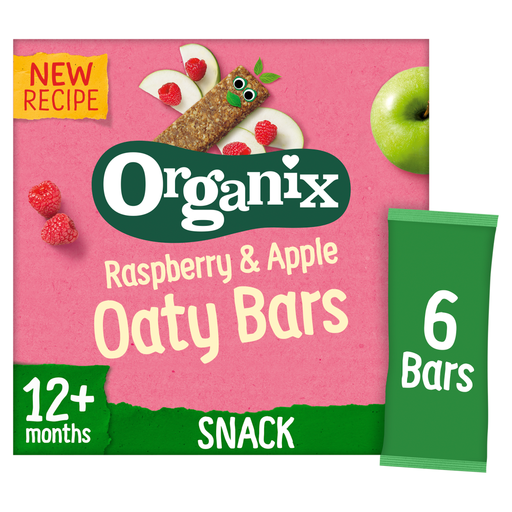
Organix Raspberry & Apple Soft Oaty Bars, 12+ months, 6 x 23g
A soft oaty bar labelled for ages 12 months and over. Check its current ingredients, sugars and allergen statement against the child’s needs, including any need to avoid gluten.
View on Joybuy
 No image available
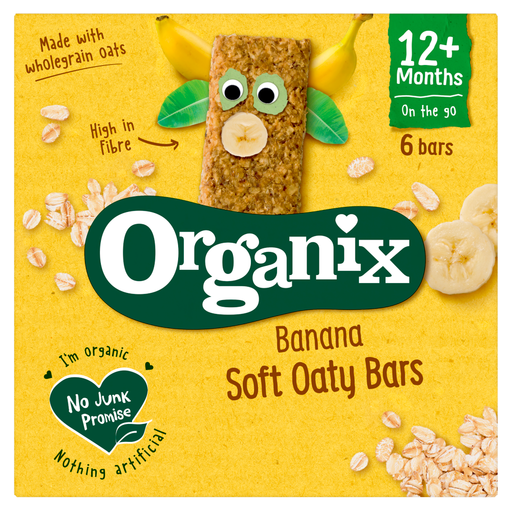
Organix Banana Soft Oaty Bars, 12+ months, 6 x 23g
Another soft oaty bar labelled for ages 12 months and over. Compare its current ingredient list and sugars information with the raspberry and apple variant rather than assuming the flavours have identical contents.
View on Joybuy
 No image available
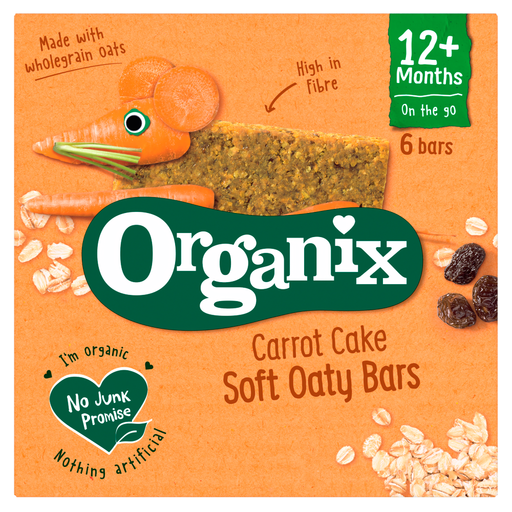
Organix Carrot Cake Soft Oaty Bars, 12+ months, 138g
A soft oaty bar labelled for ages 12 months and over. Its product information flags possible nut, soya and milk presence; read the current pack carefully if any of these allergens matter to the child.
View on Joybuy
 No image available
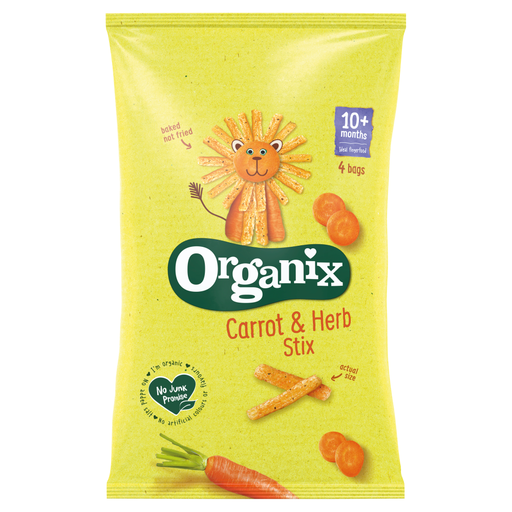
Organix Carrot & Herb Stix, 10+ months, 4 x 15g
A finger snack labelled for ages 10 months and over, not an oaty cereal bar. Assess its texture for the child’s stage, check the current ingredients and supervise eating while the child is seated upright.
View on Joybuy
 No image available
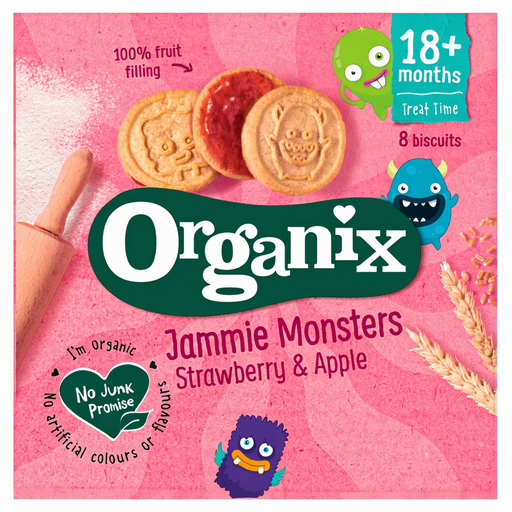
Organix Jammie Monsters Strawberry & Apple, 18+ months, 64g
A biscuit labelled for ages 18 months and over, rather than a soft bar for a baby beginning weaning. Check the current pack for wheat, other relevant allergens and sugars before choosing it for an older toddler.
View on Joybuy
Frequently asked questions
Can a baby starting baby-led weaning have a standard cereal bar?
A standard cereal bar is not a sensible default first finger food. The NHS advises starting solids when a baby is ready from around 6 months and considering each food’s size, shape and texture; check the exact bar for honey, allergens and a texture the child can manage.
Does gluten-free mean a bar is suitable for a baby with allergies?
No. Gluten-free does not address other allergens. Nature Valley UK lists peanut, soya and milk ingredients in its Chocolate & Coffee Protein bar, illustrating why you need to check the full current ingredient and allergen statement against the child’s specific needs.
Should a multi-ingredient bar be used to introduce an allergen for the first time?
Introducing several new potential allergens together makes it harder to identify which food caused a reaction. The NHS advises introducing foods that can trigger allergic reactions one at a time from around 6 months; seek advice from a GP or health visitor before introducing allergens if the baby has a diagnosed allergy, eczema or a relevant family history.
Can a baby under 12 months have an oats-and-honey bar?
Not if it contains honey. The NHS advises avoiding honey until a baby is 12 months old, and Nature Valley UK lists honey in its Crunchy Oats & Honey bar. Check the ingredients of any other variant separately.
What should I check before packing a cereal bar for school or nursery?
Check the setting’s current packed-food and allergy arrangements, then read the bar’s current ingredient and allergen information. For schools in England, the Department for Education says schools must publish an allergy safety policy; that does not establish whether a particular bar is permitted by an individual setting.


