Buyers providing gluten-free options
Choose bars with a gluten-free claim on the exact product. Check the rest of the ingredient and allergen information too, particularly when colleagues have requirements beyond gluten avoidance.


Choose office cereal bars against each colleague’s specific dietary or allergy requirements, rather than treating “free from” as a single category. For gluten avoidance, look for a gluten-free claim on the exact bar, then check its other ingredients and precautionary allergen statements: a gluten-free nut bar is not suitable for a nut-avoidance selection. Keep individual wrappers available and ask affected colleagues what they need before ordering.
Choose bars with a gluten-free claim on the exact product. Check the rest of the ingredient and allergen information too, particularly when colleagues have requirements beyond gluten avoidance.
Ask affected colleagues about their individual trigger foods before choosing shared snacks. Anaphylaxis UK advises employers to communicate directly with employees with allergies and consider an individual workplace risk assessment where appropriate.
A vegan oat flapjack and a gluten-free nut-based protein bar meet different requirements. Compare the exact product’s dietary claims, ingredients and per-bar declarations without letting a protein figure override an allergen check.
Start with the ingredients a colleague needs to avoid, then check the exact flavour’s dietary claims and how its information will remain available in the office.
| Priority | What to check | Your needs |
|---|---|---|
| Individual allergens | Read the current ingredients and any “may contain” statement for the exact flavour. Check each allergen the colleague needs to avoid; a gluten-free claim does not address nuts, milk or soy. | I need to know whether this particular bar meets a colleague’s requirements, not just whether its front label says “free from”. |
| Gluten-free status | Look for a gluten-free claim on the actual product. The Food Standards Agency says foods labelled gluten-free may contain no more than 20 mg/kg gluten; the claim does not replace a check of other allergen information. | For a colleague avoiding gluten, I want an explicit claim for the flavour I’m buying rather than assuming an oat- or rice-based bar qualifies. |
| Vegan suitability | Check the exact bar’s vegan claim and its separate allergen and precautionary statements. TREK describes Original Oat as vegan and gluten-free, but says it may contain peanuts, nuts and milk. | A vegan option would be useful, but I still need to check whether it fits anyone’s specific allergy requirements. |
| Office handling | Keep individual wrappers and product information accessible. Check with affected colleagues before setting out a shared selection; Anaphylaxis UK advises direct communication about workplace food allergies. | People should be able to identify their bar and read its information before deciding whether to eat it. |
| Per-bar nutrition | Compare declared protein and fibre figures alongside each bar’s weight, and check the ingredients first. Nature Valley lists about 10g protein and 4g fibre per 40g Salted Caramel Nut bar; TREK lists 10g protein per Original Oat bar. | If I’m comparing protein or fibre, I want figures for the actual serving—not a front-of-pack description that obscures a relevant allergen. |
Nature Valley’s gluten-free Salted Caramel Nut bar contains peanuts, almonds, soy and milk. Eat Natural’s gluten-free Peanuts, Almonds & Cocoa bar contains peanuts and almonds.
Identify the individual allergen to avoid before choosing a bar, and check the current ingredients and precautionary statement. Do not use these nut-based bars for a nut-avoidance selection.
Allergen and gluten-free claims can differ by flavour. Nature Valley identifies two Protein flavours as gluten-free; its Crunchy Oats & Honey bar contains oat gluten.
Check every flavour and variant separately, including each bar in a mixed pack.
Discarding wrappers makes it harder for colleagues to check which ingredients and precautionary statements apply to the bar in front of them.
Keep bars individually wrapped and retain the relevant outer-pack information or an up-to-date product-allergen record with the snack supply.
A general gluten-free selection may not address a colleague’s particular trigger foods or the precautions they need at work.
Speak with affected colleagues before ordering. Anaphylaxis UK advises employers to consider an individual workplace risk assessment where appropriate.
These examples show why the exact flavour matters; a brand name alone does not establish that a bar meets a colleague’s requirements.
TREK Original Oat is a vegan, gluten-free protein flapjack according to TREK’s product information.
Nature Valley identifies Protein Peanut & Chocolate and Protein Salted Caramel Nut as its gluten-free flavours.
Eat Natural lists gluten-free bars, including its Peanuts, Almonds & Cocoa Protein Bar.
Alpen’s allergy information is a reminder to check cereals and manufacturing statements at product level.
A familiar cereal-bar name does not establish free-from suitability.
These TREK flapjacks and Nature Valley protein bars are options to assess for office snacks. Check the exact flavour’s current gluten-free claim, ingredients and precautionary allergen wording before offering it to a colleague.
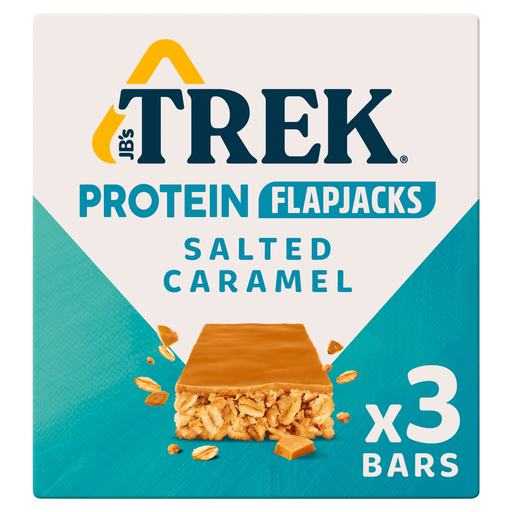 No image available
For a vegan or gluten-avoidance selection, check this Salted Caramel flavour’s current pack claims. Check its soy declaration and any precautionary allergen wording before sharing the bars.
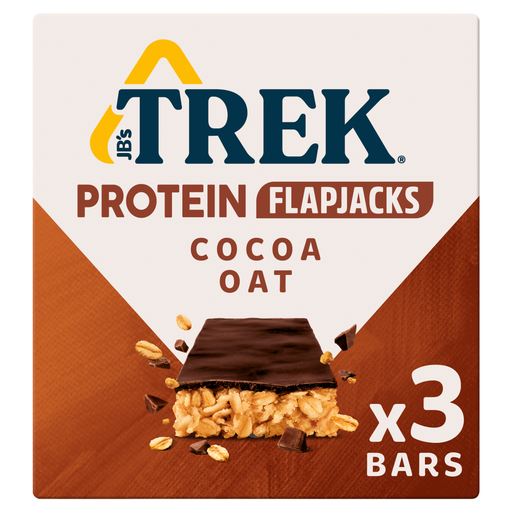 No image available
Check this Cocoa Oat flavour’s pack for its gluten-free and vegan declarations rather than relying on another TREK flavour’s label. Confirm its soy ingredients and any “may contain” statement for the intended colleagues.
 No image available
Nature Valley identifies Peanut & Chocolate as a gluten-free Protein flavour. Its peanut, soy and milk ingredients, and any precautionary nut statement on the current pack, matter when deciding who can use a shared snack supply.
 No image available
Nature Valley lists this gluten-free flavour at about 10g protein and 4g fibre per 40g bar. It contains peanuts, almonds, soy and milk, so it does not fit a selection intended for colleagues avoiding those ingredients.
No. A gluten-free claim addresses gluten, not every other allergen. Nature Valley’s gluten-free Salted Caramel Nut bar contains peanuts, almonds, soy and milk; check each bar against the individual colleague’s requirements.
The Food Standards Agency says food labelled “gluten-free” may contain no more than 20 mg/kg gluten. Read the full label as well: the claim does not tell you whether another relevant allergen is present.
No. Vegan suitability and allergen suitability are separate checks. TREK describes Original Oat as vegan and gluten-free, but its product information says it may contain peanuts, nuts and milk.
Speak directly with the colleague about their individual requirements before providing snacks. Anaphylaxis UK advises employers to communicate with employees with allergies and consider an individual workplace risk assessment where appropriate; a generic free-from assortment is not a substitute.
Check the current pack for the exact flavour before putting it out. Kellogg’s advises checking pack information because recipes can change, and retaining the wrapper lets colleagues read the information for the bar they receive.