Office workers who need gluten-free food
Look for an explicit gluten-free label on the bar, then check the current pack. An oat-based recipe, vegan description or familiar brand name is not a substitute for the label.


Choose an office-lunch cereal bar by the specific allergen or dietary requirement you need to avoid, rather than treating “free from” as an all-purpose claim. If you need gluten-free food, look for an explicit gluten-free label, then check the current pack for other ingredients and “may contain” warnings: gluten-free and vegan bars can still present concerns for someone avoiding soya, peanuts, milk or tree nuts.
Look for an explicit gluten-free label on the bar, then check the current pack. An oat-based recipe, vegan description or familiar brand name is not a substitute for the label.
Check for the particular allergen you avoid in both the ingredients and any precautionary statement. The gluten-free examples discussed here include products with soya or peanuts and products carrying milk or tree-nut warnings.
A vegan flapjack with stated protein may suit your lunch preferences, but its vegan description does not settle questions about gluten, soya or possible allergen cross-contact.
Start with the label for the requirement that matters to you; consider protein and flavour only after checking allergen suitability.
| Priority | What to check | Your needs |
|---|---|---|
| Gluten-free label | Check that the product is explicitly labelled gluten free. Coeliac UK explains that UK foods bearing this label must contain no more than 20 parts per million of gluten; oats or a plant-based description alone do not establish this. | If I need gluten-free food in my packed lunch, I want the claim on the bar I am buying, not an assumption based on its main ingredient. |
| Other ingredients | Read the allergen declaration for the exact recipe and flavour. TREK lists soya in Original Oat, while the Nature Valley Protein Peanut & Chocolate product information identifies peanut, soya and milk. | A gluten-free bar still needs to fit the other allergens I avoid. |
| “May contain” wording | Read precautionary statements separately from the ingredient list. The Food Standards Agency explains that this wording signals an allergen could be unintentionally present. | Before I put a bar in my lunch, I need to know whether its cross-contact warning names an allergen relevant to me. |
| Protein and fibre | Compare amounts on the current pack using the same basis, such as per bar. TREK states 10g plant protein for Original Oat; Nature Valley states 10g protein and around 4g fibre for Protein Peanut & Chocolate. These figures do not establish allergen suitability. | Once a bar meets my dietary requirements, I may also want to compare its stated protein or fibre with other options. |
A gluten-free claim addresses gluten, not every other allergen. The checked TREK Original Oat recipe lists soya, and Eat Natural Simply Vegan contains peanuts.
Identify the exact allergen you need to avoid, then check each flavour’s ingredients and precautionary wording.
Nature Valley says its Crunchy Oats & Honey bars contain oat gluten. An oat or vegan description alone does not establish that a bar meets the UK gluten-free labelling threshold described by Coeliac UK.
Choose a product explicitly labelled gluten free when that is your requirement.
According to the Food Standards Agency, precautionary allergen labelling communicates possible unintended allergen presence. It is different from an ingredient declaration, but can still affect an allergy-driven choice.
If the warning names an allergen relevant to you, do not assume the bar is suitable merely because that allergen is absent from the ingredient list.
A listing for a familiar bar or flavour may not reflect the pack you have in hand. Nature Valley advises checking the ingredients and nutrition information on the pack.
Read the physical pack when buying and again before eating, particularly if the flavour or packaging has changed.
These examples help narrow a shortlist, but a claim or warning for one bar should not be applied to every product from its brand.
TREK Original Oat is an example for shoppers seeking a gluten-free, vegan flapjack with stated plant protein.
Eat Natural lists a gluten-free range, including fruit-and-nut-style choices.
Nature Valley’s Protein Peanut & Chocolate is relevant where gluten avoidance matters but peanuts, milk and soya are acceptable.
Alpen is a range to rule out when the packed-lunch bar must be gluten free.
Check Kellogg's cereal bars individually rather than treating the range as gluten free.
Graze oat bars need a product-specific allergen check before they go into an office lunch.
These office-lunch options include TREK flapjacks for a gluten-free, vegan preference and a Nature Valley protein bar for someone who can have its declared peanut, milk and soya ingredients. Check the current pack against your own allergen requirements.
 No image available
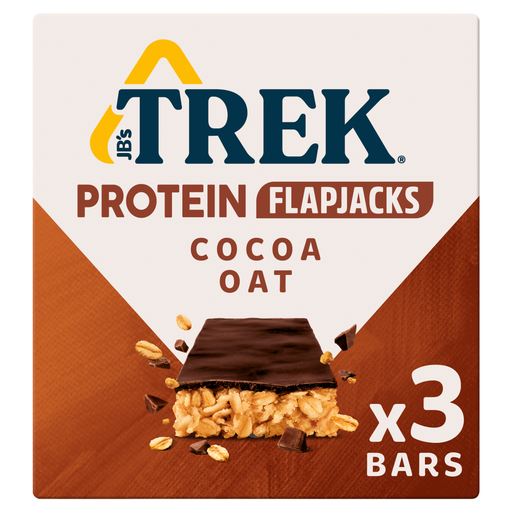
A flapjack option for an office lunch when you want a gluten-free, vegan bar. Check the pack for soya and its precautionary warning about peanuts, nuts and milk.
 No image available
A gluten-free-oat, vegan flapjack option for a packed lunch. It contains soya; check the physical pack for the current warning about possible peanuts, nuts and milk.
 No image available
A gluten-free protein-bar option only where its other allergens are acceptable. Nature Valley states 10g protein per bar; the product contains peanut, soya and milk, is not vegan and carries a possible tree-nut warning. Check the current pack before choosing it.
No. Coeliac UK explains that a food labelled gluten free must contain no more than 20 parts per million of gluten; that claim says nothing about other allergens. TREK Original Oat lists soya ingredients, for example, while Nature Valley Protein Peanut & Chocolate identifies peanut, soya and milk.
Read the current pack’s ingredient declaration and any “may contain” statement for the allergen relevant to you. The Food Standards Agency explains that precautionary wording communicates possible unintended allergen presence, rather than an intentional ingredient.
No. Check its allergen statement separately from the vegan description: Eat Natural says its Simply Vegan bar may contain milk, as well as soya and several tree nuts.
No. Look for an explicit gluten-free label on the particular product. Nature Valley says its Crunchy Oats & Honey bars contain oat gluten, so their oat-based name is not evidence that they meet your requirement.
Do not assume so. Alpen says all its products contain gluten from wheat, barley or oats, while Kellogg's describes its Special K Red Berry Bar as containing rice, wheat and barley. Check the label of any other Kellogg's product individually.