What should you check?
Start with the allergen that must be avoided, then check the exact flavour’s ingredients and warnings; only after that does a gluten-free, vegan or other product description help narrow the choice.
| Priority |
What to check |
Your needs |
| Named allergens |
Read the current pack’s ingredients and allergen declaration. Check the exact flavour rather than applying another bar’s ingredients to it. |
I need to rule out the particular ingredient the child must avoid, even if the bar has a free-from claim. |
| Precautionary warnings |
Look for a specific “may contain” or “not suitable for people with an allergy to” statement. The Food Standards Agency describes precautionary allergen labelling as a warning about possible unintended presence. |
A warning naming the allergen we avoid matters to our lunch choice, even when that allergen is not listed as an ingredient. |
| Gluten and oats |
Check the gluten-free claim and whether oats are listed separately. The Food Standards Agency defines gluten-free as no more than 20 mg/kg gluten in the food as sold; it does not mean oat-free. |
I’m looking for a gluten-free bar, but I also need to know whether oats are acceptable. |
| Other exclusions |
Check milk, soya, peanuts and tree nuts independently where relevant. Vegan and gluten-free descriptions do not replace the exact product’s allergen information. |
One free-from claim may fit our lunch plans while leaving another ingredient or warning to check. |
Brand and product-line references
These examples show why the exact bar matters more than its brand: gluten-free, vegan and oat-based ranges can have different allergen profiles.
Freee
Freee describes its oat-bar range as gluten-free and plant-based. Its Apricot & Chia bar lists gluten-free oats as an ingredient allergen.
- A range to examine when seeking a gluten-free oat bar and oats are acceptable.
- Do not use the gluten-free claim as evidence that a bar is oat-free; check the chosen pack for every required exclusion.
TREK
TREK describes its Original Oat flapjack as gluten-free and vegan, with 10 g of plant protein per 50 g bar.
- Original Oat gives shoppers a specific gluten-free, vegan flapjack to assess.
- The stated Original Oat information includes oats and soya, plus may-contain warnings for peanuts, nuts and milk; do not assume other TREK flavours have the same profile.
Eat Natural
Eat Natural has an official gluten-free cereal and bar range.
- The range offers a starting point for comparing bars labelled gluten-free.
- Gluten-free does not establish peanut- or tree-nut-free suitability. Check the individual product.
Alpen
Alpen says its products contain gluten from wheat, barley or oats. Its Fruit & Nut bar has a separate product-specific allergen profile.
- The named Fruit & Nut product provides a concrete label to compare against required exclusions.
- Fruit & Nut lists oats, wheat, hazelnuts, almonds and soya; its product information also says it is not suitable for people with milk or other nut allergies.
Kellogg’s
Kellogg’s Special K Red Berry Bar is a cereal bar whose stated allergen list includes barley, oats, milk, soya and wheat.
- Its named ingredients make it possible to rule out this particular bar for those exclusions.
- Do not transfer the Red Berry Bar’s profile to other Kellogg’s products; check the current pack.
Nature Valley
Nature Valley UK describes wholegrain oats in its Crunchy bars and peanuts in its Protein bars.
- Those product-line descriptions point shoppers towards ingredients to check on a chosen bar.
- Neither description establishes that a particular bar meets a separate allergen exclusion.
Graze
Graze describes using ingredients including wholegrains, fruit and nuts across its snacks.
- Its bars can be compared by the ingredients and allergen statements on each pack.
- A broad ingredient or vegan description cannot establish free-from suitability for a particular Graze product.
Cereal bars on Joybuy
These oat bars and flapjacks are options to check for school-holiday lunches. Compare each current pack with the child’s required exclusions; a product name or another flavour’s allergen information is not enough to establish suitability.
 No image available
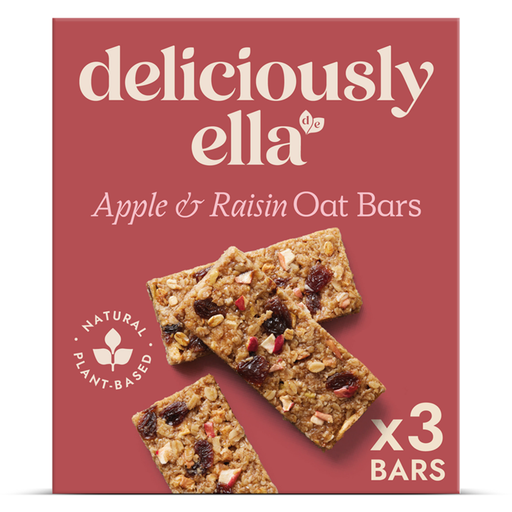
Deliciously Ella Apple, Raisin & Cinnamon Oat Bars, 3 x 50g
For an oat-bar lunch option, check whether oats are acceptable. Check the current pack for any milk, nut, peanut or soya precautionary warnings before choosing it for an allergy-related exclusion.
View on Joybuy
 No image available
TREK High Protein Flapjack Cocoa Oat, 16 x 50g
This cocoa-oat multipack is a flapjack option where oats fit the lunch requirements. Check this variant’s current ingredients for soya and its precautionary warnings; the allergen profile of TREK Original Oat cannot be assumed for Cocoa Oat.
View on Joybuy
No image available
TREK Salted Caramel Protein Flapjacks, 3 x 50g
Consider this three-bar pack only after checking whether its oat and soya ingredients fit the intended eater. Read this flavour’s own pack for any precautionary allergen warnings rather than relying on those of another TREK flapjack.
View on Joybuy
 No image available
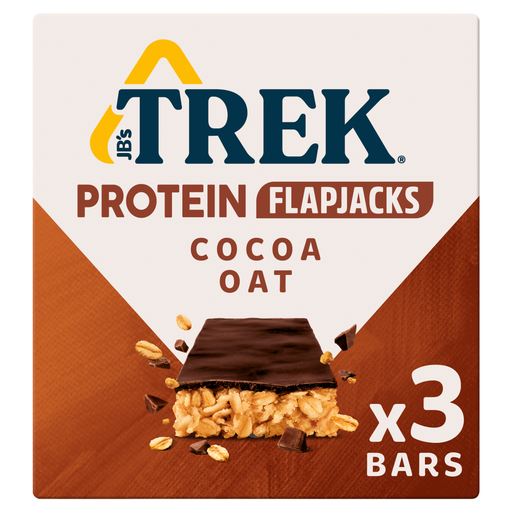
TREK Cocoa Oat Protein Flap Jacks, 3 x 50g
This is the three-bar Cocoa Oat pack, distinct from the larger Cocoa Oat listing above. Check whether oats and soya fit the child’s requirements, and read this pack’s own precautionary warnings before including it in a lunch.
View on Joybuy
 No image available
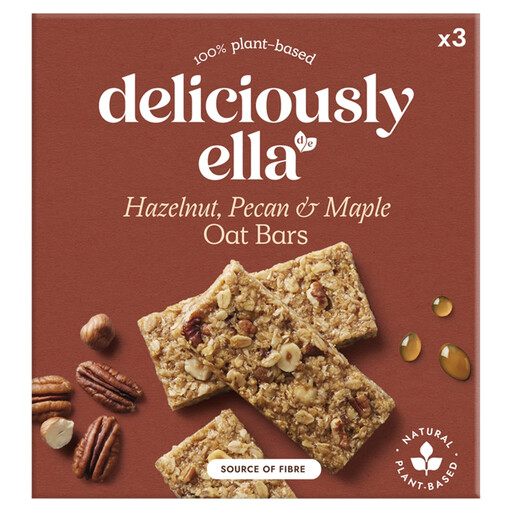
Deliciously Ella Hazelnut, Pecan & Maple Oat Bar Multipack, 150g
The named hazelnut and pecan ingredients make this an option only where those nuts are acceptable. For any other exclusion, check the current pack’s full ingredients and precautionary warnings rather than assuming an oat bar is broadly free from allergens.
View on Joybuy
Questions about free-from bars
Is a gluten-free cereal bar also oat-free?
No. Gluten-free bars can contain oats: the FREEE Apricot & Chia bar, for example, lists gluten-free oats. If oats must be avoided, check the ingredients separately from the gluten-free claim.
What does “may contain peanuts, nuts or milk” mean?
It warns of possible unintended presence of the named allergen. The Food Standards Agency describes this as precautionary allergen labelling; compare each warning with the child’s established allergy-management requirements rather than treating a vegan or gluten-free claim as an override.
Can a vegan cereal bar contain allergens?
Yes. TREK describes Original Oat as vegan and gluten-free, but its stated allergen information includes soya and may-contain warnings for peanuts, nuts and milk. Check the exact bar’s current label for the allergens that matter.
Where should I check a packaged bar’s allergens?
Start with the current pack’s ingredients and allergen statement, including any specific precautionary warning. Compare the named ingredients and warnings with the exclusions required for the person who will eat it.
Do I need to recheck a bar I have bought before?
Yes. Kellogg’s advises checking information on the pack because recipes can change. Recheck the current pack before buying and packing a familiar bar, particularly for a holiday club or shared lunch.


