Home workers avoiding an allergen or gluten
Start with the exact variant’s ingredients and any “may contain” statement. A broad free-from description does not tell you whether the bar fits your particular restriction.


Choose a cereal bar by the exact ingredient or allergen you need to avoid, rather than treating “free from” as a claim that covers every restriction. A gluten-free bar may still contain peanuts, soya or milk, while a vegan bar may contain wheat or soya. Check the current pack’s ingredients and “may contain” statement first; then compare protein, fibre, sugars and energy for the serving you would eat with lunch.
Start with the exact variant’s ingredients and any “may contain” statement. A broad free-from description does not tell you whether the bar fits your particular restriction.
Once a bar meets your dietary requirements, compare its labelled nutrition per bar. Pack sizes and serving sizes can differ, so the figures need a clear basis.
Check the vegan claim and the allergen information separately. Plant-based ingredients do not rule out wheat or soya in the recipe, or a precautionary warning for other allergens.
Decide which ingredient you must avoid before comparing flavours or nutrition. If more than one restriction applies, check each one against the same current pack.
| Priority | What to check | Your needs |
|---|---|---|
| Ingredients and cross-contact | Read the highlighted allergens in the ingredients and any “may contain” statement. The Food Standards Agency explains that precautionary allergen labelling signals possible unintended presence, rather than an ingredient deliberately added to the recipe. | “I need to avoid a particular allergen, so both the recipe and any cross-contact warning matter to my choice.” |
| Gluten and oats | Look for a gluten-free claim on the exact bar; do not assume that an oat bar or a wheat-free description establishes one. The Food Standards Agency defines gluten-free as no more than 20 mg/kg of gluten in food as sold to the consumer. Check oats separately if you also need to avoid them. | “If gluten is my concern, I need a gluten-free claim. If oats are also excluded, I need to check for those as well.” |
| Vegan and lactose-free claims | Check what each claim addresses, then read the separate allergen declaration. Nature Valley describes its Crunchy Variety Pack as lactose free, but lists possible peanut, tree-nut and soya cross-contact; Joybuy’s Trek Biscoff Flapjack listing declares wheat and soya. | “A vegan or lactose-free choice still has to meet my other ingredient and allergen requirements.” |
| Nutrition per serving | After the allergen check, compare labelled protein, fibre, sugars and energy per bar. Check the serving size before comparing a 40 g bar with a 50 g bar, or per-bar figures with per 100 g figures. | “For a bar alongside my work-from-home lunch, I want to compare what the portion I would actually eat contains.” |
Nature Valley labels its Protein Peanut & Chocolate bar gluten free, yet states that it contains peanut, soya and milk and may contain tree nuts. Its gluten claim does not answer those separate allergen questions.
Identify each ingredient you need to avoid, then check the current bar’s ingredients and precautionary statement before comparing its nutrition or flavour.
Joybuy’s Trek Biscoff Flapjack listing describes a vegan product but declares wheat and soya, with possible traces of peanuts, nuts and milk. Vegan status does not replace the allergen declaration.
Check the vegan claim and every allergen relevant to you on the exact pack.
The Food Standards Agency explains that precautionary allergen labelling communicates possible unintended allergen presence. That is different from listing an ingredient in the recipe, but it can still affect whether a bar fits your requirements.
Read the statement before purchase and assess it against the allergy advice you follow. If you are unsure how it applies to you, seek advice from your healthcare professional.
Ingredients and allergen statements need to be checked for the variant being bought. Graze’s document naming gluten-free Oat Boost variants is marked correct as of February 2022; it does not establish the contents of a current pack.
Check the current label for the exact flavour and pack, rather than relying on an older document or a similarly named bar.
These examples show why a brand name alone cannot settle a free-from decision: claims and allergen statements apply to particular products.
Its researched protein and crunchy oat bars illustrate different dietary claims within one brand.
Relevant when deciding whether this range belongs on a gluten-free shortlist.
A plant-based flapjack example for comparing a vegan description with an allergen declaration.
An example of why familiar cereal-bar formats still need product-specific screening.
Graze named gluten-free Oat Boost variants in a document marked correct as of February 2022.
These oat and protein bar options give you flavours and pack sizes to screen for a work-from-home lunch. Check each current pack against your own dietary requirements; products in the same selection need not share an allergen profile.
 No image available
For a gluten-free protein-bar option to compare with lunch, Nature Valley lists about 10 g protein and 4 g fibre per 40 g bar. It contains peanut, soya and milk and may contain tree nuts, so check the current pack if any of those allergens matter to you.
 No image available
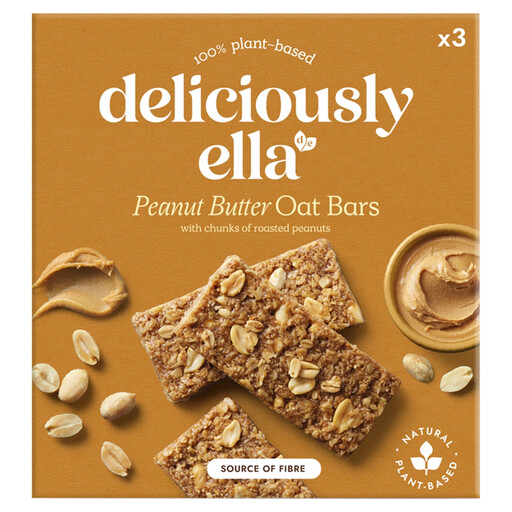
This peanut butter variant comes as three 50 g oat bars. Check its current ingredient and “may contain” statements against any peanut, oat or other allergen restriction before comparing nutrition per bar.
 No image available
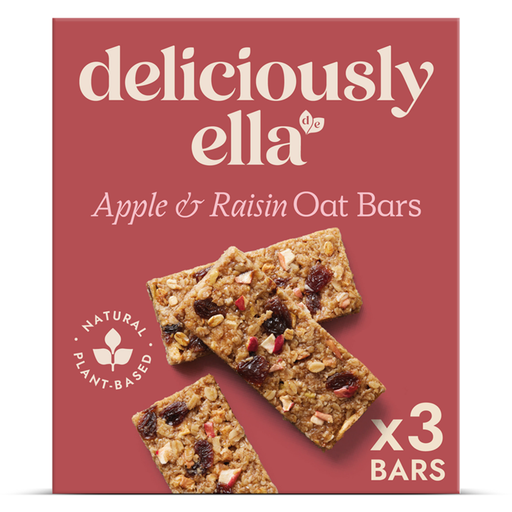
These apple, raisin and cinnamon oat bars come in a pack of three 50 g bars. If you are looking for a vegan or gluten-free option, confirm those claims on this exact pack and check its separate allergen statement.
 No image available
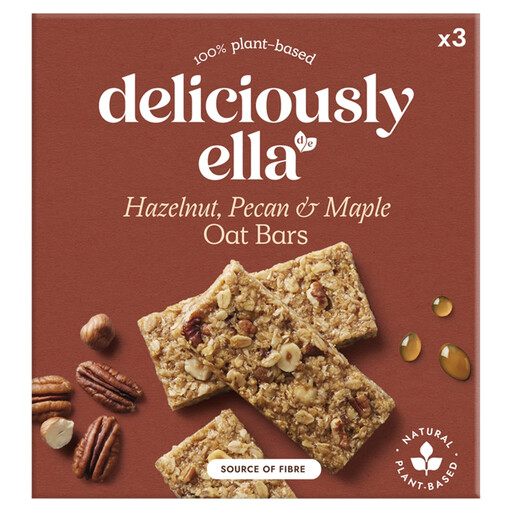
For this hazelnut, pecan and maple variant, check the ingredient declaration for the specific nuts present and the precautionary statement for other allergens. Confirm any gluten-free claim on the current multipack rather than inferring it from the oat-bar format.
 No image available
This lemon and blueberry Oat Boost multipack contains four 30 g bars. Graze named a Lemon Blueberry Oat Boost in a document dated February 2022; check this pack’s current gluten claim, ingredients and allergen statement rather than relying on the older document.
No. The Food Standards Agency defines gluten-free as no more than 20 mg/kg of gluten in food as sold to the consumer, but that claim does not mean oat-free. Check the ingredients if you need to avoid oats as well as gluten.
Not necessarily. Joybuy’s Trek Biscoff Flapjack listing declares wheat and soya and warns that it may contain peanuts, nuts and milk, despite describing the product as vegan. Read the allergen declaration separately from the vegan claim.
The Food Standards Agency explains that precautionary allergen labelling warns that an allergen could be unintentionally present. It is not the same as an ingredient declaration; assess it against the allergy advice you follow before choosing the bar.
Yes. Nature Valley advises checking the specific product’s packaging because formulations can change. Read the current ingredients and allergen statements for the flavour and pack you are buying.
Do not choose them on that basis: Alpen’s coeliac-diet FAQ states that all its products contain gluten from wheat, barley or oats. Look for a current gluten-free claim on another exact product, then check its other allergen information.