Hosts serving guests with known restrictions
Match each bar to the allergen or ingredient a guest needs to avoid. Keeping individual wrappers available lets guests read the declarations themselves before eating.


Choose cereal bars for a board game night by each guest’s named restriction, rather than treating “free from” as a claim about every allergen. A gluten-free bar can still contain milk, peanuts or soy, while a lactose-free claim does not settle questions about other ingredients. Check the exact wrapper for each flavour and keep it available when serving.
For a mixed group, the useful question is not whether a bar is generally “free from”, but whether its current label fits each guest’s restriction.
Match each bar to the allergen or ingredient a guest needs to avoid. Keeping individual wrappers available lets guests read the declarations themselves before eating.
Look for an explicit gluten-free claim, then check oats and any other relevant allergens separately. The Food Standards Agency notes that oats must still be declared as an allergen even in a food labelled gluten free.
Check which requirement applies: “lactose free” is not a claim that a bar is free from every allergen. Other ingredients and “may contain” statements still matter.
Start with the guest’s specific restriction, then read the claim, ingredients and precautionary wording on the exact flavour and pack size you plan to serve.
| Priority | What to check | Your needs |
|---|---|---|
| Exact pack | Read the current ingredient list and highlighted allergens for the chosen flavour and pack size. Recheck when buying a different variant. | I’m serving people with different restrictions, so I need the declaration for each bar rather than an assumption about its brand. |
| Gluten-free claim | Look for an explicit gluten-free claim; do not infer it from an oat- or rice-based description. The Food Standards Agency describes “gluten free” as no more than 20 mg/kg of gluten in the food as sold. | For a guest who needs gluten-free food, I also need to check whether oats and the bar’s other declared allergens suit them. |
| Lactose and milk | Check the precise lactose-free claim and the separate milk declaration. Nature Valley UK labels certain Crunchy varieties lactose free, but their other allergen statements differ by variant. | A lactose-free label answers only part of my question if a guest also avoids milk ingredients or another named allergen. |
| “May contain” wording | Identify the allergens named in the precautionary statement and compare them with the guest’s restriction. The Food Standards Agency says this wording communicates possible unintended allergen presence. | Before putting bars on a shared table, I want guests to be able to see any precautionary statement that affects them. |
| Serving | Keep wrappers with their bars and avoid mixing loose pieces from different products in one bowl. | If several bars look similar once unwrapped, I need a way for each guest to identify what they are choosing. |
Nature Valley UK labels its Protein Peanut & Chocolate bar gluten free, but states that it contains peanut, soy and milk and may contain tree nuts.
Compare every relevant ingredient and precautionary statement with the guest’s restrictions, even when the front-of-pack claim fits one of them.
Nature Valley UK identifies Crunchy varieties as lactose free, while its Variety Pack and Apple & Cinnamon variety carry different precautionary allergen statements.
Check the exact variety separately for wheat, peanuts, tree nuts, soy and any other allergen the guest needs to avoid.
An oat-based description is not an explicit gluten-free claim. The Food Standards Agency also notes that oats remain an allergen in their own right when a food is labelled gluten free.
For a gluten-free requirement, check the claim on the exact pack and consider any separate restriction involving oats.
Ingredient and allergen information can differ between flavours or change with a recipe, so an earlier pack is not the declaration for the bar being served.
Read the current wrapper each time and leave it with the bar at the game table.
These examples show why claims and allergen declarations need to be checked by product, not assigned to every bar made by a brand.
Nature Valley UK gives different free-from and allergen information for different cereal-bar varieties.
Graze describes snacks made with ingredients including wholegrains, fruit and nuts.
The Kellogg’s UK declaration for Coco Pops Snack Bar provides an example of a product-specific allergen check.
Alpen’s own FAQ is relevant when checking its range for a gluten-free option.
These cereal and oat bars offer different flavours and pack formats for a game-night snack table. Compare each current wrapper with the guest’s named restriction; a flavour name alone does not establish a free-from claim.
 No image available
For a guest seeking a gluten-free bar, Nature Valley UK labels this variety gluten free. It contains peanut, soy and milk and may contain tree nuts, so check the current wrapper against any additional restrictions.
 No image available
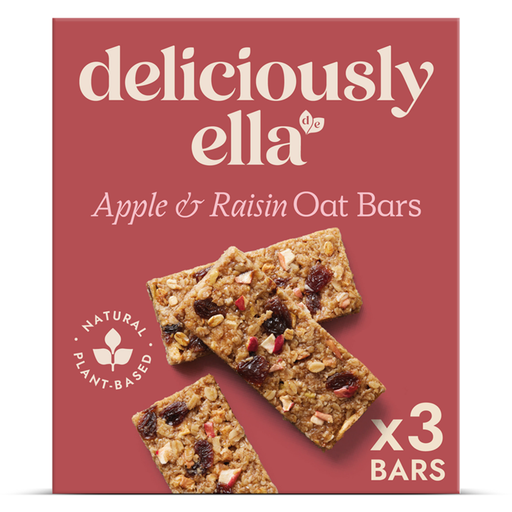
For an oat-bar option, check the current pack for any gluten-free claim, its oat declaration and any “may contain” wording relevant to your guests.
 No image available
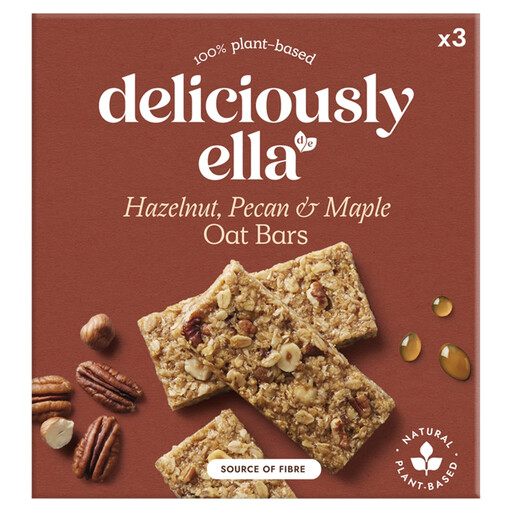
This hazelnut-and-pecan variety calls for a particularly close pack check when serving anyone who avoids nuts. Read its full ingredient and precautionary declarations, and check any gluten-free claim separately.
 No image available
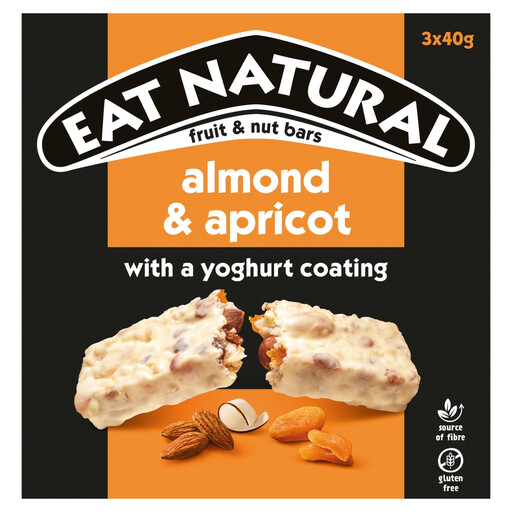
Check the current wrapper before serving this almond-and-yoghurt variety to anyone avoiding nuts or milk. If a guest needs gluten-free food, look for an explicit claim rather than relying on the flavour or bar format.
 No image available
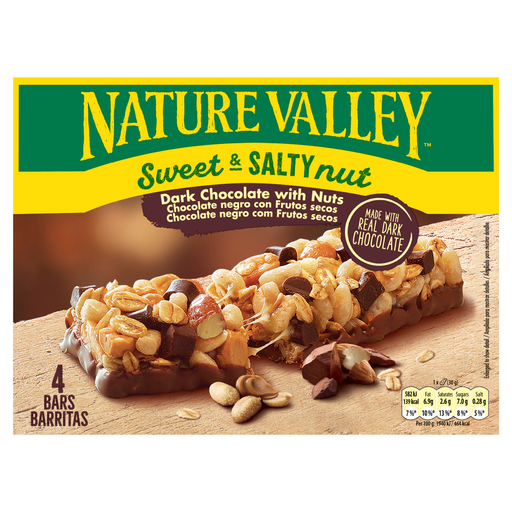
For this nut variety, compare the current ingredient and precautionary statements with every guest’s restrictions before putting it on a shared snack table. Its name is not a free-from claim.
No. Check what the claim names: a gluten-free bar can still contain other allergens, and a lactose-free claim does not resolve every other restriction. Match the full declaration on the exact pack to each guest’s needs.
The Food Standards Agency describes the claim as no more than 20 mg/kg of gluten in the food as sold to the final consumer. Oats must still be emphasised as an allergen, so check them separately if they matter to the guest.
Read it alongside the ingredient list and the guest’s restriction. The Food Standards Agency explains that precautionary allergen labelling signals that a named allergen could be unintentionally present; it is not the same as listing that allergen as an ingredient.
Nature Valley UK labels it gluten free, but also states that it contains peanut, soy and milk and may contain tree nuts. It is an option only if its complete current pack declaration fits that guest’s other restrictions.
Keep each bar with its original wrapper until the guest has checked it, rather than mixing unwrapped pieces from different products in one bowl. That keeps the ingredient and allergen declaration identifiable throughout the evening.