Students avoiding gluten
For a bar to carry into lectures, look for a current gluten-free claim. Oats in the product name do not establish that claim.


If you need to avoid gluten, start with a bar whose current pack says gluten-free rather than relying on an oat-based name; the Food Standards Agency describes that claim as applying to food with no more than 20 mg/kg gluten as sold. Then check the ingredients and any “may contain” statement for the particular allergens you avoid. Once a bar meets those requirements, compare nutrition per bar and decide what else you need for your lecture-day lunch.
For a bar to carry into lectures, look for a current gluten-free claim. Oats in the product name do not establish that claim.
Check the exact bar’s ingredients and precautionary allergen wording. A gluten-free claim does not tell you whether it contains nuts, milk or soya.
Check vegan and gluten-free claims separately, then read the allergen information. TREK describes its Original Oat flapjack as vegan and gluten-free, but lists soya and a “may contain” warning for peanuts, nuts and milk.
For a lecture-day lunch, settle any gluten and other allergen requirements before comparing the nutrition and portion size of bars you can use.
| Priority | What to check | Your needs |
|---|---|---|
| Gluten claim | Look for “gluten-free” on the current pack, not just oats in the name. The Food Standards Agency describes the claim as no more than 20 mg/kg gluten in food as sold; oats must still be identified as an allergen when present. | If I need to avoid gluten, an ordinary oat bar’s name is not enough to make my choice. |
| Other allergens | Read the full ingredients and any “may contain” statement for the exact variant. Check each allergen that matters to you, including peanut, other nuts, milk and soya. | My requirement might be nut-free or milk-free as well as gluten-free. I need the information for this bar, not just a general “free-from” description. |
| Serving nutrition | Compare protein, fibre, sugars and energy for the bar you would actually take, noting its weight. Do not treat figures for different bar sizes as identical servings. | For a short lunch break, I want to know what one bar supplies and whether I plan to pack anything else. |
Gluten-free bars can still list other allergens. Nature Valley’s Protein Salted Caramel Nut contains peanut, almond, milk and soya, while TREK’s Original Oat contains soya and has precautionary wording for peanuts, nuts and milk.
Name the allergens you need to avoid, then check both the ingredient list and any “may contain” statement on the current pack.
Coeliac UK notes that standard oats may be produced alongside wheat, barley and rye and become contaminated. An oat-based product name is therefore not a substitute for a gluten-free claim.
If gluten avoidance is essential, check the current bar for that claim rather than choosing it because oats are prominent on the front.
A protein description does not show the bar’s full per-serving nutrition or resolve an allergen requirement. Bars also come in different portion sizes.
Check suitability first, then compare the nutrition for one whole bar and decide what else to bring for lunch.
A brand name alone cannot establish that every variant meets the same free-from requirement; use these product-line details alongside the current pack.
Nature Valley identifies Protein Peanut & Chocolate and Protein Salted Caramel Nut as the gluten-free bars in its range.
TREK describes its Original Oat flapjack as vegan and gluten-free.
Kellogg’s Nutri-Grain Apple is an example to check carefully when gluten avoidance is the priority.
Alpen’s allergy guidance is relevant when deciding whether its range meets a gluten-free requirement.
Graze describes its Oat Boost flapjacks as made with wholegrain oats.
Eat Natural peanut-and-chocolate bars are another product type a student might encounter when comparing portable snacks.
These oat and protein bars are options to consider for a lecture-day snack. Check the current pack against your own gluten, vegan and allergen requirements before choosing between them.
 No image available
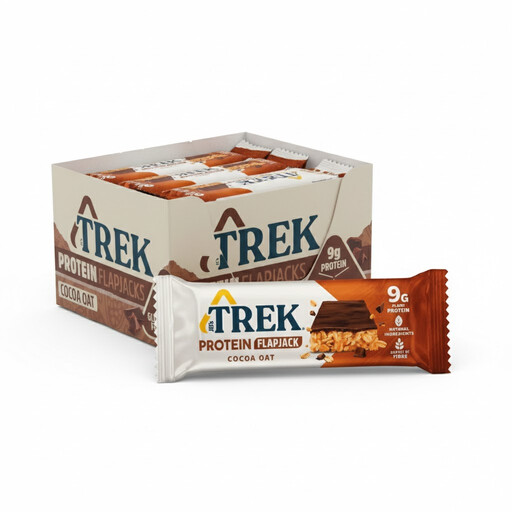
The pack contains 50 g cocoa-oat flapjacks that can be taken to lectures individually. If you need a vegan or gluten-free bar, check those claims on this Cocoa Oat variant’s current pack, along with its soya and precautionary allergen information; details for TREK Original Oat should not be assumed to apply to Cocoa Oat.
 No image available
Nature Valley identifies this 40 g bar as gluten-free and lists around 10 g protein and 4 g fibre per bar. It contains peanut, almond, milk and soya and may contain other tree nuts, so check the current pack if any of these affect your choice.
 No image available
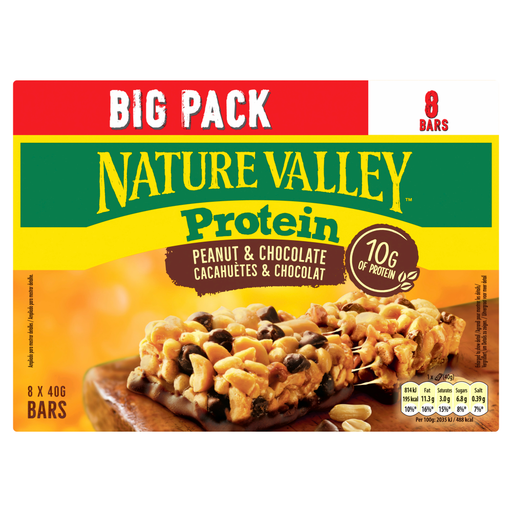
Nature Valley identifies this peanut-and-chocolate variant as gluten-free; the pack contains eight 40 g bars. If you avoid peanuts or any other allergen, check this variant’s current ingredients and “may contain” statement before choosing it.
The Food Standards Agency describes the gluten-free labelling condition as no more than 20 mg/kg gluten in the food as sold. A bar with oats must still identify oats as an allergen; gluten-free does not mean oat-free.
No. A gluten-free claim does not cover every allergen. Nature Valley’s Protein Salted Caramel Nut contains peanut, almond, milk and soya; TREK’s Original Oat contains soya and may contain peanuts, nuts and milk. Check the exact bar’s current pack.
Do not assume so. Coeliac UK says standard oats may be produced alongside wheat, barley and rye and become contaminated. Look for a current gluten-free claim rather than relying on the word “oat”; Coeliac UK also notes that some people are sensitive even to gluten-free oats.
Use the description to narrow your options, then check the physical current pack for the ingredients and any precautionary allergen statement before eating the bar. Check the exact flavour and variant rather than applying another product’s details to it.