Hosts serving a gluten-free guest
Look for an explicit gluten-free claim on the product you plan to serve. If the guest also avoids another allergen, check the exact flavour’s ingredients and precautionary wording separately.


Choose crisps for the guest’s specific dietary requirement rather than assuming that a potato base, vegan wording or a gluten-free claim covers every allergen. For a gluten-free guest, look for an explicit claim on the exact product; for someone avoiding a named allergen, check both the ingredients and any precautionary statement on the current pack before serving. Keep packs identified for particular guests separate from an unrestricted shared bowl.
Look for an explicit gluten-free claim on the product you plan to serve. If the guest also avoids another allergen, check the exact flavour’s ingredients and precautionary wording separately.
Check the named allergen against both the ingredient list and statements such as “may contain”. A plain flavour or short ingredient list does not settle the question on its own.
Vegan or vegetarian wording can help identify a choice for those diets, but it does not replace an allergy check. Keep any packs chosen for particular guests identifiable when the snacks are served.
Start with the restriction that matters to each guest, then check the exact flavour and pack. Dietary claims, ingredients and precautionary statements answer different questions.
| Priority | What to check | Your needs |
|---|---|---|
| Gluten-free choice | Look for an explicit gluten-free claim on the exact product. The Food Standards Agency describes the UK claim as no more than 20 mg/kg of gluten in the food as sold to consumers. | I need to identify a labelled option for a guest who eats gluten-free food, rather than relying on the fact that crisps are made from potatoes. |
| Named allergens | Read the current pack’s ingredients and any “may contain” or factory-handling statement for the allergen in question. The Food Standards Agency distinguishes precautionary information from intentionally added ingredients. | If a guest avoids milk, soya, celery, mustard or another named allergen, I need to check that allergen on the flavour I will actually serve. |
| Overlapping diets | Check gluten-free, vegan or vegetarian wording against each separate requirement. A gluten-free flavour can still contain milk: Pipers lists milk ingredients in its Lye Cross Cheddar & Onion crisps. | One guest needs gluten-free food and another avoids milk; I cannot treat one claim as an answer to both needs. |
| Serving format | Keep the original pack available for checking and identify any crisp reserved for a particular guest. Review each product before putting different crisps into a shared bowl. | I want guests to know which crisps were checked for them without having to identify a flavour from a mixed bowl. |
| Stall or café snacks | Ask for allergen information about the food being sold, including its exact flavour and presentation, rather than relying on a familiar brand name. | If I buy snacks at a Bonfire Night venue, I need information about what is being served there, not just a pack I checked elsewhere. |
A potato base is not the same as an explicit gluten-free claim. The Food Standards Agency describes that UK claim in terms of gluten content in the food as sold.
For a gluten-free guest, check the claim on the exact product, then look separately for any other allergens relevant to that guest.
The labels address different requirements. Pipers Lye Cross Cheddar & Onion is described as gluten-free but lists milk ingredients; REAL Roast Ox lists milk, soya and celery despite the brand’s gluten-free range statement.
Start with the guest’s particular restriction and check the current label for that flavour.
According to Food Standards Agency-commissioned research, wording such as “may contain” communicates possible unintended allergen presence. Tyrrells Naked lists potatoes and sunflower oil as ingredients but also says it may contain milk.
Read both parts of the physical pack. If its wording does not meet a guest’s allergy requirements, do not present that pack as suitable for them.
Online details can help narrow a choice, but they are not the packaging guests will encounter at the gathering. The Joybuy listing for Pipers Biggleswade Sweet Chilli advises shoppers to read the product’s own labels and warnings.
Before serving, use the pack in hand to confirm its ingredients, dietary wording and precautionary statement.
These examples show why a claim or warning must be read for a particular flavour; a brand name alone cannot establish suitability for every guest.
Walkers Ready Salted has a short stated ingredient list, but its manufacturer also gives a factory-handling warning.
Tyrrells Naked is an unseasoned example with potatoes and sunflower oil listed as ingredients.
KETTLE Chips describes its Thai Sweet Chilli product as gluten-free and suitable for vegans and vegetarians.
Seabrook states that its gluten-free crisp and snack range is Coeliac UK accredited. A listed Sea Salted multipack is also described as gluten-free and vegan.
Pipers describes Anglesey Sea Salt as gluten-free and suitable for vegans and vegetarians; it lists potatoes, sunflower oil and Anglesey Sea Salt PDO as ingredients.
REAL states that its crisp range is gluten-free and vegetarian, with six recipes suitable for vegans.
These potato-crisp options include sharing bags with different flavours and label checks to make before a Bonfire Night gathering. Choose against each guest’s requirements using the current pack, especially where an allergy is involved.
 No image available
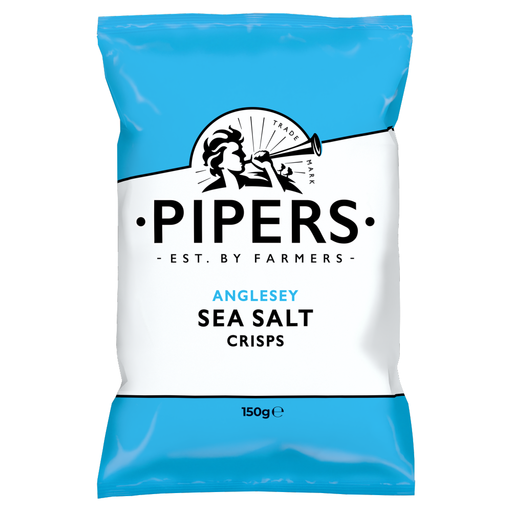
For guests seeking a gluten-free or vegan-labelled option, Pipers describes this flavour as both. The 150g pack lists potatoes, sunflower oil and Anglesey Sea Salt PDO; check its current precautionary allergen wording before serving it to someone with an allergy.
 No image available
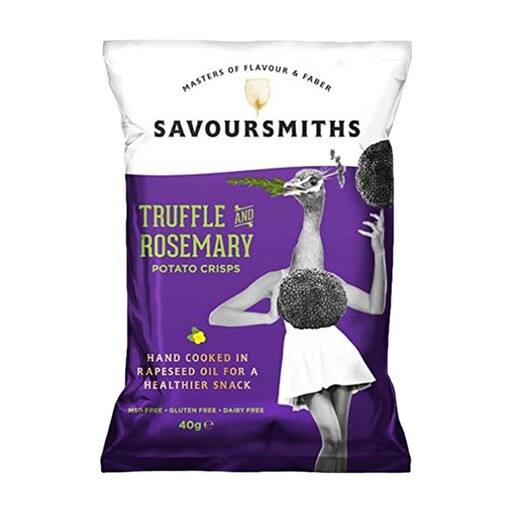
This 150g truffle and rosemary flavour is a sharing-bag option. Before choosing it for a guest with a dietary restriction, check the exact pack’s ingredients, relevant dietary claims and precautionary allergen wording.
 No image available
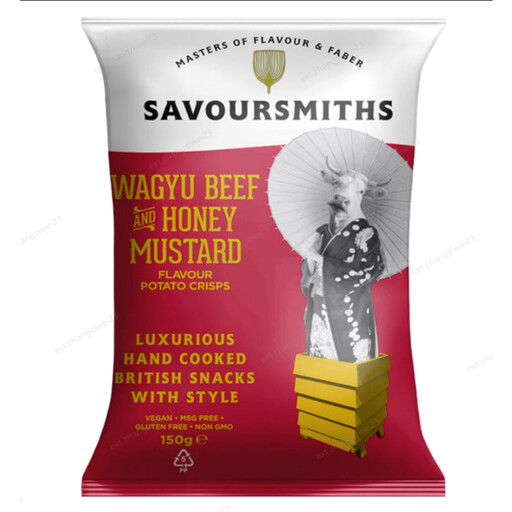
The 150g pack names a vegan Wagyu beef and honey mustard flavour. If you are choosing it for a vegan guest or someone avoiding an allergen, confirm the relevant wording, full ingredients and any precautionary statement on the pack in hand; the flavour name alone is not an allergy check.
 No image available
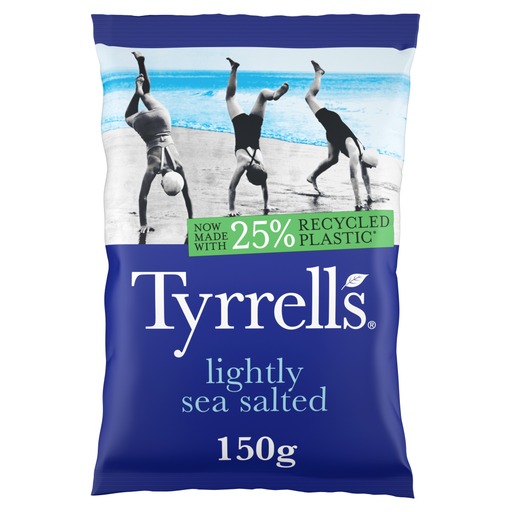
This 150g lightly sea-salted flavour is distinct from Tyrrells Naked. Check this pack’s own ingredients, precautionary allergen wording and any gluten-free claim before offering it to a guest with those requirements.
 No image available
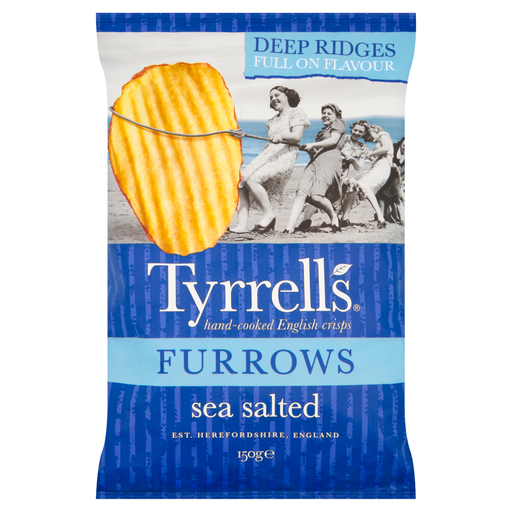
For this 150g sea-salt flavour, use the Furrows pack itself to check ingredients and any precautionary statement. Do not transfer dietary claims or allergen information from another Tyrrells product to this one.
No. A gluten-free claim concerns gluten, not milk. Pipers describes its Lye Cross Cheddar & Onion crisps as gluten-free, but the ingredients include cheese powder and milk powder; check the exact pack for every allergen the guest avoids.
The Food Standards Agency describes a UK gluten-free claim as applying to food containing no more than 20 mg/kg of gluten as sold to the consumer. Look for the claim on the exact crisp product rather than assuming that its potato base makes it gluten-free.
No. The Food Standards Agency describes precautionary statements as information about possible unintended allergen presence, which is separate from the ingredient list. For example, Tyrrells Naked lists potatoes and sunflower oil but also says it may contain milk; check both kinds of wording against the guest’s requirements.
Ask for allergen information about the exact food being offered before buying it. The Food Standards Agency advises food businesses on providing allergen information for prepacked and non-prepacked food; a familiar brand or flavour name is not a substitute for information about the snack at that stall.