Desk-lunch shoppers avoiding a named allergen
Start with the exact product’s ingredients and any precautionary statement. A broad fruit-only or vegan description cannot answer whether the pack fits your particular exclusion.


Choose a portioned fruit snack only when its current pack confirms suitability for the particular allergen you need to avoid. A vegan or fruit-only description does not settle every allergy question: for a quick desk lunch, check the ingredients and precautionary wording as well as whether the format is convenient to carry.
The allergen you need to avoid determines which label details matter; a convenient pack format is a separate choice.
Start with the exact product’s ingredients and any precautionary statement. A broad fruit-only or vegan description cannot answer whether the pack fits your particular exclusion.
Look for a gluten-free claim on the exact product rather than assuming fruit-based snacks qualify. The Food Standards Agency defines gluten-free as no more than 20 mg/kg of gluten in food as sold; that claim does not address other allergens.
A small fruit portion may be easy to pack for lunch, but still read its allergen information. For example, the M&S Dried Pineapple listing declares sulphites despite describing the product as free from added sugars.
Match the pack to your allergen exclusion first, then decide whether its portion size and packaging work at your desk.
| Priority | What to check | Your needs |
|---|---|---|
| Allergen suitability | Read the current ingredient list, the named allergen information and any ‘may contain’ or ‘not suitable for’ statement. Check the precise flavour and pack size you intend to take. | I need to know whether this particular pack fits the allergen I avoid, including any cross-contact warning. |
| Desk-friendly format | Check the portion size and whether portions are individually packed or need dividing before lunch. Sainsbury’s lists BEAR Raspberry Yoyos as a multipack of 20 g portions. | A portion I can put in my bag without preparing it at my desk is easier to fit into a quick lunch. |
| Mixed ingredients | Read the full list when fruit is combined with other ingredients. Tesco Dried Mixed Fruit declares sulphites; Whitworths SHOTS Fruity Biscuit declares wheat, milk and soya and warns that it may also contain peanuts, other nuts and sesame. | If I choose mixed fruit or a fruit-and-biscuit snack, I need to check the whole product—not just the fruit named on the front. |
| Claim wording | Match each claim to what it actually covers. ‘Vegan’ does not exclude sulphites, while ‘gluten-free’ addresses gluten rather than every allergen. | I want a claim that addresses my specific exclusion, rather than relying on a different dietary description. |
Tesco Dried Mixed Fruit is listed as suitable for vegans but contains sulphites. M&S Dried Pineapple is described as free from added sugars, yet its listing declares sulphites and says it is not suitable for people with a nut allergy.
Begin with the allergen you must avoid, then read the current pack’s ingredients and allergy-suitability wording.
Added components change what needs checking. Whitworths SHOTS Fruity Biscuit declares wheat, milk and soya, with precautionary warnings for peanuts, other nuts and sesame.
Check every ingredient and warning on a fruit-and-biscuit or fruit-and-nut mix before treating it like a plain fruit portion.
Ingredients and allergen information can change. A familiar brand name—or a different flavour in the range—does not establish what is on the pack in your hand.
Read the physical label each time, particularly after a packaging change or when switching flavour or pack size.
The Food Standards Agency explains that precautionary allergen labelling communicates possible unintentional allergen presence. An allergen need not appear as an ingredient for its warning to matter.
If a warning names the allergen you avoid, do not treat the product as confirmed free from that allergen on the strength of its ingredient list alone.
These examples show why suitability belongs to an individual product and pack, not to a brand’s entire range.
Sainsbury’s lists BEAR Raspberry Yoyos in individually portioned 20 g packs and describes that product as gluten-free and nut-free, with no allergens present.
Tesco’s Dried Mixed Fruit is a larger pack described for baking and cooking rather than an individually portioned snack.
M&S product pages provide ingredients and product-specific allergy wording for dried fruit.
Whitworths lists individual dried fruits alongside other fruit-containing snack formats.
Sainsbury’s lists both snack-size fruit products and larger dried-fruit packs, including the BEAR Raspberry Yoyos multipack.
These prunes and fruit snacks offer different pack sizes for a desk lunch. Match each current pack’s ingredients and allergen wording to your own exclusion before choosing by format.
 No image available
The product name describes individually wrapped prunes, which may suit a lunch packed in advance. Its listed limitation identifies added low-polymer isomaltose; check the current pack’s full ingredients and allergen wording against what you need to avoid.
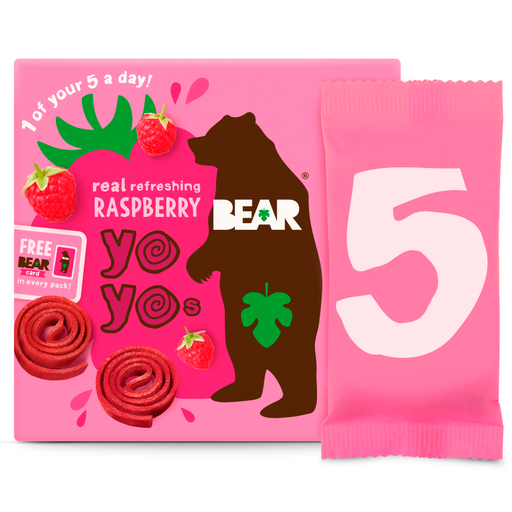 No image available
Five 20 g portions give this raspberry fruit snack a defined format for packing with lunch. Sainsbury’s listing for the raspberry multipack describes it as gluten-free and nut-free, with no allergens present; check the current physical pack before relying on those statements.
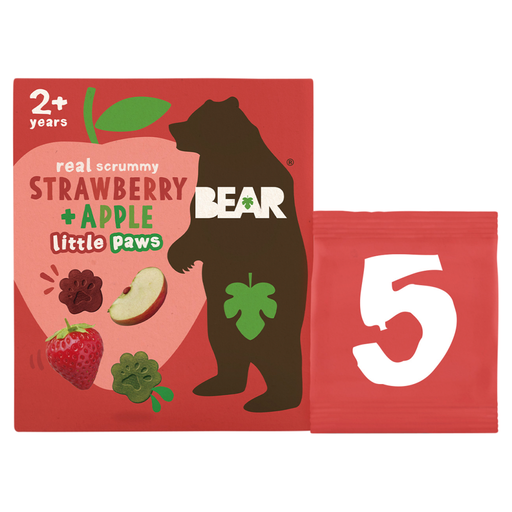 No image available
The 5 x 20 g format offers small portions for a packed desk lunch. Check this strawberry-and-apple variant’s own ingredients, free-from claims and precautionary wording; the raspberry Yoyo listing does not establish this product’s allergy suitability.
 No image available
This apple-and-blackcurrant variant is named as five 20 g portions. If it is going into an allergy-focused lunch, use the current pack for this exact variant to check ingredients and any precautionary statement.
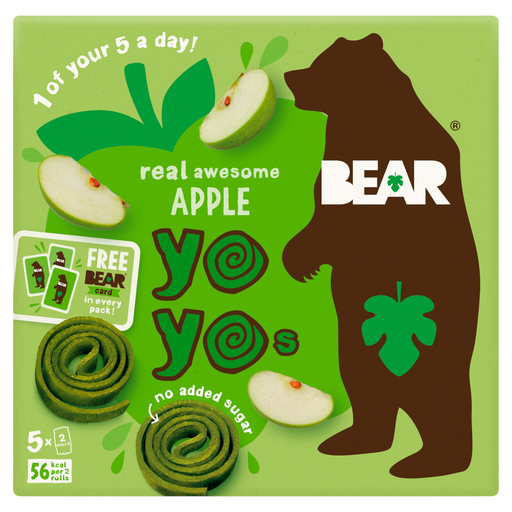 No image available
This apple Yoyos product is identified as a 100 g pack. Check its current portion format if you want a ready-packed desk snack, and read its own allergen information rather than assuming it matches another BEAR flavour.
Match the claim to the particular allergen you avoid; it is not a claim that the product excludes every allergen. GOV.UK says food businesses must tell customers when a listed allergen is an ingredient. Read the exact pack’s ingredients and any precautionary statement as well as its front-of-pack claim.
No. A vegan description does not establish the absence of every allergen: Tesco lists its Dried Mixed Fruit as suitable for vegans while declaring sulphites. Check the allergen information for the product you intend to eat.
No. The Food Standards Agency defines gluten-free as no more than 20 mg/kg of gluten in food as sold. That claim does not tell you whether nuts, milk, soya, sulphites or other allergens are relevant to the same product.
Read the warning in relation to the allergen you avoid rather than treating the ingredient list as the whole answer. The Food Standards Agency explains that precautionary allergen labelling communicates possible unintentional allergen presence.
Yes. Ingredients and allergen information can change, so check the physical pack you are buying, especially when changing flavour, pack size or packaging. An online description for one product does not establish another variant’s suitability.