Shoppers seeking gluten-free popcorn
Check the gluten-free claim on the particular pack, then compare its stated serving with the amount you expect to eat. Calories, sugars and salt can differ between flavours and formats.


Choose popcorn by the particular allergen you need to avoid and the current pack information first: a gluten-free claim does not cover every allergy. To manage calorie intake, compare the kcal for the amount you intend to eat, then check sugars and salt. Small packs define a portion for you; larger bags and home-popped corn give you more control over serving size or preparation, but require you to measure what you use.
Check the gluten-free claim on the particular pack, then compare its stated serving with the amount you expect to eat. Calories, sugars and salt can differ between flavours and formats.
Choose by the allergen that matters to you, not by the fact that popcorn is made from corn or labelled vegan. Check the current ingredients and allergen information for the exact product.
A small pack defines one amount; a sharing bag needs portioning, while kernels let you decide how much to prepare. Oil, sugar, butter and seasoning added at home also count towards the finished snack.
Start with the exact allergen requirement. Then compare nutrition on a common per-100 g basis and for the portion you will actually eat.
| Priority | What to check | Your needs |
|---|---|---|
| Allergen information | Find the claim for the allergen you avoid; read the current ingredients and allergen statement. A gluten-free or vegan label does not establish the absence of other allergens. | I need to know whether this exact popcorn meets my particular avoidance requirement, including any ingredients I add during preparation. |
| Portion and energy | Compare kcal per 100 g and per stated serving, then work out the kcal for your intended amount. NHS Better Health notes that a manufacturer’s portion may differ from yours. | A small pack might help me keep track of one portion; with a larger bag, I would measure some into a bowl. |
| Sugars and salt | Read both per-100 g and per-portion figures, particularly when comparing sweet, sweet-and-salty and salted flavours. NHS food-label guidance uses per-100 g figures for comparisons. | I want to compare what is in the serving I plan to eat, rather than judging a flavour by its calorie figure alone. |
| Preparation | Check whether figures refer to ready-to-eat popcorn or a specified cooking method. Measure kernels and any oil, sugar, butter or seasoning you add. | If I make popcorn at home, I can choose the additions, but the finished portion depends on how I prepare it. |
| Fibre | Compare the declared fibre amount on the nutrition label where it matters to your choice; keep the serving size alongside the figure. | I would like to compare fibre without assuming that a fibre claim answers my allergen or portion questions. |
NHS Better Health notes that the stated serving may not match the amount eaten. A larger bag can contain several servings even when its per-serving kcal figure looks small.
Check the serving weight and the pack weight. If you intend to eat some of a sharing bag, portion it into a bowl.
Free-from claims concern the allergen named. The Food Standards Agency’s allergen guidance distinguishes specified allergens, including cereals containing gluten, milk, peanuts, soybeans and tree nuts.
Check the current pack for the precise allergen you avoid; do not substitute a different dietary label for that check.
Sainsbury’s popping-corn instructions include oil and suggest optional sugar or salt. Changing those additions changes the finished snack.
Measure the kernels and additions you use, and compare the resulting portion rather than treating the kernel serving figure as unchanged.
These examples show different popcorn formats and label details; a brand name alone does not establish that a particular pack meets an allergen requirement.
The Delicious Ideas Food Group listing describes Metcalfe’s Sea Salt Popcorn as a 17 g serving with 84 kcal and a gluten-free claim.
Sainsbury’s lists Propercorn ready-to-eat and microwave formats. Its Microwavable Sweet listing states 93 kcal per serve when prepared according to its instructions.
Sainsbury’s own-label examples include 14 g Sweet & Salty packs, a 110 g ready-to-eat bag and popping corn.
Tesco’s popcorn category lists own-label Sweet & Salted multipacks and a 110 g bag among other formats.
Tyrrells’ popcorn archive names Sea Salted Caramel, Madagascan Vanilla and Sea Salt flavours.
These options include larger ready-to-eat bags and microwave popcorn. For each one, check the current pack against your particular allergen requirement and intended portion.
 No image available
A ready-to-eat bag for shoppers considering lightly salted popcorn. The 70 g pack may cover more than your intended serving, so check the portion and allergen information on the current pack.
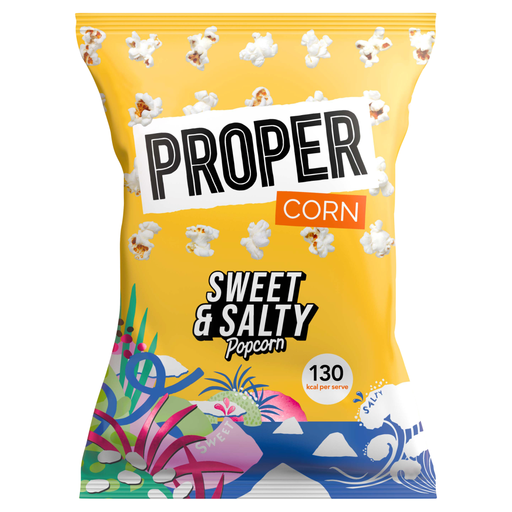 No image available
A ready-to-eat sweet-and-salty option in a 90 g bag. Compare sugars per 100 g and for the portion you plan to eat, and check the current allergen information.
 No image available
A microwave format for preparing popcorn at home. Check the pack’s cooking instructions and appliance requirements, then compare nutrition for the amount you serve and read its current allergen information.
 No image available
A ready-to-eat sweet-and-salted option in a 100 g bag. Measure your intended portion rather than treating the bag as one serving; compare the current sugars and kcal figures and check its allergen information.
No. A gluten-free claim concerns gluten, not every other allergen. Check the current ingredients and allergen information for the particular substance you need to avoid.
No. A vegan label does not replace a claim or allergen statement for the specific ingredient you avoid. Read the current pack for that product and flavour.
Use both: per 100 g puts different products on the same comparison basis, while per-serving figures help you assess the amount you plan to eat. NHS Better Health cautions that the manufacturer’s serving size may differ from your own.
You choose the amount of kernels and the ingredients added during cooking, but those additions affect the finished portion. Sainsbury’s popping-corn instructions include oil and optional sugar or salt, so account for what you use and check every ingredient against your allergen requirement.