Travellers avoiding a particular allergen
Check the named ingredients and any precautionary “may contain” statement on the exact bar. A vegan or high-protein description cannot answer an allergen-specific question.


Choose a protein bar by the ingredients you need to avoid, then check the exact flavour’s current wrapper: vegan does not also mean gluten-free, soy-free or suitable for a milk or nut allergy. Keep the wrapper with the bar when travelling; GOV.UK notes that food in hand luggage can prompt an additional security check, and rules for taking food across borders need checking separately.
Check the named ingredients and any precautionary “may contain” statement on the exact bar. A vegan or high-protein description cannot answer an allergen-specific question.
A plant-based bar may fit an animal-ingredient exclusion, but its proteins and other ingredients still need checking if you also avoid wheat, gluten or soya. Barebells, for example, says its vegan range uses soy and wheat proteins.
If you have no relevant dietary exclusion, compare the protein amount per bar and the serving size rather than assuming all bars offer the same amount. Check the label for any ingredients or consumption warnings that matter to you.
Start with dietary compatibility, compare the nutrition information on bars that pass that check, then consider how you will carry them.
| Priority | What to check | Your needs |
|---|---|---|
| Allergen information | Read the current flavour’s ingredients and highlighted allergens. Check any “may contain” wording separately: the Food Standards Agency explains that precautionary labelling signals possible unintended allergen presence. | I need to know whether the bar fits every allergen I avoid, including any cross-contact warning relevant to me. |
| Dietary claims | Check the specific exclusion, not just a vegan or free-from description. Barebells says its vegan bars use soy and wheat; its Fudge Brownie flavour lists gluten, soy and wheat. | A plant-based bar interests me, but I may also need to avoid gluten, soya or another ingredient. |
| Protein and serving size | Compare grams of protein per bar alongside bar weight. Myprotein states 15g of plant protein for Vegan Carb Crusher; its standard Layered Bar sample states 20g of protein and describes a milk or white-chocolate coating. | I want to compare the amount in the portion I would actually pack, after checking that its ingredients suit me. |
| Travel handling | Keep the bar identifiable in its wrapper. GOV.UK says food in hand luggage can obstruct X-ray images and lead to a manual bag check; check applicable airport, airline and destination requirements before travelling. | I want a snack whose label I can refer to during a journey and whose travel requirements I have checked. |
Barebells’ Vegan Fudge Brownie lists gluten, soy and wheat and carries a may-contain warning for milk, peanuts, tree nuts and sesame. Vegan status does not resolve those separate exclusions.
List the ingredients you must avoid and compare each one with the current, flavour-specific wrapper before buying and eating.
Myprotein describes its standard Layered Bar as coated in milk or white chocolate. Its stated protein amount does not establish dairy-free suitability.
Check dietary compatibility first, then compare protein per bar among products that meet your requirements.
PhD warns on its Smart Bar product page that excessive consumption may cause laxative effects. A multipack may be an inconvenient first purchase if you have not tried that bar.
Consider trying the exact flavour before a travel day and follow its packaging guidance.
Without it, you lose the bar’s ingredient and allergen information when you need to check it. GOV.UK also notes that food in hand luggage may prompt a manual security check.
Keep bars in their original wrappers and check the requirements for your airport, airline, transit stops and destination.
These ranges offer different starting points, but suitability depends on the exact product and flavour rather than the brand name.
Barebells has a vegan protein-bar range alongside other bars.
Myprotein offers Vegan Carb Crusher and a separate standard Layered Bar range.
Grenade’s Cookie Dough bar is listed by the brand with 21g of protein.
PhD describes its standard Smart Bar as having a whey-protein centre.
Quest presents its protein-bar range as gluten-free and soy-free on its global storefront.
Tesco is a retailer with a gluten-free-and-vegan bars category, not a single protein-bar recipe.
These bars and flapjacks cover different airport-snack preferences, from plant-based or gluten-free searches to choices without those requirements. Check each exact product’s current wrapper for any dietary exclusion; the product name alone is not an allergen declaration.
 Image unavailable
A three-pack to consider if you want flapjacks for a journey. If you need to avoid gluten or soya, confirm the exact pack’s ingredients, allergen declaration and precautionary wording before choosing it.
 Image unavailable
The peanut and chocolate variant comes as a four-pack. If peanuts, other nuts, milk or soya are among your exclusions, read this flavour’s current ingredient list and any may-contain statement; do not use its protein-bar name as a free-from claim.
 Image unavailable
This is a separate flavour from the Peanut & Chocolate pack, so check its own wrapper rather than carrying over an allergen assessment. Confirm the ingredient list and any gluten-free claim if gluten avoidance is essential.
 Image unavailable
A multipack for someone considering bars for several journeys. Grenade advises checking each product’s allergy information: confirm this Double Chocolate variant’s ingredients, dietary suitability and any packaging warnings rather than applying figures or claims from another Grenade bar.
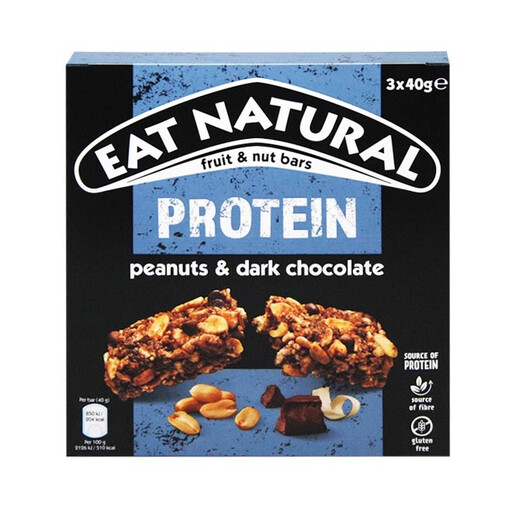 Image unavailable
A three-pack of peanut and chocolate energy bars. Check the exact wrapper for the protein amount, ingredients and allergen warnings; the product name does not establish suitability for a gluten-free or other free-from diet.
Check the requirements for your airport and airline rather than assuming every itinerary is treated identically. GOV.UK says food in hand luggage can obstruct X-ray images, so a bag may need an additional manual check; keeping the bar in its wrapper also preserves its ingredient information.
No. Barebells says its vegan range uses soy and wheat proteins, while its Vegan Fudge Brownie lists gluten, soy and wheat and carries a may-contain statement for milk, peanuts, tree nuts and sesame. Check every exclusion against the exact flavour’s current label.
The Food Standards Agency explains that precautionary allergen labelling communicates that a regulated allergen could be unintentionally present. It is different from listing an allergen used as an ingredient; assess the warning against the allergen you need to avoid and your own allergy-management advice.
Yes. The Food Standards Agency says UK food businesses must provide allergen information for prepacked and non-prepacked food and drink. For a packaged protein bar, use its current, flavour-specific wrapper rather than assuming a shelf description or another flavour has the same ingredients.
Yes: a departure security check and permission to bring food into another country are separate matters. Check the rules for your destination and any transit stop before travelling; GOV.UK also sets out separate rules for bringing food into Great Britain from abroad.