What matters when choosing a bar?
Start with the restriction that would rule a bar out, then compare the remaining options as snacks for your routine.
| Priority |
What to check |
Your needs |
| Declared allergens |
Read the ingredients on the exact pack and flavour. Check for the allergens relevant to you, including milk, gluten-containing cereals, soya, peanuts and nuts. |
I need to know whether an ingredient in this particular bar rules it out before I buy it. |
| Possible cross-contact |
Read any “may contain” statement as well as the ingredients list. The Food Standards Agency explains that precautionary wording concerns allergens that could be unintentionally present. |
Even if an allergen is not an ingredient, a precautionary warning may matter for my restriction. |
| Vegan suitability |
Check the vegan statement and the separate allergen information. Myprotein’s Vegan Carb Crusher warning mentions possible milk, peanut and nut presence and says it is not suitable for peanut and nut allergy sufferers. |
I want a plant-based bar, but I cannot treat “vegan” as a blanket allergy claim. |
| Milk-protein avoidance |
Check for whey, casein, caseinate and other milk ingredients. Grenade lists whey proteins and calcium caseinate in its White Chocolate Cookie bar; PhD describes a whey centre in its conventional Smart Bar. |
If I have been advised to avoid cow’s milk while breastfeeding, a conventional protein bar needs an ingredient check before it goes in my bag. |
| Gluten-free choice |
Confirm the gluten-free statement on the exact product and UK pack. Quest says its protein bars are gluten-free, but also says they use milk protein isolate. |
Gluten avoidance is my priority, and I still need to check whether dairy-based protein fits my other requirements. |
| Everyday use |
Compare pack size and protein per bar where stated, then consider how the bar fits alongside meals and other snacks. The NHS says breastfeeding does not require a special diet and recommends variety. |
A bar would be useful when caring for a baby leaves little time for a snack; I do not need to treat it as a replacement for a varied diet. |
Brand and product-line references
These examples show why a brand name or range label cannot replace a check of the specific bar; inclusion here does not indicate that a product is sold on Joybuy.
Myprotein
Its Vegan Carb Crusher is a vegan protein-bar option.
- The Myprotein product information identifies the bar as suitable for vegans.
- Its allergen warning mentions possible milk, peanut and nut presence and says it is not suitable for peanut and nut allergy sufferers.
PhD
PhD lists a vegan Smart Plant bar as well as a conventional Smart Bar.
- PhD describes Smart Plant as suitable for vegans and vegetarians.
- PhD describes a whey protein centre in its conventional Smart Bar, so that bar does not fit milk-protein avoidance.
Barebells
Barebells offers a Vegan Fudge Brownie protein bar.
- The product gives shoppers a vegan-labelled bar to assess.
- Barebells lists wheat and soya and warns that the bar may contain milk, peanuts, tree nuts and sesame.
Grenade
Grenade’s White Chocolate Cookie bar illustrates why conventional protein bars need a milk-ingredient check.
- Grenade provides an ingredient list for this specific flavour.
- The listed protein blend includes milk-derived whey and calcium caseinate; the product also carries precautionary warnings for other allergens.
Quest
Quest describes its protein-bar range as gluten-free and made with dairy-based proteins.
- The manufacturer states that its protein bars are gluten-free.
- Quest also names milk protein isolate. Confirm the exact UK pack before choosing a bar for a gluten restriction, and do not use this range for milk-protein avoidance.
Joybuy protein bar options
These portable bar packs offer two different ingredient-check starting points: a salted caramel flapjack and a peanut butter bar. Neither title alone establishes suitability for a free-from diet; check the exact pack against your restrictions.
 No image available
Trek Salted Caramel Protein Flapjacks, 3 × 50g
This three-bar flapjack pack is an option to consider for snacks during busy care routines. Check the exact pack for soya and any “may contain” warning for milk, peanuts or nuts before choosing it for an allergen restriction.
View on Joybuy
 No image available
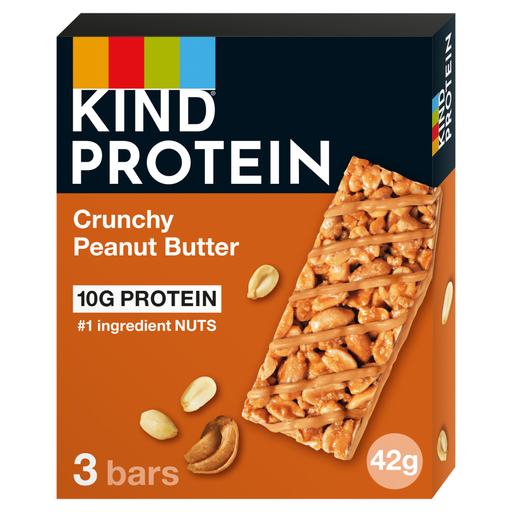
KIND Protein Crunchy Peanut Butter, 3 × 42g
This three-bar peanut butter pack offers another portable snack format. It is not an option for peanut avoidance; check the exact pack for soya and milk as well, particularly if you must avoid milk protein.
View on Joybuy
Questions about free-from protein bars
Does a vegan protein bar suit every allergy restriction?
No. Vegan suitability does not establish freedom from wheat, soya, peanuts, nuts or possible milk cross-contact. For example, Barebells lists wheat and soya in its Vegan Fudge Brownie bar and warns of possible milk, peanut, tree nut and sesame presence; check the exact bar against the allergens you need to avoid.
How do I check a UK protein bar for allergens?
Read the ingredients and any precautionary allergen statement on the exact pack and flavour. The Food Standards Agency says allergens in a prepacked food’s ingredients list must be emphasised, while “may contain” wording communicates possible unintended presence.
Can I choose a regular protein bar while avoiding milk protein during breastfeeding?
Only choose one after checking its exact ingredients against the milk-free advice you have been given. Grenade’s White Chocolate Cookie bar lists whey and caseinate, and PhD describes a whey centre in its conventional Smart Bar. Bedfordshire and Luton Children’s Health NHS guidance identifies a cow’s-milk-free diet while breastfeeding as a specific restriction.
Do I need a protein bar because I am breastfeeding?
No. The NHS says breastfeeding does not require a special diet. A bar that meets your ingredient requirements can be a convenient snack, rather than a reason to replace varied meals.


