Who needs a closer label check?
The relevant claim depends on what you avoid: gluten-free, vegan and dairy-free are different checks, and none covers every allergen.
Shoppers avoiding gluten
Look for an explicit gluten-free claim on the bar, then check milk, nuts, peanuts and soya separately if any of those matter to you. Coeliac UK explains that foods labelled gluten free must contain no more than 20 parts per million of gluten.
Vegan or dairy-free shoppers
A portable plant-based bar may fit a vegan or dairy-free diet without fitting other exclusions. PhD’s Smart Plant Salted Caramel bar, for example, is described as vegan and dairy-free but lists soya and peanut paste, with a may-contain statement for other allergens.
Shoppers avoiding nuts, peanuts or soya
Check the ingredients and precautionary statement for the exact flavour. A gluten-free or vegan claim does not establish suitability for these exclusions: the Tesco-listed KIND Dark Chocolate Raspberry Protein Bar is described as gluten-free but lists peanuts, almonds and soya.
What should you check before choosing?
Start with the exclusion that determines whether you can choose the bar at all. Then compare the serving and nutrition details that matter for a breakfast eaten on the move.
| Priority | What to check | Your needs |
|---|
| Specific allergens |
Read the current ingredients and any “may contain” statement for the exact flavour. Check each allergen you avoid, not just the claim on the front. |
I need to know whether the bar contains, or may contain, the particular allergen I avoid. The Food Standards Agency distinguishes allergens used as ingredients from potential unintended presence addressed by precautionary labelling. |
| Gluten-free claim |
Look for an explicit gluten-free label; Coeliac UK says it applies to foods containing 20 parts per million of gluten or less. Check other allergens independently. |
For gluten avoidance, I want a defined claim rather than assuming an ingredient list without obvious wheat is enough. |
| Vegan or dairy-free suitability |
Check the stated suitability, then the full ingredients and precautionary statement. PhD’s vegan, dairy-free Smart Plant Salted Caramel bar lists soya and peanut paste. |
A plant-based bar suits what I am looking for only if its other ingredients and allergen warnings also fit my needs. |
| Serving and nutrition |
Compare protein, fibre and energy on the same basis, such as per bar or per 100 g. Check the bar size and number of bars in the pack. |
When breakfast needs no preparation, I want to know what one bar provides rather than comparing differently sized servings as if they were equal. |
| Polyols and warnings |
Read polyols per bar where declared and follow any pack warning. PhD lists 16 g polyols per Smart Plant bar; Grenade’s selection box warns that excessive consumption may cause a laxative effect. |
If I plan to eat more than one bar or know that sugar alcohols affect me, I want the serving information and warning in view before choosing. |
Brand and retailer references
These examples show why a brand or product-range description cannot stand in for the label on the particular bar you choose.
Grenade
Grenade sells protein bars in individual flavours and selection boxes.
- Its range gives shoppers individual flavours to check against their preferences.
- Grenade’s selection box says bars may contain milk, soya, wheat and peanuts, as well as traces of several other allergens; it directs shoppers to individual packaging.
PhD
PhD describes its Smart Plant Salted Caramel bar as suitable for vegan and dairy-free diets.
- Its product information states 21 g protein per bar and gives a polyol figure.
- The bar lists soya and peanut paste, may contain sulphites, sesame seeds and nuts, and has 16 g polyols per bar.
Myprotein
Myprotein has a UK vegan-snacks category that includes protein bars and dairy-free shopping filters.
- The category offers a way to identify plant-based bars for a closer look.
- A category label does not establish the allergen profile of an individual flavour; check its product information and delivered pack.
Quest
Quest describes its protein-bar collection as gluten-free.
- Its collection information also identifies dairy-based proteins in original bars and the use of sugar alcohols.
- That collection information does not establish the formulation of a particular UK pack; check the exact product before choosing it.
Barebells
Barebells has original, soft and vegan protein-bar lines.
- Separate lines let shoppers narrow down which individual products to inspect.
- Barebells says all its bars contain nuts or may contain traces of nuts, and that original and soft bars contain lactose or may contain traces.
Tesco
Tesco’s product listings can provide ingredients alongside a gluten-free product description.
- Its listing for KIND Dark Chocolate Raspberry Protein Bars states 12 g protein per bar and provides an ingredient list.
- That gluten-free bar lists peanuts, almonds and soya and may contain milk and other nuts, so the gluten-free description does not cover those exclusions.
Joybuy protein-bar options
These portable multipacks are options to inspect for a quick breakfast, particularly if you are looking for a gluten-free bar. Check the explicit claim and full allergen information on the current pack before choosing one for any exclusion.
 No image available
Nature Valley Protein Salted Caramel Nut Bars, 4 x 40g
The four-bar pack is an option to check when you need breakfast you can carry. For gluten avoidance, confirm the explicit claim on the current pack; check the full allergen statement separately for milk, peanuts, almonds and soya.
View on Joybuy
 No image available
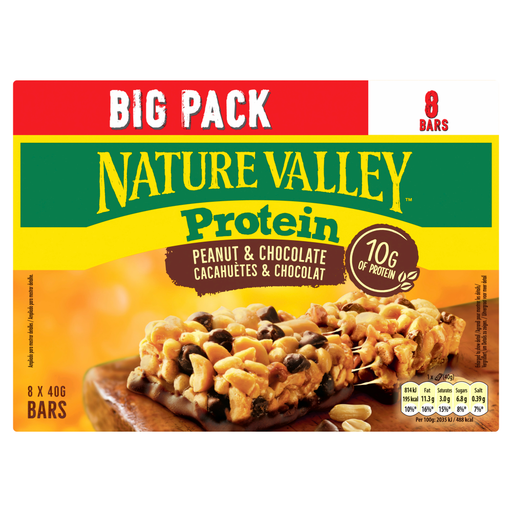
Nature Valley Protein Peanut & Chocolate Cereal Bars, 8 x 40g
This eight-bar cereal-bar pack offers individual bars for an on-the-go breakfast. Check the current pack for an explicit gluten-free claim if required, and read its allergen statement for milk, peanuts, soya and possible tree nuts.
View on Joybuy
 No image available
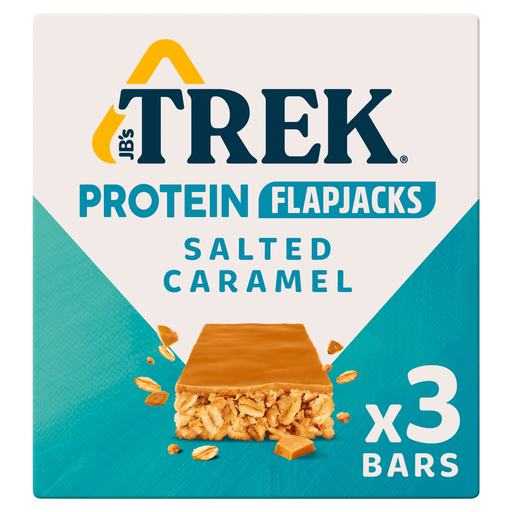
Trek Salted Caramel Protein Flapjacks, 3 x 50g
The three-flapjack pack is another portable breakfast option. If avoiding gluten or dairy, check the relevant claim and any “may contain” statement on the exact pack; its listed limitations also identify soya as an ingredient to check.
View on Joybuy
Common questions
Does gluten free mean a protein bar suits every food allergy?
No. Coeliac UK says foods labelled gluten free must contain no more than 20 parts per million of gluten; the claim says nothing about whether milk, nuts, peanuts or soya are present. Tesco’s gluten-free KIND Dark Chocolate Raspberry Protein Bar, for example, lists peanuts, almonds and soya and may contain milk and other nuts.
Is a vegan protein bar also free from other allergens?
Not necessarily. PhD describes its Smart Plant Salted Caramel bar as vegan and dairy-free, but its ingredients include soya and peanut paste, and its statement says it may contain sulphites, sesame seeds and nuts. Check the exact flavour against every exclusion that matters to you.
What should I read on a protein-bar pack for an allergy?
Read the current full ingredient list and precautionary “may contain” statement for the exact flavour. The Food Standards Agency explains that ingredient labelling identifies main allergens used in a food, while precautionary labelling addresses potential unintended presence; a front-of-pack free-from claim does not replace those checks.
Why check polyols on a low-sugar bar?
The amount and any pack warning can matter when deciding how many bars to eat. PhD lists 16 g polyols per Smart Plant bar, and Grenade’s selection box warns that excessive consumption may cause a laxative effect. Read the figure per bar and follow the warning on the product you choose.
Can I use a protein bar as a quick breakfast regularly?
A bar is a no-preparation option, but compare its energy, fibre, fat and salt per serving rather than judging it by protein alone. NHS guidance says nutrition labels can help you compare foods; also check the ingredients and allergen information each time the product or flavour changes.


