Who needs to check what?
“Free from” only helps narrow the choice once you know which ingredient or dietary requirement matters to you.
Cinema-goers avoiding a specific allergen
Check the current ingredient list and any “may contain” statement against the allergen you need to avoid. The Food Standards Agency cautions that vegan labelling alone is not a substitute for allergen information.
People avoiding gluten who tolerate dairy
An explicit gluten-free claim can help narrow the search, but other ingredients still matter. Quest describes its protein-bar collection as gluten-free and says its OG bars use dairy-based proteins; check the exact bar’s current UK pack.
Vegan snackers without relevant allergen restrictions
PhD Smart Plant and Myprotein Vegan Carb Crusher offer vegan-labelled routes. Their ingredient and precautionary statements still need checking: a vegan preference and avoidance of soya, peanuts, wheat or possible cross-contact are different requirements.
What matters when choosing a bar?
Start with the ingredient you must avoid, then check whether the exact bar and your cinema’s rules fit the visit. Compare protein or sugar information only after those checks.
| Priority | What to check | Your needs |
|---|
| Named allergens |
Read the exact flavour’s ingredients and “may contain” statement. Check every bar in a variety pack separately. |
I need to avoid a particular allergen, so a general dietary claim cannot replace the full pack label. The Food Standards Agency warns that vegan labelling alone is not a proxy for allergen labelling. |
| Dietary claims |
Match a gluten-free or vegan claim to the requirement it actually describes. Check other ingredients independently: Quest says its OG bars use dairy-based proteins, while Myprotein lists wheat and soya in Vegan Carb Crusher. |
Gluten avoidance might be my only restriction; alternatively, I may need to avoid milk or another ingredient as well. |
| Sweeteners and nutrition |
Read the ingredient and nutrition panels for the exact bar. Quest says its bars contain sugar alcohols and that tolerance varies; do not use a low-sugar claim as a substitute for checking the formulation. |
If certain sweeteners do not suit me, I want to identify them before choosing a bar for a film. |
| Pack format |
Check the size of each bar and whether a multipack contains individually wrapped portions. Keep the packaging available if you need to refer back to the allergen information. |
A single, easy-to-carry portion makes more sense for my cinema visit than bringing an entire multipack. |
| Cinema policy |
Check the venue’s current outside-food rules. ODEON says guests may bring snacks and drinks; Cineworld says externally purchased hot food and alcohol are not permitted. |
I want to know whether I can take my packaged snack into the specific cinema I’m visiting. |
Brand and retailer references
These examples show why the named product and flavour matter more than a brand-wide “free from” assumption.
PhD
PhD presents Smart Plant as a vegan protein-bar range; its product page states 20g protein and less than 1g sugar per bar for the product shown.
- A vegan-labelled option for shoppers whose requirements match the exact formulation.
- Smart Plant Salted Caramel lists soya ingredients and peanut paste, so the vegan label does not establish suitability for those allergens.
Myprotein
Vegan Carb Crusher is a plant-protein bar for shoppers seeking a vegan-labelled snack.
- Its published ingredient and allergen information allows the named bar to be checked against specific exclusions.
- The formulation lists wheat and soya; its allergen statement also says it may contain milk, peanuts and nuts.
Quest
Quest describes its protein-bar collection as gluten-free and says its OG bars use dairy-based proteins.
- The gluten-free claim offers a starting point for shoppers avoiding gluten who can accept the bar’s other ingredients.
- Dairy avoidance is a separate check. Quest also says sugar-alcohol tolerance varies; confirm the current UK flavour’s label.
Grenade
Grenade’s Salted Caramel protein bar is an example where the named flavour’s ingredients, not the wider brand, determine the choice.
- The product information identifies milk-derived proteins, which helps shoppers screen for milk ingredients.
- The Salted Caramel bar is not a route for someone avoiding milk; check other flavours independently.
Barebells
Barebells offers several protein-bar types, including vegan bars, but their dietary descriptions are not a general allergen clearance.
- Its allergy FAQ provides a useful starting point before checking an individual pack.
- Barebells says all its bars contain nuts or may contain traces of nuts. It also says its newer vegan bars contain wheat protein and gluten.
Tesco
Tesco’s protein-bar category is a retailer route for browsing different products and dietary filters, rather than a single formulation.
- Individual listings can help narrow down which packs to inspect.
- A category or filter cannot confirm that a particular flavour meets an allergen requirement; check its product information and physical pack.
Protein bars on Joybuy
These portable bars offer different flavours and pack sizes for a cinema snack. Their names do not establish which allergens they are free from: check the current pack against your own requirements before choosing one.
 No image available
Trek Salted Caramel Protein Flapjacks, 3 x 50g
The three-bar pack lets you take a 50g flapjack for a cinema visit. Check the current pack’s gluten and other allergen information against your requirements, and confirm that your cinema permits outside snacks.
View on Joybuy
 No image available
Nature Valley Protein Peanut & Chocolate Bars, 4 x 40g
This four-pack contains 40g bars and names peanut in the flavour. If you avoid peanuts or another allergen, check the full current ingredient and precautionary statements rather than relying on the product name alone.
View on Joybuy
 No image available
Nature Valley Protein Salted Caramel Nut Bars, 4 x 40g
The four-pack contains 40g bars, with nut included in the product name. Check which nuts and other allergens appear on the exact pack before treating it as suitable for a cinema snack.
View on Joybuy
 No image available
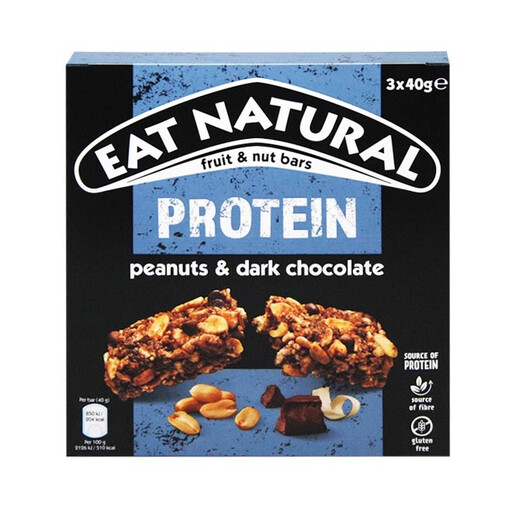
Eat Natural Protein-Packed Peanut & Chocolate Bars, 3 x 40g
This pack contains three 40g bars, and the name identifies peanuts. If you have a specific free-from requirement, use the full ingredients and precautionary statement on the current pack to assess it; the product name alone is not enough.
View on Joybuy
Questions about cinema snacks and labels
Does “vegan” mean a bar is suitable for someone with a milk or egg allergy?
No. The Food Standards Agency says vegan labelling alone should not be used instead of allergen labelling. Check the exact bar’s current ingredients and any precautionary statement for the allergen concerned.
Can a vegan protein bar contain wheat, soya or peanuts?
Yes. Myprotein Vegan Carb Crusher lists wheat and soya and warns that it may contain peanuts and nuts; PhD Smart Plant Salted Caramel lists soya ingredients and peanut paste. Check the particular flavour rather than assuming a plant-based bar excludes those ingredients.
Can I take a packaged protein bar into a cinema?
Check the cinema’s current policy before you go. ODEON says guests may bring snacks and drinks, while Cineworld states that externally purchased hot food and alcohol are not permitted; the rules you need to follow are those of your venue.
What if I avoid gluten but also need to avoid milk?
Check both requirements on the exact bar. Quest describes its protein-bar collection as gluten-free but says its OG bars use dairy-based proteins, so its gluten-free claim does not establish milk avoidance.
Should I check sweeteners in a low-sugar bar?
Yes, if particular sweeteners matter to your choice. Quest says its protein bars contain sugar alcohols and that tolerance varies, so read the ingredients of the flavour you plan to take rather than choosing on a low-sugar description alone.


