Who needs to check what?
The useful meaning of “free from” depends on the particular ingredient or allergen you need to avoid.
Shoppers avoiding a named allergen
If you need to avoid milk, peanuts, nuts, soya or sesame, check both the ingredients and any “may contain” statement on the exact bar. The Food Standards Agency explains that precautionary allergen labelling communicates possible unintentional presence; it is different from an ingredient declaration.
Shoppers avoiding gluten
Look for an explicit gluten-free claim on the individual product rather than relying on “vegan” or “dairy-free”. Barebells, for example, states that its vegan Caramel Peanut bar contains wheat protein.
Plant-based or dairy-free shoppers
A dedicated dairy-free range can narrow the search, but it does not settle other exclusions. Myprotein lists Vegan Carb Crusher in its dairy-free category and warns that the bar may contain milk, peanuts and nuts.
What matters when choosing?
Check allergen suitability on the exact flavour first. Then compare the portion and nutrition information if those details matter to your elevenses choice.
| Priority | What to check | Your needs |
|---|
| Named allergens |
Read the ingredients for deliberately added allergens, then read precautionary wording for possible unintentional presence. Check the current wrapper for the exact flavour. |
I need to avoid a particular allergen, so a general protein or vegan claim cannot answer the question for me. |
| Gluten-free claim |
Look for “gluten-free” on the individual product. The Food Standards Agency states that food carrying this claim must contain no more than 20 mg/kg gluten as sold. |
If I need to avoid gluten, I cannot assume a plant-based or dairy-free bar meets that requirement. |
| Flavour and pack |
Check each flavour in a mixed box; do not apply one bar’s declaration to the whole range. Cambridge University Hospitals advises reading labels each time a product is purchased because recipes can change. |
A multipack is only useful to me if every included flavour meets my requirements. |
| Portion and ingredients |
Compare the declared protein, fibre and serving size per bar, and read the ingredients for sweeteners or sugar alcohols. |
Once the allergen checks are settled, I want a portion and ingredient list that fit my mid-morning routine. |
Brand and retailer references
These ranges offer starting points for comparison, not brand-wide allergen assurances; the individual product label remains decisive.
Myprotein
Myprotein’s UK dairy-free protein-bar category lists Vegan Carb Crusher.
- A dairy-free category can help narrow a search for bars without milk-derived ingredients.
- Myprotein warns that Vegan Carb Crusher may contain milk, peanuts and nuts. Check its exact ingredients for any further exclusions.
Grenade
Grenade offers protein bars in a mixed selection box.
- The selection-box format brings several bars together for comparison.
- Grenade’s selection-box statement warns of possible milk, soya, wheat and peanuts, as well as traces of other allergens. Check each included flavour for a required exclusion.
Barebells
Barebells lists conventional and vegan bars in its UK range.
- Different product lines provide distinct ingredient lists to compare.
- Barebells states that Cinnamon Bun contains milk and soya, while its vegan Caramel Peanut bar contains wheat protein. A range-level dietary description does not cover both.
PHD
PHD lists Smart Protein Bar and Smart Plant Protein Bar lines.
- The separate plant and conventional lines offer a useful first distinction.
- For an allergen exclusion, check the selected flavour’s current pack rather than relying on the product-line name.
Quest
Quest describes its original protein-bar line as gluten-free and made with dairy-based proteins.
- Quest’s range information distinguishes its gluten-free claim from its dairy-based ingredients.
- Quest also says its bars contain sugar alcohols. For a bar bought in the UK, check the exact pack’s formulation and allergen declaration.
Tesco
Tesco is a retailer with a mixed protein-bar assortment, rather than one bar formulation.
- Individual bars and multipacks can be compared within the same shopping route.
- A category listing or Free From search result cannot establish the allergens in a particular bar; check its product information and pack.
Protein snacks on Joybuy
These flapjacks and bars are options to assess for elevenses. Check the current pack for the specific free-from claim and allergen declaration you need; none should be treated as free from every allergen.
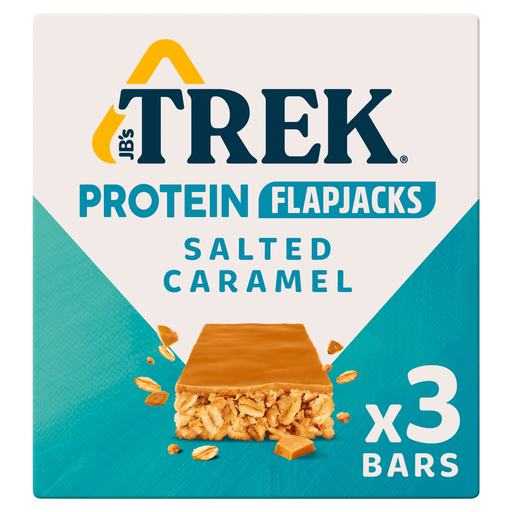 Image unavailable
Trek Salted Caramel Protein Flapjacks, 3 × 50 g
A three-bar flapjack pack for portion-by-portion elevenses. If you need to avoid gluten, soya, milk, peanuts or nuts, check the current pack’s claim, ingredients and precautionary statement before choosing it.
View on Joybuy
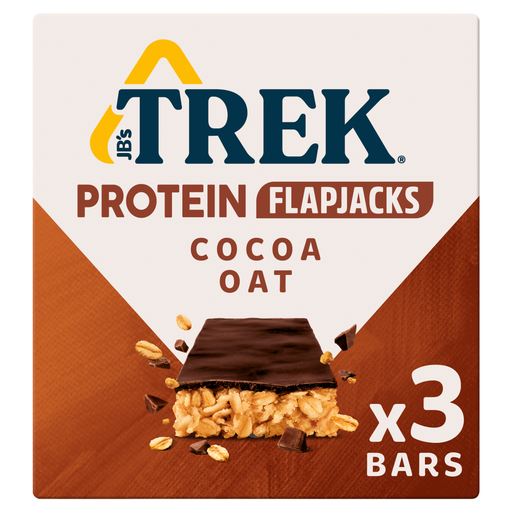 Image unavailable
Trek Cocoa Oat Protein Flapjacks, 3 × 50 g
Another three-bar flapjack option for mid-morning snacking. Check this cocoa oat variant’s own gluten-free wording and allergen statements rather than carrying over a conclusion from another Trek flavour.
View on Joybuy
 Image unavailable
Nature Valley Protein Peanut & Chocolate Bar, 4 × 40 g
The title identifies peanut as part of this four-bar variant, so it is not a choice for peanut avoidance. For any other exclusion, including gluten, check the exact pack’s claims, ingredients and precautionary wording.
View on Joybuy
 Image unavailable
Nature Valley Protein Salted Caramel Nut Bar, 4 × 40 g
This four-bar variant is identified as a nut bar, so do not use a free-from search result as evidence that it meets a nut exclusion. Check its current pack for the particular ingredients, warnings and dietary claim relevant to you.
View on Joybuy
Questions about free-from bars
Does vegan mean free from gluten, peanuts, nuts and soya?
No. Vegan describes animal-derived ingredients, not every allergen. Barebells states that its vegan Caramel Peanut bar contains wheat protein; Myprotein warns that Vegan Carb Crusher may contain peanuts and nuts. Check the exact bar for each exclusion.
What does “gluten-free” mean on a UK food label?
The Food Standards Agency states that food labelled gluten-free must contain no more than 20 mg/kg gluten as sold to the final consumer. A vegan or dairy-free description is not a substitute for that claim when choosing a bar for gluten avoidance.
Do I need to check a bar I have bought before?
Yes. Cambridge University Hospitals advises reading the label every time a product is purchased because recipes can change. Check the current ingredients and allergen statements for the exact flavour and pack.
What does “may contain” tell me?
It warns of possible unintentional allergen presence, rather than identifying an intentionally added ingredient, as the Food Standards Agency explains. Read it alongside the ingredient list and use your individual allergy-management advice to decide whether that warning is compatible with your needs.
What should I compare after the allergen checks?
Compare the portion size and declared protein and fibre per bar, then check the ingredients for sweeteners or sugar alcohols if relevant to your choice. Quest says its protein bars contain sugar alcohols; that range information does not replace the label on the exact bar you are buying.


