Choose a movie-night protein bar by its exact UK label, not a brand name or a broad vegan or free-from claim. If someone has an allergy, check the ingredients, allergen declaration and relevant “may contain” wording; for gluten avoidance, look for a specific gluten-free claim, and remember that a vegan bar can still contain wheat, soya or peanuts. If several bars might be eaten during a film, compare the per-bar nutrition panel and any on-pack wording about polyols.
Who needs to check what?
People buying for someone with a food allergy
Check the exact flavour’s ingredients, emphasised allergens and precautionary wording before putting a bar into a shared snack bowl. A dietary label does not answer whether that person’s particular allergen is present or could be present through cross-contact.
Shoppers avoiding gluten
Look for a specific gluten-free claim rather than relying on vegan wording or a quick scan for wheat. Check the individual wrapper when choosing between flavours or packs.
Vegan shoppers with additional exclusions
A vegan claim helps identify a plant-based option, but it does not settle questions about soya, peanuts, wheat or allergen cross-contact. The Food Standards Agency advises against using vegan labelling as a substitute for allergen labelling.
What matters when choosing?
Start with any ingredient that must be avoided, then check the claim that matters to your diet. For a shared film snack, repeat those checks for every flavour rather than treating a mixed pack as one product.
| Priority | What to check | Your needs |
|---|
| Specific allergens |
Read the ingredients and emphasised allergens on the exact wrapper. Assess any relevant “may contain” statement; the Food Standards Agency describes precautionary labelling as a warning that an allergen could be unintentionally present. |
I’m choosing for someone with an allergy, so I need to check their particular allergen before buying or sharing a bar. |
| Gluten-free claim |
Look for an explicit gluten-free claim and check the allergen declaration for wheat or oats where relevant. The Food Standards Agency defines “gluten-free” as no more than 20 mg/kg gluten in the food as sold. |
If I need to avoid gluten, a vegan label or an ingredient list without obvious wheat is not the check I’m looking for. |
| Vegan ingredients |
Confirm the vegan claim on the particular bar, then read its separate allergen and precautionary statements. The Food Standards Agency warns that vegan labelling alone is not an allergen-safety check. |
A plant-based snack suits my preference, but I may still need to screen soya, peanuts or cross-contact for a guest. |
| Per-bar information |
Compare the stated serving size, protein, sugars and polyols per bar, alongside the ingredients and any on-pack consumption warning. |
For a long film, I want to know what one bar contains before deciding whether to buy a multipack or eat more than one. |
| Mixed flavours |
Check each wrapper in a variety pack. Grenade identifies particular peanut-containing flavours, illustrating why a range name cannot establish every flavour’s allergen profile. |
When several people are choosing from the same box, I need each bar’s label to match the person taking it. |
Checks that are easy to miss
-
Treating a vegan logo as allergen clearance
Vegan ingredients do not rule out other allergens or relevant cross-contact. The Food Standards Agency says vegan labelling alone should not stand in for allergen labelling.
For an allergy, read the exact bar’s ingredients, allergen declaration and precautionary wording before offering it to someone else.
-
Assuming flavours share one allergen profile
Grenade identifies Peanut Nutter, White Chocolate Salted Peanut and Peanut Butter & Jelly as flavours containing peanuts. Suitability cannot be carried across a brand or mixed box.
Check every flavour’s wrapper, including when buying a pack that may contain different bars.
-
Equating vegan with gluten-free
Vegan describes a different requirement from gluten-free; a plant-based bar can contain wheat.
When gluten avoidance matters, look for a specific gluten-free claim on the bar you intend to eat.
-
Judging a bar by its sugar claim alone
Sugar wording does not tell you how much of a bar is one serving or whether its recipe contains polyols. PhD’s Smart Plant information lists 16 g polyols per 64 g Salted Caramel bar.
Read the per-bar panel and any consumption warning before choosing a multipack for an evening’s snacking.
Brand and retailer references
These ranges offer different starting points for browsing, not brand-wide free-from assurances. The flavour and pack label determine which checks apply.
Grenade
A protein-bar range in which flavour-specific peanut checks matter.
- Grenade names Peanut Nutter, White Chocolate Salted Peanut and Peanut Butter & Jelly as flavours containing peanuts.
- Check the wrapper for the selected flavour and any precautionary allergen statement rather than screening by brand.
PhD
Its Smart Plant range is a starting point for shoppers seeking a vegan protein bar.
- PhD describes Smart Plant as suitable for vegans and lists less than 1 g sugar per serving on its product page.
- The Salted Caramel information lists 16 g polyols per 64 g bar; check the chosen flavour’s ingredients and allergen declaration separately.
Myprotein
Its UK vegan-snacks range offers a way to browse plant-based bars and other snack formats.
- The range includes bars among its vegan snacks.
- A category listing does not establish whether an individual bar meets a separate allergen or gluten-free requirement.
Quest
Quest presents a gluten-free protein-bar range on its US brand site.
- Its product information also identifies dairy-based proteins and sugar alcohols as considerations.
- Use the actual UK pack and product details for UK shopping decisions; do not assume the US range has identical formulations or availability.
Barebells
Its vegan bar range calls for flavour-level allergen checks.
- Barebells lists Vegan Caramel Peanut as a plant-based bar option.
- Barebells states that this flavour contains peanuts, soya and wheat and may contain milk, eggs, tree nuts and sesame.
Tesco
A supermarket browsing route for comparing protein-bar flavours and formats.
- Its protein-bar category lists examples with peanut and almond ingredients.
- A retailer category or dietary filter does not replace the allergen information on an individual item.
Protein bars and flapjacks on Joybuy
These movie-night options include flapjacks and bars in different flavours and pack sizes. Use each product’s current label to check any gluten-free or vegan claim and the allergens relevant to the people sharing them.
 No image available
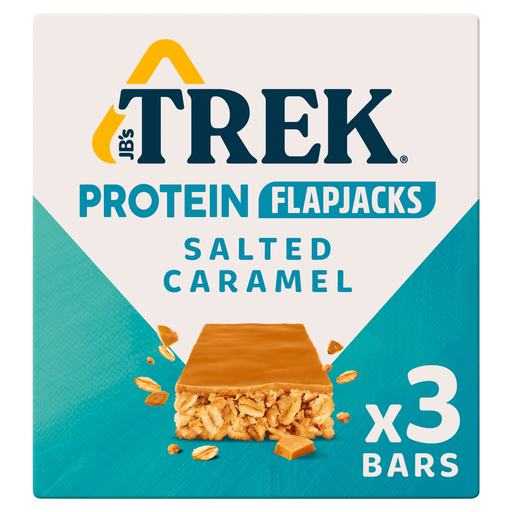
Trek Salted Caramel Protein Flapjacks 3 x 50g
For a plant-based or gluten-free film snack, check this flavour’s claims on the wrapper. Screen soya and any precautionary peanut, nut or milk wording if those allergens matter to you.
 No image available
Nature Valley Protein Peanut & Chocolate Bar 4x40g
This peanut-and-chocolate multipack needs a wrapper check before it is shared with anyone avoiding peanuts. For gluten avoidance, confirm the gluten-free claim on the pack; also check its soya, milk and precautionary nut wording.
 No image available
Nature Valley Protein Salted Caramel Nut Bar 4x40g
Check this nut-flavoured bar’s wrapper before adding it to a mixed snack selection, particularly for peanuts, almonds, milk and soya. If you need gluten-free food, confirm the claim on this specific pack.
 No image available
Grenade Soft Core Double Chocolate Protein Bar 12 x 50g
For this chocolate multipack, compare the sugar and polyols per bar rather than relying on front-of-pack wording. Check milk and soya on each wrapper before sharing.
 No image available
Grenade Soft Core Golden Caramel Protein Bar 12 x 50g
If golden caramel is the flavour you want for movie night, read its own per-bar nutrition panel and any polyol warning. Check the milk and soya declarations; another Grenade flavour’s label is not a substitute.
Questions about free-from bars
Does vegan mean a protein bar is suitable for someone with a milk or egg allergy?
No. The Food Standards Agency advises that vegan labelling alone is not a substitute for allergen labelling because cross-contact can still matter. Check the exact bar’s ingredients, allergen declaration and relevant precautionary wording, following the person’s clinical advice.
What does gluten-free mean on a UK protein bar?
The Food Standards Agency defines “gluten-free” as no more than 20 mg/kg gluten in the food as sold to the final consumer. Look for that specific claim rather than assuming a vegan bar, or one without obvious wheat ingredients, is gluten-free.
What if the wrapper says “may contain” an allergen I avoid?
Treat it as a warning of possible unintended presence, not a statement that the allergen is absent. The Food Standards Agency explains that precautionary allergen labelling communicates this cross-contact possibility; assess the wording against the particular allergen and your clinical advice.
Why check every bar in a mixed-flavour box?
Flavours can have different ingredients. Grenade identifies several named flavours containing peanuts, so check each wrapper before guests choose from a shared box.
What should I check before eating more than one bar during a film?
Read the serving size, per-bar nutrition panel, ingredients and any on-pack consumption warning. For example, PhD lists 16 g polyols per 64 g Smart Plant Salted Caramel bar, so a front-of-pack sugar statement alone does not describe the whole formulation.


