What matters when choosing a bar?
Start with the ingredient you need to avoid, then check claims and precautionary wording on the particular bar. Protein content and flavour are useful comparisons only after that choice fits your requirements.
| Priority | What to check | Your needs |
|---|
| Specific allergens |
Read the ingredients and highlighted allergens for the exact flavour. Check any “may contain” statement separately: the Food Standards Agency describes precautionary labelling as a warning about possible unintended allergen presence. |
I need to know whether this bar contains the ingredient I avoid, and whether its cross-contact warning affects my choice. |
| Vegan or dairy-free status |
Check the claim against the ingredients and precautionary statement. PhD's Smart Plant Salted Caramel contains soya and peanut paste; Myprotein's Vegan Carb Crusher may contain milk, peanuts and nuts. |
A bar without milk-derived ingredients may suit my lunch, but I still need to check any separate allergy requirement. |
| Gluten-free claim |
Look for an explicit claim on the current UK pack rather than relying on “vegan”. The Food Standards Agency defines “gluten-free” as no more than 20 mg/kg gluten in the food as sold to consumers. |
When I need to avoid gluten, a plant-based description alone does not settle whether this bar fits. |
| Flavour and wrapper |
Check each flavour and the pack you receive. Barebells lists different allergens for Caramel Cashew and Hazelnut Nougat; Tesco notes that food ingredients and allergen information can change. |
I want the information for the bar in my hand, even if I have bought another flavour from the same range. |
| Sweeteners |
Read the ingredients for polyols such as maltitol or xylitol and follow any on-pack warning. NHS guidance says polyols can have a laxative effect when consumed in large amounts. |
If polyols affect me, a low-sugar description is not enough to choose a bar. |
Brand ranges to compare
These brand examples show why a range name cannot establish whether a particular flavour meets your requirements.
PhD
PhD offers conventional Smart Protein Bars and a vegan, dairy-free Smart Plant range.
- PhD labels Smart Plant Salted Caramel vegan and dairy-free.
- That flavour contains soya and peanut paste and may contain sulphites, sesame seeds and nuts. PhD describes its conventional Smart Bar as having a whey-protein centre.
Myprotein
Myprotein lists vegan bars within its dairy-free protein-bar range.
- Vegan Carb Crusher is presented as suitable for vegans.
- Its product information says it may contain milk, peanuts and nuts and is not suitable for peanut and nut allergy sufferers.
Barebells
Barebells has vegan bars as well as original flavours with milk-containing ingredients.
- Vegan Fudge Brownie provides a plant-based option.
- Barebells lists gluten-containing cereals, soybeans and wheat in Vegan Fudge Brownie, with possible traces of milk, peanuts, tree nuts and sesame.
Grenade
Grenade identifies its protein bars as certified vegetarian.
- Vegetarian status does not establish whether an individual flavour meets a milk, gluten, nut or other allergen requirement; check its current label.
Quest
Quest describes its protein bars as gluten-free and made with dairy-based proteins.
- Quest's own range description identifies a gluten-free route for shoppers who can consume dairy.
- Check the label of the particular product offered in the UK rather than assuming another market's packaging is equivalent.
Protein bars and flapjacks on Joybuy
These bar and flapjack multipacks are options to consider alongside a ploughman's-style lunch. Their names and pack sizes help distinguish them; check each current wrapper for the allergen information you need.
 No image available
Trek Salted Caramel Protein Flapjacks, 3 x 50g
A flapjack-format addition to lunch. If you need to avoid gluten, milk, soya or nuts, check the claim, ingredients and precautionary wording on the pack you receive.
 No image available
Nature Valley Protein Peanut & Chocolate, 4 x 40g
A peanut-and-chocolate bar multipack for lunch. The flavour name identifies peanuts; check the wrapper for any other allergens and for an explicit gluten-free claim if you need one.
 No image available
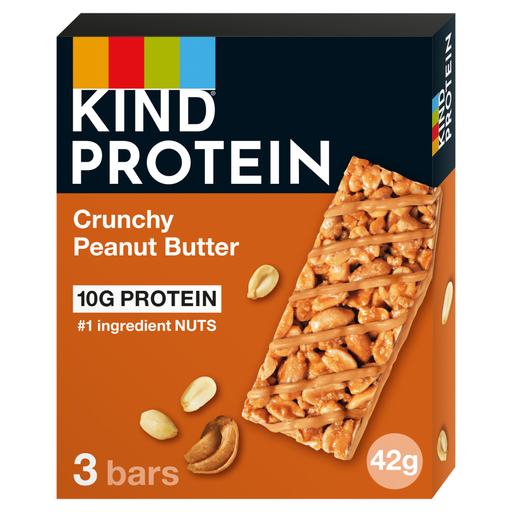
KIND Protein Crunchy Peanut Butter, 3 x 42g
A peanut-butter-flavoured option for shoppers who can eat peanuts. Check the current pack before relying on it for a dairy-free or gluten-free requirement, and read any other allergen warnings.
 No image available
Nature Valley Protein Salted Caramel Nut, 4 x 40g
A nut-flavoured bar multipack. Check which nuts and other allergens its wrapper declares; if gluten avoidance matters, look for an explicit claim on that pack.
 No image available
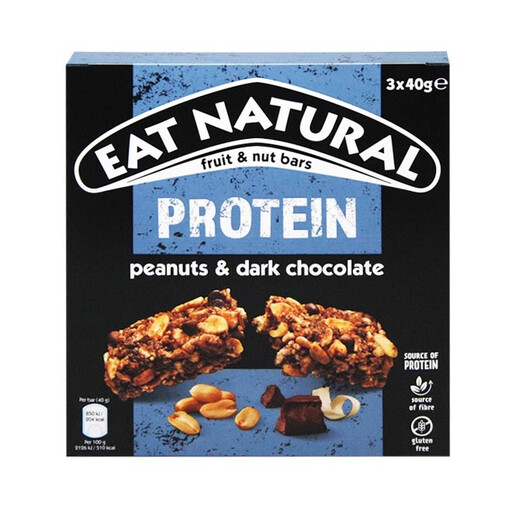
Eat Natural Protein-Packed Peanuts & Chocolate, 3 x 40g
An energy-bar option with peanuts and chocolate for a packed lunch. Check the current ingredients and precautionary statement for any additional allergen restrictions; do not assume a gluten-free claim from the product name.
Questions about free-from bars
Does “vegan” mean a protein bar is suitable for a milk allergy?
No. Vegan status does not replace a check of the current ingredients and precautionary statement. Myprotein says Vegan Carb Crusher may contain milk, and Barebells says Vegan Fudge Brownie may contain traces of milk.
Can a vegan protein bar also be gluten-free?
Yes, but check the specific bar rather than inferring it from “vegan”. Barebells lists gluten-containing cereals in Vegan Fudge Brownie; for a UK gluten-free claim, the Food Standards Agency sets a limit of no more than 20 mg/kg gluten in food as sold to consumers.
What should I read on a protein-bar wrapper if I have a food allergy?
Read the ingredients and allergen declaration for the exact flavour, followed by any “may contain” wording. The Food Standards Agency explains that precautionary allergen labelling communicates possible unintended presence through cross-contact.
Why might a low-sugar bar carry a consumption warning?
Some products use polyols such as maltitol or xylitol. NHS guidance says polyols can have a laxative effect when consumed in large amounts, so check the ingredients and any warning on the bar you choose.
Is an online ingredient list enough when buying a bar for lunch?
Use it to narrow your choices, then check the wrapper before eating. Tesco notes that reformulation can change a food product's ingredients, nutrition and allergen information.


