Who needs to check what?
The useful starting point is your specific restriction: different labels answer different questions.
Travellers avoiding a named allergen
Check the exact pack for that allergen in the ingredients and any precautionary warning. A vegan or gluten-free label alone does not answer whether a bar contains milk, peanuts, tree nuts, soya, sesame or another ingredient you avoid.
Vegan or dairy-free travellers
Look for the relevant vegan or dairy-free designation, then check the other ingredients separately. The UK product information for PhD Smart Plant and Myprotein Vegan Carb Crusher illustrates how bars in this group can still list soya, peanut or wheat.
Travellers sensitive to particular sweeteners
If a sweetener has caused you problems before, check the ingredients and any polyol warning before making an unfamiliar low-sugar bar your only snack for the drive. NHS guidance specifically discusses sorbitol in relation to IBS symptoms; that does not mean every polyol-containing bar affects everyone alike.
What matters when choosing a bar?
Settle the free-from requirement for the exact product first; then compare its nutrition information and whether it works as a snack to take along.
| Priority | What to check | Your needs |
|---|
| Named allergen |
Find a claim naming the allergen you avoid. Read the exact pack’s ingredients, highlighted allergens and any “may contain” statement. The Food Standards Agency distinguishes a specified free-from claim from warnings about possible unintended presence. |
I need to know whether this particular flavour addresses my restriction, not just whether its front label sounds suitable. |
| Vegan or dairy-free |
Check the stated vegan or dairy-free suitability, then check wheat, soya, peanut and nut information separately. PhD lists Smart Plant Salted Caramel as dairy-free and vegan but identifies soya protein and peanut paste. |
A bar without animal-derived ingredients may meet my vegan preference, but I also need to account for any other ingredients I avoid. |
| Gluten-free |
Look for a gluten-free claim on the exact bar rather than assuming vegan means gluten-free. Myprotein’s Vegan Carb Crusher ingredient information lists wheat flour and malted wheat flour. |
Gluten is the ingredient I need to avoid; milk or nuts may be a separate consideration for me. |
| Protein and sweeteners |
Compare protein figures on the same per-bar basis, and read the sweetener ingredients and any polyol warning. PhD lists 21g protein and 16g polyols per 64g Smart Plant Salted Caramel bar. |
I want a protein bar for the journey, but I would rather check an unfamiliar sweetener before relying on that bar during a long drive. |
| Pack for the trip |
Check the flavour and pack size you are buying, and keep its label available for the ingredient check. Do not assume that another flavour has the same ingredients or warnings. |
I need a snack I can pack with confidence that I have checked the bar I will actually eat. |
Brand and retailer references
These examples show why the formulation and flavour matter more than a brand name; inclusion here does not indicate what a shop currently stocks.
PhD
PhD presents Smart Plant Salted Caramel as a dairy-free, vegan bar.
- PhD lists 21g protein per 64g bar.
- Its ingredient information includes soya protein and peanut paste, and warns that it may contain sulphites, sesame seeds and nuts.
Myprotein
Myprotein’s Vegan Carb Crusher is a vegan bar with 16g protein per 60g bar in its displayed product information.
- The product has an explicit vegan designation.
- The listed ingredients include wheat flour; the product information also warns of possible milk, peanuts and nuts and says it is not suitable for peanut and nut allergy sufferers.
Grenade
Grenade describes its nut-based Go Nuts bar as gluten-free and vegan. Its White Chocolate Salted Peanut bar has different ingredients and warnings.
- Grenade describes Go Nuts as an option combining gluten-free and vegan claims where its nut ingredients are acceptable.
- Grenade’s White Chocolate Salted Peanut bar contains milk, soya and peanuts, may contain gluten and nuts, and carries a laxative-effect warning.
Tesco
Tesco’s product listings provide ingredient and allergen information for specific bars, including KIND Protein Caramel Nut.
- Tesco describes that KIND bar as gluten-free and lists 12g protein per bar.
- The same listing declares pecans, almonds, milk and soya; check the pack rather than treating the gluten-free claim as covering those ingredients.
Quest
Quest’s US-facing range information describes gluten-free Protein Bars made with dairy-based proteins.
- The range illustrates that a gluten-free claim and dairy-based ingredients can coexist.
- The cited range information is US-facing; check the exact UK product and pack before using it to make a buying decision.
Protein bar options on Joybuy
These bars illustrate different road-trip checks: a peanut and chocolate bar, a plant-based flapjack, and a conventional high-protein bar with declared allergens. Assess each exact pack against your own restriction rather than treating the group as interchangeable free-from options.
 No image available
Nature Valley Protein Peanut & Chocolate Bar, 4 x 40g
Consider this pack when checking a peanut and chocolate bar for the trip. Its listed limitations identify milk, peanuts and soya, with a possible other-nuts warning; check the exact pack before choosing it for a gluten-free requirement.
View on Joybuy
 No image available
TREK Salted Caramel Protein Flapjacks, 3 x 50g
Presented as a plant-based, gluten-free flapjack option, this pack lists soya as an ingredient. Check the exact pack’s gluten-free claim and precautionary allergen wording if you also need to avoid milk or nuts; their absence from an ingredient list alone is not an all-clear.
View on Joybuy
 No image available
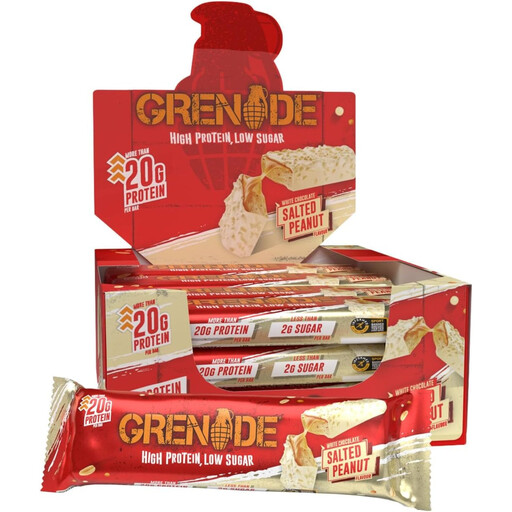
Grenade White Chocolate Salted Peanut Protein Bar, 12 x 60g
For a shopper comparing protein figures after checking allergens, Grenade lists 20g protein and 2g sugar per bar for this flavour. It contains milk, soya and peanuts, may contain gluten and nuts, and carries a warning that excessive consumption may have a laxative effect.
View on Joybuy
Questions about free-from bars
Does “free-from” mean a bar contains no allergens?
No. The Food Standards Agency says a free-from or allergen-free claim applies to the specified allergen, not every possible allergen. Check which ingredient the claim names, then read the exact pack’s full ingredient and allergen information.
What does “may contain” mean on a protein bar?
It signals that an allergen could be unintentionally present. The Food Standards Agency describes this as precautionary allergen labelling, separate from ingredients deliberately used in the bar. Check whether the warning names an allergen relevant to you rather than assuming another claim overrides it.
Is a vegan protein bar also gluten-free?
Not necessarily. Myprotein’s Vegan Carb Crusher is labelled vegan, but its displayed ingredients include wheat flour and malted wheat flour. Look for a separate gluten-free claim on the exact bar if gluten is your restriction.
Can a gluten-free bar still contain milk or nuts?
Yes. Tesco describes KIND Protein Caramel Nut as gluten-free, while its allergen information declares pecans, almonds, milk and soya. Treat each ingredient you need to avoid as a separate check.
Should I try a new low-sugar bar on a long drive?
If particular sweeteners have caused you problems before, check the ingredients and any polyol warning before relying on an unfamiliar bar for the journey. PhD lists 16g polyols per 64g Smart Plant Salted Caramel bar, and Grenade carries a laxative-effect warning for White Chocolate Salted Peanut; neither detail predicts how every person will respond.


