What should you check first?
Set your non-negotiable ingredient exclusions before comparing protein amounts or other nutrition information.
| Priority | What to check | Your needs |
|---|
| Allergens |
Read the exact flavour’s ingredients and highlighted allergens. Check “may contain” wording separately: the Food Standards Agency explains that it communicates possible unintended allergen presence. |
I need to know whether both the ingredients and any cross-contact warning fit the allergens I avoid. |
| Free-from claims |
Check each required claim independently. Barebells says some of its newer vegan bars contain wheat protein and therefore contain gluten; a gluten-free label does not establish that a bar is dairy-free or nut-free. |
A vegan or gluten-free label helps me narrow the choice, but I still need to check my other exclusions. |
| Protein per bar |
Compare grams per bar, not just the product name, with the rest of your food after exercise. The International Society of Sports Nutrition’s 2017 position stand discusses 20–40g, or around 0.25g/kg, as general protein amounts around exercise; it is not a requirement for every bar. |
Will this bar provide the amount of protein I want from a snack, or will it be one part of a larger meal? |
| Other pack warnings |
Read the nutrition information and any polyol warning on the current pack, particularly if you might eat more than one serving. |
Before choosing a lower-sugar bar, I want to know what other ingredients and warnings come with it. |
Brand and retailer examples
These product-specific examples show why a brand name alone cannot establish which free-from requirements a bar meets.
Grenade
A conventional protein-bar example for shoppers comparing protein amount alongside allergen information.
- Grenade UK lists 20g protein and 1.4g sugar per Chocolate Chip Salted Caramel bar.
- Grenade UK says that flavour may contain gluten, peanut and nuts. Check the pack for its full ingredients and warnings; these details do not describe every Grenade bar.
PhD
Its Smart Plant Salted Caramel bar illustrates a vegan and dairy-free route.
- PhD labels the Smart Plant product vegan and dairy-free.
- Those claims do not establish suitability for soya, peanut or other allergen avoidance. Check the exact flavour’s ingredients and precautionary statement.
Myprotein
Its Vegan Carb Crusher illustrates why a vegan product still needs an individual allergen check.
- The Vegan Carb Crusher is presented as a vegan bar.
- Myprotein says it may contain milk, peanuts and nuts and states that it is not suitable for peanut and nut allergy sufferers.
Barebells
Its vegan range includes bars with different ingredient considerations.
- Barebells lists 15g protein per Vegan Salty Peanut bar.
- Barebells says some newer vegan varieties contain wheat protein and gluten. Check the individual product rather than treating the range as gluten-free.
Tesco
Its listings illustrate how gluten-free and dairy-free claims can differ between products.
- Tesco lists Nakd Cocoa Hazelnut as vegan, gluten-free and dairy-free, with 7.2g protein per 45g bar.
- Tesco’s gluten-free KIND Caramel Nut listing names almonds, milk and soya among its allergens. Compare the exact pack, not just its gluten-free claim.
Protein bars to compare on Joybuy
These bars offer different flavours and pack sizes to assess against your ingredient exclusions and intended post-workout snack.
 No image available
Trek Salted Caramel Protein Flapjacks, 3 x 50g
If you are looking for a vegan or gluten-free flapjack, confirm both claims on this exact pack. The pack contains 3 x 50g flapjacks; check its soya information and any “may contain” wording against your requirements.
View on Joybuy
 No image available
Nature Valley Protein Salted Caramel Nut Bar, 4 x 40g
For gluten avoidance, confirm the claim on the exact bar rather than relying on its protein-bar name. This is a pack of 4 x 40g bars; check the milk, soya and nut information if any of those ingredients matter to you.
View on Joybuy
 No image available
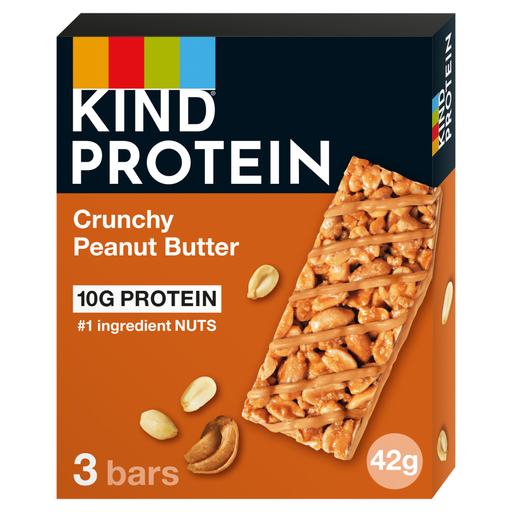
KIND Protein Crunchy Peanut Butter, 3 x 42g
The peanut-butter flavour makes peanut ingredients an immediate check for anyone avoiding them. The pack contains 3 x 42g bars; read its full allergen information, and do not assume a gluten-free or vegan claim.
View on Joybuy
 No image available
Grenade Oreo Flavour Protein Bar, 4 x 60g
Compare this Oreo-flavour bar’s protein information with its allergen information rather than treating it as a broadly free-from option. The pack contains 4 x 60g bars; check this flavour’s milk, wheat and soya information, any “may contain” wording and polyol warning.
View on Joybuy
Questions about free-from protein bars
Does vegan mean a protein bar is gluten-free or nut-free?
No. A vegan claim does not address gluten or nuts. Barebells says some newer vegan bars contain wheat protein and gluten, while its Vegan Salty Peanut is a peanut-flavour product; check the exact bar’s ingredients and warnings.
Does gluten-free mean dairy-free?
No. Tesco lists its KIND Caramel Nut bar as gluten-free while naming milk among its allergens. Check each free-from requirement separately on the product you intend to buy.
How much protein should I look for in a post-workout bar?
Compare protein per bar with the rest of your food after exercise rather than expecting every bar to provide the same amount. The International Society of Sports Nutrition’s 2017 position stand discusses 20–40g, or around 0.25g/kg, as general protein amounts around exercise; it does not make that figure a requirement for an individual bar.
What does “may contain” mean on a protein bar?
It is precautionary allergen wording about possible unintended allergen presence, as explained by the Food Standards Agency. For an allergy, assess it separately from the ingredients list and follow your clinician’s or allergy specialist’s avoidance advice.
Where should I check allergens on a prepacked bar?
Check the current pack’s ingredients list and any precautionary statement. The Food Standards Agency says allergens present in UK prepacked food must be emphasised each time they appear in the ingredients list.


