What should you check first?
Settle the exact dietary exclusion before comparing nutrition panels or pack sizes; a useful multipack is one that suits its intended eaters.
| Priority |
What to check |
Your needs |
| Allergen status |
Read the ingredients for the exact flavour. Check “may contain” wording separately; the Food Standards Agency explains that precautionary allergen labelling signals possible unintended presence of a regulated allergen. |
I need to know whether this particular bar fits the person who will eat it, not whether the brand has a general free-from range. |
| Vegan and milk requirements |
Distinguish a vegan designation from milk-allergy suitability. Inspect both the ingredient list and any precautionary milk statement on the pack. |
A plant-based option may suit one family member, while another needs to account for possible milk cross-contact. |
| Gluten, nuts and soya |
Check each named exclusion rather than inferring it from protein or sugar claims. If a gluten-free claim matters, look for it on the exact UK-market product and check its other allergen statements too. |
I cannot choose a bar on its gluten claim alone if the intended eater also avoids peanuts, tree nuts or soya. |
| Nutrition and serving size |
Compare protein and sugar using the same basis, such as per bar or per 100 g. Note bar weight and any on-pack sweetener or serving warnings. |
Once the bar fits our dietary requirements, I want to compare what each person would actually eat, not just figures from differently sized bars. |
| Multipack fit |
Check the count, bar weight and exact flavour before committing to a case. Use retailer dietary filters to find candidates, then confirm the individual product label. |
Several people may want snacks for the week, but a larger pack is useful only if the intended eaters can use that flavour. |
Brand and retailer references
These examples show why the product and flavour matter more than a brand-wide assumption; they do not establish that every bar in a range has the same ingredients.
Grenade
Grenade lists its Chocolate Chip Salted Caramel protein bar as a 12 × 60 g box.
- Grenade states 20 g protein and 1.4 g sugar per bar for this flavour.
- This flavour lists milk and soya ingredients and says it may contain gluten, peanut and nuts.
PhD
The Smart Bar range includes a 12-pack and flavour-specific nutrition information.
- PhD describes a whey-protein centre and lists 21 g protein per 64 g Choc Brownie bar.
- Check the exact flavour’s full allergen declaration before choosing it for a dietary exclusion.
Myprotein
Its Vegan Carb Crusher is labelled suitable for vegetarians and vegans.
- The vegan designation identifies a plant-based dietary option.
- The Vegan Carb Crusher page says it may contain milk, peanuts and nuts, so vegan suitability does not settle those allergy questions.
Barebells
Barebells lists its Salty Peanut protein bar in a 55 g format.
- The Salty Peanut nutrition panel lists 20 g protein per bar.
- That flavour contains milk, peanuts and soya and may contain gluten and nuts.
Tesco
Tesco’s protein-bar listings provide a way to browse different multipack formats.
- Pack counts and weights can help a household compare how much of an eligible flavour it is buying.
- A dietary browsing filter is a starting point, not a substitute for checking the individual product and delivered pack.
Quest
Quest makes gluten-free and soy-free claims for its protein bars on its US-facing website.
- Those claims indicate what to check if considering a particular Quest bar.
- For a UK purchase, assess the exact product offered by the retailer and its UK pack label rather than applying a US-site claim to every variant.
Protein-bar multipacks on Joybuy
These Nature Valley, TREK and KIND multipacks offer different pack sizes for a family shop. Check each exact flavour’s ingredients and precautionary wording against the needs of the people who will eat it.
 No image available
Nature Valley Protein Salted Caramel Nut, 4 × 40 g
A four-bar pack offers a smaller quantity to assess before buying more for the household. Check the exact label for milk, peanut, soya and tree-nut requirements; the supplied product limitations identify those as concerns for this flavour.
View on Joybuy
 No image available
Nature Valley Protein Peanut & Chocolate, 4 × 40 g
This four-bar Peanut & Chocolate pack is a separate flavour choice from Salted Caramel Nut. Its product limitations flag peanuts, soya and milk, with a possible other-nut warning; check the precise pack before sharing it with anyone avoiding those allergens.
View on Joybuy
 No image available
Nature Valley Protein Peanut & Chocolate Cereal Bars, 8 × 40 g
The eight-bar format provides more of this named flavour in one pack. Its product limitations flag milk, peanuts and soya, plus a possible tree-nut warning; confirm the exact pack suits its intended eaters before choosing the larger quantity.
View on Joybuy
No image available
TREK Salted Caramel Protein Flapjacks, 3 × 50 g
This three-pack is a smaller-format flapjack option for the family shop. The product limitations identify soya as an ingredient; check the exact wrapper’s ingredients and precautionary statement before treating it as suitable for any other exclusion.
View on Joybuy
 No image available
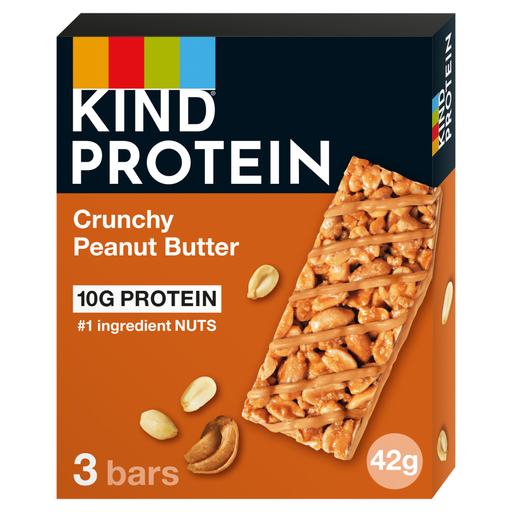
KIND Protein Crunchy Peanut Butter, 3 × 42 g
The three-bar pack offers a smaller quantity of the Crunchy Peanut Butter flavour. Its product limitations flag peanuts and soya and a possible tree-nut warning; confirm all relevant exclusions on the exact pack rather than inferring dairy or gluten status from the flavour name.
View on Joybuy
Questions about free-from bars
Does vegan mean a protein bar suits someone with a milk allergy?
No: a vegan designation addresses animal-derived ingredients, not necessarily possible allergen cross-contact. Myprotein’s Vegan Carb Crusher is labelled suitable for vegans but says it may contain milk, peanuts and nuts. Check the exact pack’s ingredients and precautionary statement for an allergy-driven choice.
Can I assume every flavour from one brand has the same allergens?
No. Check each flavour and pack rather than applying a brand-wide rule. Grenade’s Chocolate Chip Salted Caramel lists milk and soya ingredients and may contain gluten, peanut and nuts; Barebells’ Salty Peanut contains milk, peanuts and soya and may contain gluten and nuts.
What does “may contain” mean on a UK protein-bar label?
The Food Standards Agency explains that precautionary allergen labelling communicates that a regulated allergen could be unintentionally present. It is distinct from naming an intentional ingredient, and it matters when assessing a bar for someone managing an allergy.
How can a large household compare multipacks?
First establish which exact flavours suit the people who will eat them. Then compare pack count and bar weight on a consistent basis; retailer listings such as Tesco’s show that multipacks come in different formats. A larger case is not useful to an intended eater whose exclusion it does not meet.
How should we store bars bought for different family members?
Follow each pack’s storage instructions and best-before date, and keep its original label information available so family members can identify the right bar. Myprotein’s Vegan Carb Crusher instructions specify a cool, dry place away from direct sunlight.


