Start with the exact ingredient, allergen or gluten requirement: a vegan protein bar is not necessarily suitable for someone avoiding wheat, soya or peanuts. A bar can be a convenient snack or part of dinner, but the NHS Eatwell Guide advises looking at the balance of foods across a day or week rather than treating one bar as a complete meal.
Who needs which checks?
Students avoiding a named allergen or gluten
Match the current pack to the ingredient or allergen you need to avoid. The Food Standards Agency explains that precautionary wording such as “may contain” communicates possible unintended allergen presence; a vegan claim answers a different question.
Vegan students choosing a portable snack
Check the specific flavour’s ingredients as well as its vegan designation. Plant-based bars can use ingredients such as soya or peanuts, so vegan suitability does not settle a separate allergy requirement.
Students putting together a quick dinner
A bar may supply one convenient part of dinner. Consider what else you will eat across the day: the NHS Eatwell Guide looks at the overall balance of food groups over a day or week.
What matters when choosing?
Check dietary suitability before comparing serving sizes and pack formats. A category label or a claim on another flavour cannot replace the information on the bar you intend to eat.
| Priority | What to check | Your needs |
|---|
| Named allergens |
Read the current ingredient list, highlighted allergens and any “may contain” statement for the exact flavour. The Food Standards Agency says precautionary labelling communicates possible unintended allergen presence. |
I need to check the ingredient or allergen I avoid, including any cross-contact warning that matters to me. |
| Vegan and gluten-free claims |
Check each claim separately on the individual product. Review ingredients such as wheat, soya and peanuts rather than treating “plant-based” as a general free-from claim. |
A vegan bar might fit my food choices, but I may also need a specific gluten-free claim or an allergen check. |
| Role at dinner |
Compare nutrition per bar using the stated serving size. Consider what other foods form the meal; the NHS Eatwell Guide advises balancing food groups over a day or week. |
If I use a bar at dinnertime, I want to know what else I need alongside it rather than assuming the bar is the whole meal. |
| Pack format |
Check the number of bars, grams per bar and whether a listed offer has membership or delivery conditions. |
I want a pack size I can use and a clear view of any conditions before I order. |
Mistakes to avoid
-
Treating “vegan” as a universal free-from claim
Vegan describes animal-derived ingredients, not the absence of wheat, soya, peanuts or cross-contact warnings. A bar can meet one requirement and not another.
Check the ingredient list, highlighted allergens and precautionary wording on the specific flavour and pack.
-
Making a protein bar the entire dinner
Protein content alone does not describe the balance of foods eaten across the day. The NHS Eatwell Guide advises considering that balance over a day or week.
Use a bar as a snack or one part of dinner, and consider other foods, such as a starchy food and fruit or vegetables, as appropriate.
-
Overlooking polyols
Some protein bars contain polyols, and individual tolerance can vary. Their amount may also differ between products and serving sizes.
If polyols matter to you, read the nutrition information for the particular bar before choosing a multipack.
Brand references
These brand and range details help identify claims worth checking; they do not establish the ingredients or allergen advice of every bar a brand makes.
PhD
PhD describes its Smart Bar Plant range as plant-based. Its Smart Bar Plant 12-pack page states 20g of protein per serving; check the chosen flavour for its ingredients and serving size.
- A named plant-based range offers a starting point for checking vegan suitability.
- Plant-based positioning does not establish suitability for soya or peanut avoidance.
Grenade
Grenade makes protein bar selections, but its UK selection-box allergen advice includes milk, soya, wheat and peanuts among ingredients or possible traces.
- Individual bar flavours can be compared by their own pack information.
- Do not use the brand name or a range description as a free-from assurance.
Quest
Quest labels a protein-bar collection gluten-free and says its original bars contain as much as 21g of protein per bar.
- The named gluten-free collection gives shoppers a specific claim to check.
- Confirm the formulation and allergen information on the UK pack of the flavour you choose.
Barebells
Barebells has vegan bars as well as other protein-bar ranges.
- The range name helps distinguish vegan options from the brand’s other bars.
- Barebells says all its protein bars contain nuts or may contain traces of nuts; check each pack for further allergens.
Myprotein / Myvegan
Myprotein presents Myvegan as a vegan range that includes snacks.
- The range provides a way to browse products positioned as vegan.
- Check an individual bar’s ingredients, allergens and nutrition rather than applying the range description to every product.
Tesco
Tesco groups bars in free-from and gluten-free or vegan shopping categories.
- The categories can help narrow a search across different brands and pack sizes.
- Category placement does not establish that an individual bar meets every dietary exclusion; check its product information and pack.
Protein bar options on Joybuy
These bars and flapjacks cover different flavours, serving sizes and dietary considerations. For a free-from requirement, decide from the particular pack’s claims and allergen information—not from this selection as a whole.
 No image available
Nature Valley Protein Peanut & Chocolate Bars, 4 x 40g
A four-bar pack to consider when you want a 40g snack. Product information flags milk, peanuts and soya; check the current pack for the exact allergen and gluten claims you require.
View on Joybuy
 No image available
Trek Salted Caramel Protein Flapjacks, 3 x 50g
Three 50g flapjacks offer another format for a portable snack. Check the particular pack for its vegan and gluten-free claims, soya ingredients and any precautionary allergen wording.
View on Joybuy
 No image available
Grenade Soft Core Double Chocolate Protein Bars, 12 x 50g
This is a 12-pack of 50g Double Chocolate bars. Product information flags milk and soya; consult the current pack for ingredients and precautionary warnings before choosing it for a dietary exclusion.
View on Joybuy
 No image available
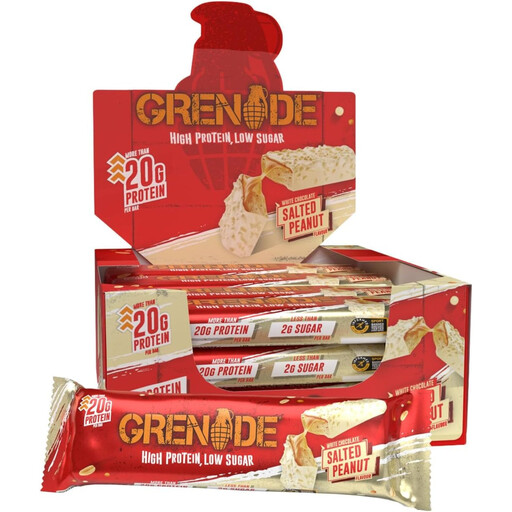
Grenade White Chocolate Salted Peanut Protein Bars, 12 x 60g
These Salted Peanut bars come as twelve 60g servings. Product information flags milk, soya and peanuts; check the exact pack rather than treating the protein-bar category as free-from.
View on Joybuy
No image available
KIND Protein Crunchy Peanut Butter Bars, 3 x 42g
This three-pack contains 42g Peanut Butter bars. Product information flags peanuts, soya and honey; check the pack if you avoid those ingredients or need a specific gluten-free claim.
View on Joybuy
Frequently asked questions
Does vegan mean a protein bar is gluten-free or suitable for every allergy?
No. Vegan describes the avoidance of animal-derived ingredients, not the absence of gluten, soya, peanuts or nuts. Barebells says its bars contain nuts or may contain traces of nuts; check the ingredients and warnings on the particular bar you are considering.
Can a protein bar be my whole dinner?
Treat a bar as a snack or one part of dinner rather than assuming its protein content makes it a complete meal. The NHS Eatwell Guide advises looking at the balance of food groups across a day or week.
What does a “may contain” allergen statement tell me?
It communicates possible unintended presence of an allergen, according to the Food Standards Agency. If cross-contact with that allergen matters to you, read the statement on the current pack as well as the ingredient list.
What should I look for if I need a gluten-free bar?
Look for a gluten-free claim on the specific product rather than relying on a vegan label or a retailer category. The Food Standards Agency describes “gluten-free” as no more than 20mg/kg of gluten in food as sold to consumers; check the pack separately for any other ingredients or allergens you avoid.


