Hosts serving guests who avoid gluten
Look for an explicit gluten-free claim on the chosen rice cakes. Keep the pack available so guests can also read its ingredients and allergen warnings.


Choose rice cakes by the specific ingredient or allergen each guest needs to avoid, rather than treating “free from” or “gluten free” as a claim about every allergy. Plain and chocolate-coated products can have different ingredients and “may contain” warnings, so keep each variety’s current pack beside it and let guests check the label before eating.
Look for an explicit gluten-free claim on the chosen rice cakes. Keep the pack available so guests can also read its ingredients and allergen warnings.
Ask which substances matter to your guests. A gluten-free rice cake can still list milk or soya as an ingredient, or carry a “may contain” warning for milk, sesame, soya or nuts.
Nature’s Store Dark Chocolate Rice Cakes are listed as dairy free and suitable for vegans, but their allergen advice says they may contain soya. Check the current pack against each guest’s requirements.
Start with the guest’s specific requirement, then compare the claim, ingredient list and allergen advice on each pack. Plan how guests will identify the products once they are served.
| Priority | What to check | Your needs |
|---|---|---|
| Gluten-free claim | Find an explicit gluten-free or wheat- and gluten-free statement on the current product. Check its ingredients and allergen advice separately; the claim does not cover every other allergen. | I’m serving someone who avoids gluten, but I don’t want to assume that the same pack meets another guest’s allergy requirements. |
| Ingredients and warnings | Read the ingredients for deliberately added allergens, then check any “may contain” statement for the substances your guests avoid. The Food Standards Agency explains that precautionary allergen labelling indicates an allergen could be unintentionally present. | If a guest avoids milk, sesame, soya or nuts, I need to check the wording for that particular product, not just its front-of-pack claim. |
| Plain or coated | Compare the exact varieties rather than relying on the brand. Kallo’s Milk Chocolate Rice Cakes list whole milk powder and soya lecithin; Nature’s Store Dark Chocolate Rice Cakes are listed as dairy free but may contain soya. | A sweet option would be welcome, provided its ingredients and warnings fit the guests who might choose it. |
| Serving labels | Keep different varieties separate, with each current pack or its accurately copied ingredient and allergen information beside the serving dish. Avoid mixing products in an unlabelled bowl. | I want guests to be able to identify what they are picking up, even after the rice cakes have been put out. |
Tesco Free From Wholegrain and Kallo Organic Unsalted rice cakes are labelled for gluten avoidance, yet both carry “may contain” warnings for milk, sesame and soya. A gluten-free chocolate-coated product can also include milk and soya as ingredients.
Ask guests which substances they avoid, then check both the ingredients and warnings on the current pack.
Once different rice cakes share an unlabelled bowl, guests cannot reliably match each piece to its ingredient list or allergen advice.
Serve varieties separately and keep the corresponding packaging or an accurately copied ingredient-and-allergen card beside each dish.
Coatings and flavourings change the ingredient list. Kallo Milk Chocolate Rice Cakes, for example, contain whole milk powder and soya lecithin.
Compare the exact plain, flavoured and coated products before deciding which ones to put out.
A brand name cannot settle an allergy question: the relevant claims and warnings belong to the individual product and its current pack.
Tesco’s Free From Wholegrain Rice Cakes are labelled wheat and gluten free.
Kallo has plain-style and chocolate-coated rice cakes with different ingredient and allergen profiles.
The Snack a Jacks Singles range includes Sour Cream & Chive, Sweet Chilli and Salt & Vinegar flavours.
These Kallo options cover a lightly salted rice cake and a blueberry-and-vanilla rice-and-corn cake for a street-party snack table. Check each current pack against guests’ particular requirements before serving.
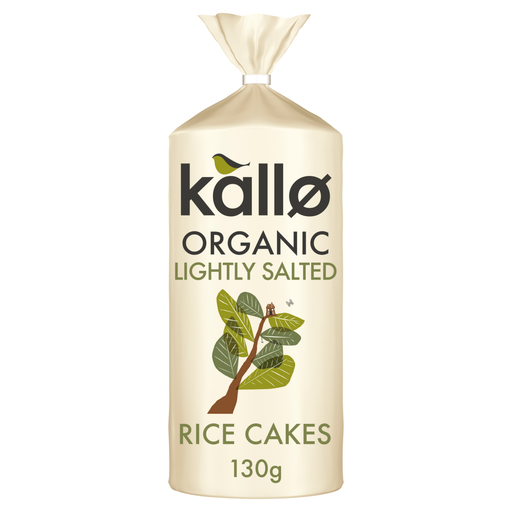 No image available
A lightly salted option for guests looking for a gluten-free rice cake.
The product information describes it as gluten free and made with organic wholegrain rice. Its allergen advice warns of possible milk, sesame and soya cross-contact; check the current pack with guests for whom those warnings matter.
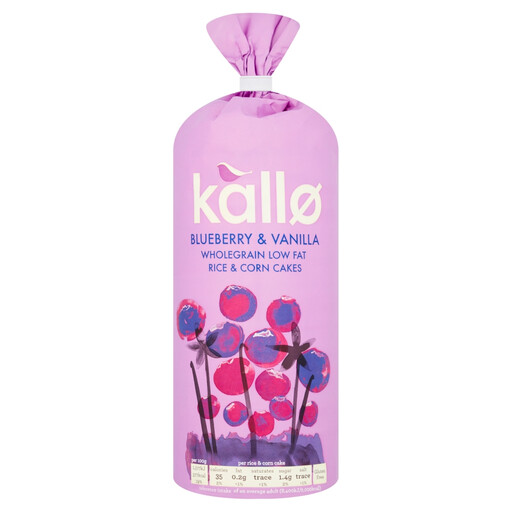 No image available
A blueberry-and-vanilla option when a flavoured gluten-free cake suits the snack table.
The product information describes these rice-and-corn cakes as gluten free and warns that they may contain milk, sesame and soya. Check the current pack before offering them to guests who avoid those allergens.
No. Tesco Free From Wholegrain and Kallo Organic Unsalted rice cakes carry “may contain” warnings for milk, sesame and soya, while Nature’s Store Wholegrain warns of possible sesame and soya. Check the current pack for the specific allergen a guest avoids.
Nature’s Store Gluten Free Wholegrain Dark Chocolate Rice Cakes are listed as dairy free and suitable for vegans. They may contain soya, so check that warning if the guest also avoids soya.
The Food Standards Agency describes “may contain” as precautionary allergen labelling: it indicates that a named allergen could be unintentionally present. That differs from an allergen deliberately listed as an ingredient, and both parts of the label matter when choosing food for a guest.
Use the current pack for the final check. Tesco advises customers to read product labels because ingredients and allergen information can change; keeping each pack beside its serving dish also lets guests check the information themselves.