Hosts serving guests with food allergies
Check each product’s ingredients and precautionary allergen statements against the allergens named by the guest or their parent. A gluten-free claim does not settle questions about milk, sesame, soya or nuts.


Choose rice cakes against each guest’s named allergens, rather than treating rice, gluten-free or vegan labelling as a general allergy guarantee. Plain and chocolate-coated products can have different ingredients and “may contain” statements, so check the pack bought for the hunt and keep its label available to guests or parents.
The useful starting point is the guest’s specific requirement, not a single free-from label applied to the whole selection.
Check each product’s ingredients and precautionary allergen statements against the allergens named by the guest or their parent. A gluten-free claim does not settle questions about milk, sesame, soya or nuts.
Start with a rice cake expressly labelled gluten free or free from cereals containing gluten. Choose between plain and coated varieties only after checking the current pack for any other allergens that matter to the guest.
Look for the relevant dietary claim, then check allergen information separately. The Food Standards Agency advises that vegan labelling alone should not be used as a substitute for allergen labelling.
Set out the allergens that matter for each guest before choosing a flavour or coating. Then compare the exact packs you intend to serve.
| Priority | What to check | Your needs |
|---|---|---|
| Gluten labelling | Look for an explicit gluten-free or free-from-cereals-containing-gluten statement on the exact product. Read the other allergen information separately. | I need a gluten-free choice, but other guests may have different allergies. ASDA and Tesco list gluten-free rice cakes with precautionary statements for other allergens. |
| Ingredients and “may contain” advice | Compare both the ingredient list and precautionary statements with each guest’s named allergens. The Food Standards Agency explains that precautionary labelling indicates an allergen could be unintentionally present. | A short ingredient list is useful to read, but I also need to know whether the pack warns about an allergen a guest avoids. |
| Vegan and dairy-free claims | Check dietary claims and allergen advice as separate pieces of information. Sainsbury’s says its vegan-recipe 135g rice cakes are not suitable for customers with milk allergy because of manufacturing methods. | If a guest avoids milk or egg because of an allergy, I cannot use “vegan” alone to decide whether to serve the product. |
| Flavour and coating | Read the declaration for the exact variant. Kallo lists milk and soya as ingredients in its milk-chocolate rice cakes; Tesco lists Nature's Store dark-chocolate rice cakes as dairy free with a “may contain soya” statement. | I want a chocolate-style Easter treat, but its coating must work for the particular guests I am serving. |
| Packaging at the hunt | Check the pack bought, then retain its label when presenting the food. Keep different products identifiable rather than mixing them in an unlabelled container. | Parents and guests need to be able to identify which rice cake is which before choosing one. |
ASDA’s gluten-free lightly salted rice cakes say they may contain soya; Tesco’s gluten-free wholegrain rice cakes list possible sesame, soya and milk.
Ask which allergens each guest needs to avoid, then check the ingredients and precautionary advice on the pack you bought.
The Food Standards Agency says vegan labelling is not a substitute for allergen labelling. Sainsbury’s describes its 135g rice cakes as made to a vegan recipe but not suitable for customers with milk allergy because of manufacturing methods.
Use the vegan claim for dietary selection; assess milk, egg and any other relevant allergens using the product’s full label.
Kallo’s milk-chocolate rice cakes contain milk and soya, while the Nature's Store dark-chocolate rice cakes listed by Tesco are labelled dairy free but may contain soya.
Compare the exact flavour and coating. If offering more than one variety, keep each one identifiable with its own label.
Product information can change. Once the wrapper is discarded, guests and parents cannot readily check which ingredients and warnings applied to the food offered.
Read the current pack before the hunt and keep its label available. The NHS advises avoiding a food when you are unsure whether it contains the allergen concerned.
These examples show why the exact product and variant matter; a brand name alone does not establish allergen suitability.
Its Slightly Salted Rice Cakes are listed as free from cereals containing gluten.
Tesco lists its Wholegrain Rice Cakes as wheat and gluten free.
Its dark-chocolate rice cakes are listed by Tesco as gluten free, dairy free and suitable for vegans.
Kallo offers both plain and chocolate-coated rice cakes with different allergen information.
Its 135g rice cakes illustrate the difference between a vegan recipe and milk-allergy suitability.
M&S lists its Lightly Salted Rice Cakes as gluten free, vegan and vegetarian.
Its Jumbo range includes several flavours, among them chocolate chip and caramel.
These Joybuy options include plain, apple and apple-and-cinnamon rice cakes. Compare each current pack with the allergens relevant to your Easter egg-hunt guests before serving.
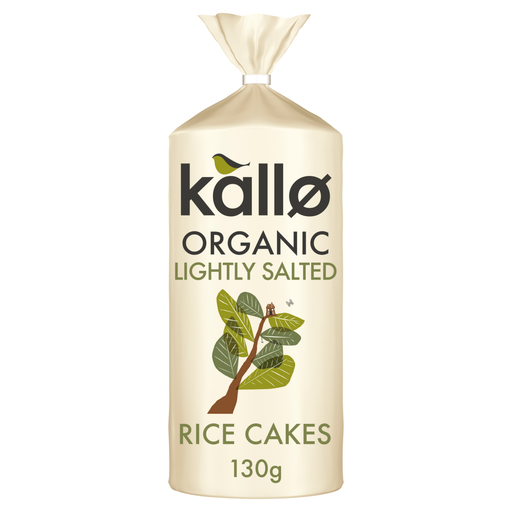 Image unavailable
A plain option to consider when looking for a gluten-free rice cake: Kallo labels its Organic Lightly Salted range gluten free. Kallo also says the product may contain milk, sesame and soya, so compare the current 130g pack with each guest’s requirements.
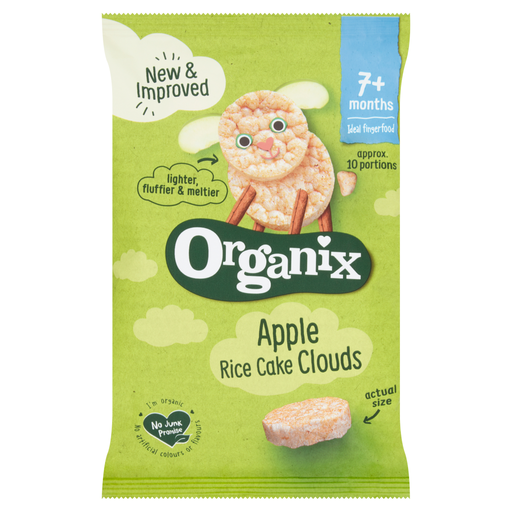 Image unavailable
An apple-flavoured rice cake labelled for ages 7+ months. For a young guest with a food allergy, have their parent or responsible adult check the current 40g pack’s ingredients and allergen advice before it is offered.
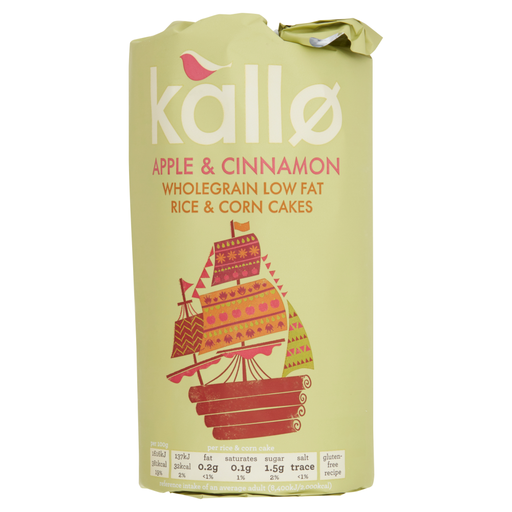 Image unavailable
An apple-and-cinnamon variant for guests who want a flavoured rice cake. Check this 127g pack’s ingredients and precautionary statements separately from those of Kallo’s plain and chocolate-coated products, particularly if milk, sesame or soya matters.
No. Choose a product with a current gluten-free or free-from-cereals-containing-gluten statement rather than assuming its rice base answers the question. Check other relevant allergens separately.
A vegan label alone cannot establish that. The Food Standards Agency advises checking allergen labelling separately because unintended presence is possible; Sainsbury’s, for example, says its vegan-recipe 135g rice cakes are not suitable for customers with milk allergy because of manufacturing methods.
Treat the statement as relevant when a guest avoids that allergen. Food Standards Agency research explains that precautionary labelling communicates possible unintended presence; follow the guest’s established allergy-management advice rather than assuming a plain rice cake is suitable.
Keep the exact product identifiable so a guest or parent can check its label before choosing it. For a guest with a food allergy, the NHS advises reading food labels carefully and avoiding food when it is unclear whether it contains the allergen concerned.
Follow the storage instructions on each pack. If transferring rice cakes to an airtight container, keep different products separate and retain their labels so guests can still identify the ingredients and allergen advice for each one.