Parents choosing a gluten-free snack
Look for an explicit gluten-free declaration on the particular rice cake, then check its current ingredient and allergen information before serving it.


For a child who needs to avoid gluten, choose a rice cake explicitly labelled gluten free rather than relying on rice as its main ingredient. Check the current pack for other relevant allergens and may-contain statements too: plain cakes offer a flexible base, while coated or individually packed versions have different ingredients or allergen declarations.
Look for an explicit gluten-free declaration on the particular rice cake, then check its current ingredient and allergen information before serving it.
A gluten-free label does not settle questions about milk, soya or sesame. Check both the ingredients and any may-contain statement against the child’s requirements.
A plain cake can be served as it is or with a suitable topping; a coated cake is a different snack, while an individual pack may be easier to carry to a club or activity.
Start with the allergens that matter to the child, then compare formats, per-cake information and any rules for snacks taken to school.
| Priority | What to check | Your needs |
|---|---|---|
| Gluten declaration | Check the exact product for a gluten-free or free-from-cereals-containing-gluten statement. Read the current pack rather than judging by the rice base. | I need a rice cake with an explicit gluten-free declaration, not simply a snack described as rice-based. |
| Other allergens | Read the ingredients and contains and may-contain statements for each relevant allergen. Kallo lists possible milk, sesame and soya presence for its Organic Lightly Salted cakes; Asda lists milk and soya in its milk-chocolate cakes. | Gluten is not the only concern for my child, so each flavour and topping needs its own check. |
| Plain or coated | Compare the declared serving size and per-cake nutrition, as well as the ingredients. Asda lists 30 kcal per Slightly Salted cake; its milk-chocolate cake lists 4.8 g sugars and 2.3 g saturated fat per cake. | For a plain snack or a base for a suitable topping, I want an uncoated cake. If I choose chocolate coating, I want to check the changed ingredients and per-cake values. |
| Pack format | Check portion packaging separately from allergen suitability. Tesco lists Snack a Jacks Salt & Vinegar as five 19 g packs, with a may-contain statement covering milk, wheat, soya, mustard and other cereals containing gluten. | A separate pack would be convenient for an activity, but I cannot use that format in place of the allergen check. |
| School snacks | Check the current pack, any topping and the individual school’s packed-lunch or allergy policy before packing a snack. | If the snack is going to school, I need it to meet both the child’s requirements and that school’s rules. |
A flavoured rice-and-corn snack can carry a may-contain statement for wheat and other cereals containing gluten, as Tesco’s Snack a Jacks Salt & Vinegar listing does.
When gluten avoidance is required, choose a product explicitly labelled gluten free and check its current pack.
Other allergens differ between products: Kallo’s Organic Lightly Salted cakes may contain milk, sesame and soya, while Asda’s milk-chocolate cakes contain milk and soya.
Check every relevant contains and may-contain statement for the exact product, including any topping.
Chocolate coating changes the ingredients and nutrition declaration. Asda’s milk-chocolate cake contains milk and soya and lists 4.8 g sugars and 2.3 g saturated fat per cake.
Compare the products on the same stated serving basis, and choose a coating only after checking its allergens and ingredients.
Sainsbury’s says its own-brand allergen lists are updated monthly, and M&S warns that product ingredients and dietary information can change.
Read the pack you are buying, particularly when its design or recipe has changed.
Kallo labels its Organic Lightly Salted and Organic Unsalted Wholegrain Rice Cakes gluten free.
Tesco describes its Free From Wholegrain Rice Cakes as wheat and gluten free.
Sainsbury’s maintains allergen-specific lists for its own-brand products.
Asda labels both its Slightly Salted and Milk Chocolate Rice Cakes free from cereals containing gluten.
M&S labels its Lightly Salted Rice Cakes gluten free and lists wholegrain brown rice and salt as ingredients.
The Salt & Vinegar rice-and-corn snack comes in individually portioned packs.
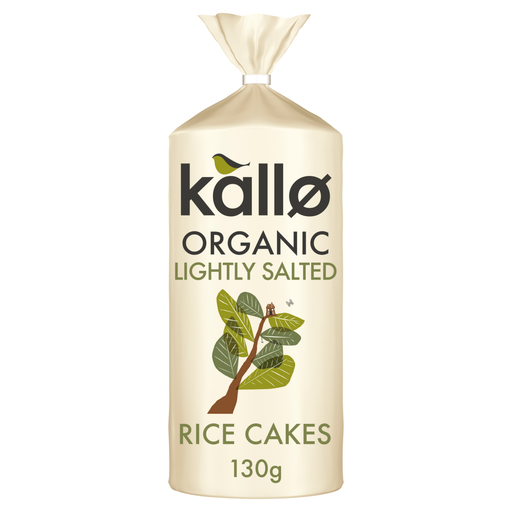
This lightly salted rice cake is an option to consider when looking for a plain, gluten-free after-school snack. Check its current pack against the child’s other allergen requirements.
 No image available
A plain, lightly salted option for an after-school snack or a suitable topping. Kallo labels its Organic Lightly Salted rice cakes gluten free and lists organic wholegrain brown rice and sea salt as ingredients. Kallo says the product may contain milk, sesame and soya; check the current pack for the child’s requirements.
No. A rice base does not establish that every flavoured or coated product meets a gluten-free requirement. Choose an explicitly labelled product and check the current pack; Tesco’s Snack a Jacks Salt & Vinegar listing, for example, says it may contain wheat and other cereals containing gluten.
No. Kallo says its Organic Lightly Salted Rice Cakes may contain milk, sesame and soya, while Asda’s gluten-free milk-chocolate rice cakes contain milk and soya. Check each allergen relevant to the child on the exact pack.
Check both the coating’s ingredients and the per-cake nutrition declaration rather than treating the formats as interchangeable. Asda’s milk-chocolate rice cake contains milk and soya and lists 4.8 g sugars and 2.3 g saturated fat per cake; its Slightly Salted cake lists brown rice and sea salt as ingredients.
Check the current pack’s gluten-free declaration, ingredients and may-contain statement against the child’s requirements, including any topping. Then check the individual school’s current packed-lunch or allergy policy; a product label alone cannot establish what that school permits.