Exercisers looking for a gluten-free carbohydrate base
A plainly labelled gluten-free rice cake is a portable option after training. If the snack also needs to provide protein, choose a separate food that meets your dietary requirements.


For harder or closely spaced training sessions, a plainly labelled gluten-free rice cake can provide a portable carbohydrate base, but pair it with a suitable protein food if the snack also needs to provide protein. Check the current pack for milk, sesame and soya advisories: gluten-free does not mean free from those allergens.
A plainly labelled gluten-free rice cake is a portable option after training. If the snack also needs to provide protein, choose a separate food that meets your dietary requirements.
A chocolate-coated rice cake can meet these dietary preferences, but check the exact product. Nature's Store's dairy-free, vegan dark-chocolate cakes carry a may-contain soya statement, according to Tesco Groceries.
A gluten-free statement alone does not settle whether a rice cake suits someone avoiding milk, sesame or soya. The advisories differ between products, including plain varieties, so read the current pack.
Start with the allergens you need to avoid, then compare the per-cake nutrition and decide whether the rice cake is a snack on its own or a base for another food.
| Priority | What to check | Your needs |
|---|---|---|
| Gluten-free labelling | Look for an explicit gluten-free claim on the chosen product; do not infer one from a rice-based ingredient list. The Food Standards Agency defines gluten-free as no more than 20 mg/kg of gluten in food as sold. | I want a gluten-free claim I can identify on the pack. In Coeliac UK's 2025 member survey, which had 3,785 respondents, 74.7% said they trusted its Crossed Grain Trademark more than a gluten-free statement; that preference does not mean the trademark is required on every gluten-free food. |
| Other allergens | Read the ingredients and may-contain statement for each allergen you avoid. Kallo and Tesco plain rice cakes list milk, sesame and soya advisories; the Asda Free From example lists may contain soya, according to their product information. | If I also avoid milk, sesame or soya, I need the declaration for the exact rice cakes I plan to eat, not just the gluten-free wording. |
| Snack composition | Compare carbohydrate and protein per cake on the same basis. Kallo Organic Lightly Salted lists 5.6 g carbohydrate and 0.6 g protein per cake, according to Kallo; consider a separate, suitable protein food when the snack needs to include protein. | After a demanding session, I may want a carbohydrate base with another food and a drink. After a shorter session, the timing of my next meal also matters. |
| Plain or coated | Check fat, saturates and sugars per cake as well as allergens. Tesco Groceries lists 3.7 g fat, 2.3 g saturates and 3.9 g sugars per cake for Nature's Store's dark-chocolate variety. | A sweet, dairy-free option might suit what I want to eat, but I do not want to assume it has the same nutrition or allergen advisory as a plain cake. |
| Pack and availability | Check the current retailer listing before shopping, then read the pack in hand before eating; formulations and stock can change. | When I need a snack to take with me, I want to confirm that the product I can actually buy meets my allergen requirements. |
A gluten-free rice cake may still carry a milk, sesame or soya advisory. Kallo, Tesco and Asda list different advisories for their plain varieties.
Identify each allergen you need to avoid, then check both the ingredients and may-contain wording on the current pack.
The plain Kallo, Tesco and Asda examples list only 0.6–0.7 g protein per cake in their product information. The British Dietetic Association advises prompt carbohydrate-rich refuelling when quick recovery is required, while the snack's protein and fluids are separate considerations.
For a demanding or closely spaced session, consider what other suitable food and drink will accompany the rice cakes.
Tesco Groceries lists 3.7 g fat, 2.3 g saturates and 3.9 g sugars per cake for Nature's Store's dark-chocolate variety. It also carries a may-contain soya statement.
Compare nutrition per cake and the allergen declaration when deciding between a coated snack and a plain base.
Ingredients, allergen information and stock can change, so a previously suitable product or available listing may not describe the pack you encounter.
Check the retailer listing when shopping and the physical pack before eating, particularly when an allergen exclusion is essential.
These examples illustrate different labels and formulations; a brand name alone cannot establish whether a particular pack meets your dietary requirements.
A plain, slightly salted rice-cake option listed as free from cereals containing gluten by ASDA Groceries.
Kallo Organic Lightly Salted is a plain gluten-free rice cake made with organic wholegrain brown rice and sea salt, according to Kallo.
Tesco Groceries describes its Wholegrain Rice Cakes as wheat- and gluten-free.
Its dark-chocolate wholegrain rice cakes are listed by Tesco Groceries as dairy-free, gluten-free and suitable for vegans.
Marks & Spencer lists its Lightly Salted Rice Cakes as gluten-free and vegan; its wider rice-cake range also includes different formulations.
These Kallo options include a plain rice cake that can serve as a post-exercise carbohydrate base and two flavoured alternatives. Check the current pack before choosing any of them for an allergen-restricted diet.
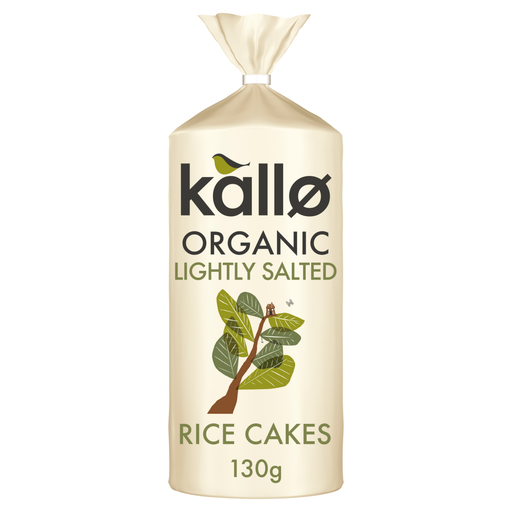 Image unavailable
A plain gluten-free option to use as a carbohydrate base alongside another suitable food if you want protein in the snack. Kallo lists 5.6 g carbohydrate and 0.6 g protein per cake, with may-contain warnings for milk, sesame and soya.
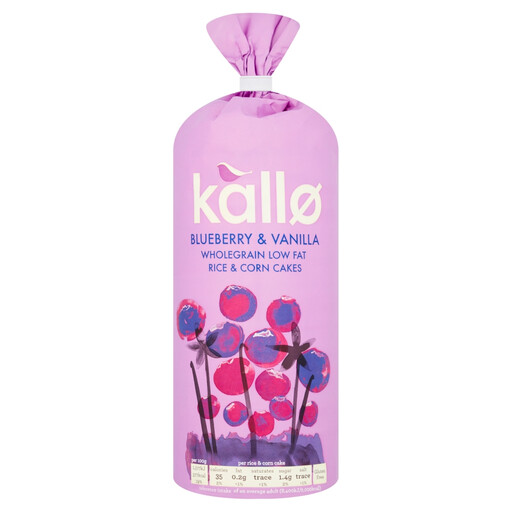 Image unavailable
A flavoured rice-and-corn alternative if you want a sweet snack after exercise. Check the pack's gluten-free wording, allergen advisory and per-cake nutrition against your requirements.
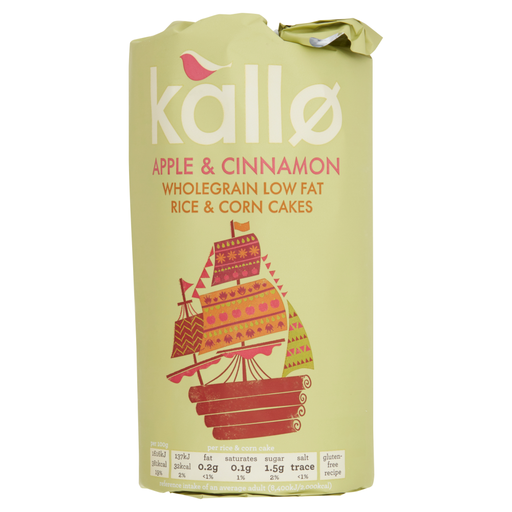 Image unavailable
An apple-and-cinnamon rice-cake option for a flavoured post-exercise snack. Do not infer gluten-free status from the ingredients alone: confirm the claim, other allergen information and nutrition on the current pack.
No. A gluten-free claim concerns gluten, not every other allergen. Kallo, Tesco and Asda product information shows that gluten-free rice cakes can carry milk, sesame or soya advisories; check the ingredients and may-contain statement for the exact pack.
It depends on what else the snack needs to provide and when you will next eat. The plain Kallo, Tesco and Asda examples list 0.6–0.7 g protein per cake, so consider another suitable food if you want protein alongside the rice cake. The British Dietetic Association advises prompt carbohydrate-rich refuelling when quick recovery is required.
The Food Standards Agency defines gluten-free as no more than 20 mg/kg of gluten in the food as sold to the final consumer. The claim does not tell you whether milk, sesame or soya is present, so check the rest of the label too.
Use it to help choose what to look for, then read the physical pack before eating. Tesco, Asda and M&S caution that product ingredients and allergen information can change.