Choose a rice cake by the particular allergen or dietary requirement, not by the words ‘rice cake’ or ‘free from’ alone: a gluten-free product can still contain other allergens or carry a ‘may contain’ warning. For a plain half-term snack, compare the ingredients and allergy advice on an uncoated cake; for flavoured or chocolate-coated versions, check the added ingredients and nutrition panel too. Read the current packet before serving, as product information can change.
Who needs to check what?
Families managing a named food allergy
If a child must avoid milk, soya, sesame or another allergen, check the exact product’s ingredients and precautionary wording. The rice cakes described by Tesco, Kallo and ASDA have different allergy statements, even among plain varieties.
Gluten-free snack shoppers
Look for a gluten-free claim on the product rather than assuming every rice-based snack qualifies. Check milk, soya, sesame and any other relevant allergens separately; a gluten-free claim does not address them.
Parents planning half-term snacks
Plain cakes and coated or flavoured cakes call for different label checks. The NHS includes plain rice cakes among shop-bought snack ideas and advises checking packaging and nutrition labels when choosing packaged snacks.
What matters when choosing rice cakes?
Start with the eater’s specific requirement, then compare the exact variety and the portion you plan to serve.
| Priority |
What to check |
Your needs |
| Specific allergens |
Read both the ingredient list and any ‘may contain’ statement for the named allergen. The Food Standards Agency explains that precautionary wording signals possible unintended allergen presence. |
A child in my household must avoid a particular allergen, so a broad ‘free from’ claim is not enough to choose their snack. |
| Gluten-free claim |
Check for a gluten-free label on the exact cake. The Food Standards Agency states that, under the cited UK definition, food labelled gluten-free must contain no more than 20 mg/kg gluten as sold to the final consumer; other allergens still need separate checks. |
For someone avoiding gluten, I want the product’s own gluten-free claim, while also checking any other allergens relevant to them. |
| Plain or coated |
Compare ingredients, allergens and nutrition per cake or serving. ASDA lists milk and soya in its Free From Milk Chocolate Rice Cakes, with 4.8 g sugars and 2.3 g saturates per cake. |
For an everyday snack base I may prefer a plain cake; if I choose a chocolate-coated one, I need to assess that particular coating and portion. |
| Flavour and current label |
Check the exact flavour’s allergy advice and nutrition panel, then read the packet in hand. ASDA’s listing for Snack a Jacks Salt & Vinegar Sharing Rice Cakes carries precautionary warnings for several allergens, including wheat, gluten and milk. |
When choosing a flavoured snack to share, I need to know whether everyone eating it can have that specific variety. |
Checks that are easy to miss
-
Reading ‘free from’ as free from every allergen
Tesco says its Free From Wholegrain Rice Cakes are wheat and gluten free, but warns that they may contain sesame seeds, soya and milk. A claim about one allergen does not settle a different allergy requirement.
Identify the allergen that must be avoided, then check both the ingredients and precautionary wording on the exact packet.
-
Using a vegan label to decide milk-allergy suitability
Sainsbury’s says its plain rice cakes are prepared to a vegan recipe but are not suitable for customers with a milk allergy because of manufacturing methods.
For milk allergy, follow the product’s current milk-allergy advice rather than relying on vegan recipe status.
-
Assuming every variety has the same label
ASDA’s Free From Milk Chocolate Rice Cakes contain milk and soya. Its separate Slightly Salted Rice Cakes list brown rice and sea salt but warn that they may contain soya.
Compare the precise flavour or coating you intend to serve, including its allergens and nutrition per cake or serving.
-
Relying on an online listing alone
Marks & Spencer warns that ingredients, dietary information and allergen information can change. An earlier product description may not describe the packet in hand.
Read the current physical label before buying or serving a rice cake for someone with an allergy.
Brand and range examples
These examples show why the allergy statement belongs to the individual product, not to a brand or its entire range.
Kallo
Kallo lists plain wholegrain rice cakes, including an Organic Unsalted variety.
- Kallo describes its Organic Unsalted Wholegrain Rice Cakes as gluten free and vegan friendly.
- That same variety may contain milk, sesame and soya, according to Kallo.
Tesco Free From
Tesco’s Wholegrain Rice Cakes are an example of a plain product labelled wheat and gluten free.
- Tesco lists wholegrain brown rice as the ingredient.
- Its listing says the product may contain sesame seeds, soya and milk.
ASDA Free From
The Slightly Salted and Milk Chocolate rice cakes illustrate how allergy advice differs between varieties.
- ASDA lists its Slightly Salted Rice Cakes as free from cereals containing gluten, with brown rice and sea salt as ingredients.
- The Slightly Salted variety may contain soya; ASDA says its separate Milk Chocolate variety contains milk and soya.
Nature’s Store
The reviewed range includes plain wholegrain cakes and a separate dark-chocolate-topped variety.
- The Nature’s Store dark-chocolate rice cakes listed by ASDA are labelled dairy free and gluten free.
- That dark-chocolate variety may contain soya; Tesco’s listing for the separate plain wholegrain variety warns of sesame and soya.
Sainsbury’s
Sainsbury’s plain 135 g rice cakes are a gluten-free, uncoated example.
- Sainsbury’s describes them as prepared to a vegan recipe.
- Sainsbury’s says they are not suitable for customers with a milk allergy because of manufacturing methods.
M&S
M&S lists Lightly Salted Rice Cakes made with wholegrain brown rice and salt.
- M&S describes this particular product as gluten free and vegan.
- M&S advises reading the product label because ingredient and allergen information can change.
Snack a Jacks
Salt & Vinegar Sharing Rice Cakes offer a flavoured format rather than a plain snack base.
- ASDA’s listing gives nutrition information per 10.5 g cake, including 0.14 g salt.
- That listing warns the variety may contain milk, wheat, gluten, barley, soya, celery and mustard.
Rice cakes on Joybuy
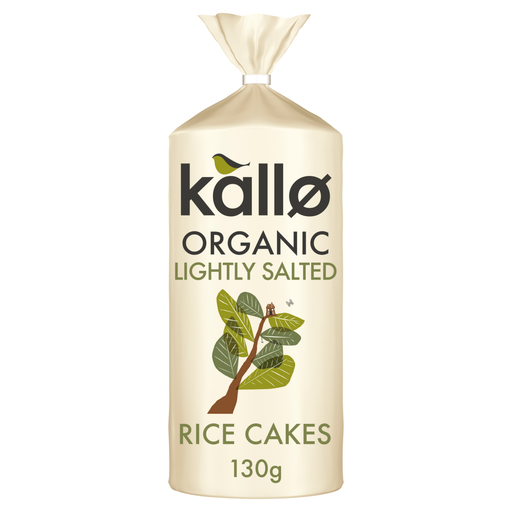
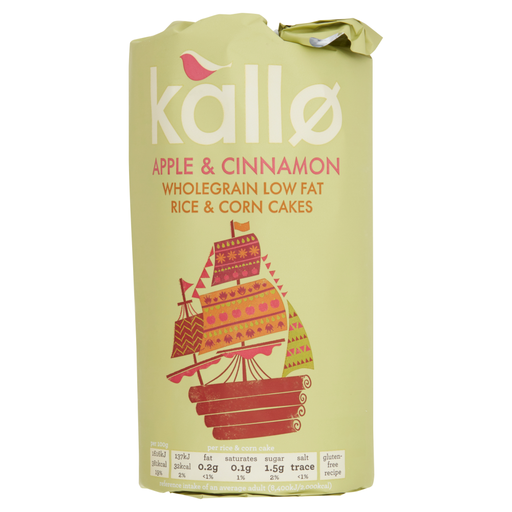
These Kallo options cover a lightly salted cake and an apple-and-cinnamon flavoured cake. For either one, use the current packet to check the allergens that matter to the person eating it.
 No image available
Kallo Organic Lightly Salted Rice Cakes 130g
For a lightly salted snack, check the current packet’s ingredients and precautionary allergy advice against the eater’s specific requirements.
View on Joybuy
 No image available
Kallo Jumbo Apple & Cinnamon Rice Cakes 127g
For an apple-and-cinnamon flavoured option, compare the current packet’s ingredients, allergy advice and nutrition panel with those of a plain cake.
View on Joybuy
Frequently asked questions
Does gluten-free mean a rice cake is suitable for every allergy?
No. Under the Food Standards Agency’s cited UK definition, gluten-free refers to food containing no more than 20 mg/kg gluten as sold to the final consumer. It does not establish whether the rice cake contains, or may contain, milk, sesame, soya or another allergen; check those separately on the packet.
What does ‘may contain’ mean on a rice-cake packet?
It signals that an allergen could be unintentionally present. The Food Standards Agency describes this as precautionary allergen labelling, so check whether the warning names an allergen the person eating the cake must avoid.
Are vegan rice cakes automatically suitable for someone with a milk allergy?
No. Sainsbury’s says its plain rice cakes are made to a vegan recipe but are not suitable for customers with a milk allergy because of manufacturing methods. Follow the current product’s own allergy advice rather than its vegan description alone.
Do plain and chocolate-coated rice cakes need different checks?
Yes. Check the ingredients and allergens of the exact variety, then compare nutrition per cake or serving. ASDA lists milk and soya in its Free From Milk Chocolate Rice Cakes, with 4.8 g sugars and 2.3 g saturates per cake; its separate Slightly Salted variety lists brown rice and sea salt and may contain soya.


